Tag: balance training

  • Tai Chi After 40: Balance, Strength & Mindful Movement

    Tai Chi After 40: Balance, Strength & Mindful Movement

    A low-impact practice backed by clinical research — and one of the smartest fitness choices you can make after 40.

    Introduction

    Margaret, 63, had been living with mild osteoarthritis and a lingering fear of falling after her neighbor broke a hip last winter. Her doctor had recommended staying active, but high-impact exercise felt risky and intimidating. A friend suggested she try tai chi at the local community center — and within eight weeks, Margaret noticed something remarkable: she felt steadier on her feet, her knees ached less, and she was sleeping better than she had in years.

    Margaret’s experience isn’t unusual. According to the CDC, falls are the leading cause of injury-related death among adults 65 and older, with nearly 36 million falls reported annually in the United States. But the problem begins long before 65 — balance decline, joint stiffness, and muscle loss start as early as your 40s.

    Tai chi — a centuries-old Chinese martial art practiced as a slow, flowing sequence of movements — has emerged as one of the most evidence-supported exercises for adults in midlife and beyond. In this guide, you’ll learn what tai chi actually is, what the science says about its benefits, how to get started safely, and what to discuss with your doctor before beginning.

    What Is Tai Chi?

    Tai chi (pronounced tie-chee) is a mind-body practice rooted in traditional Chinese martial arts. It consists of a series of slow, deliberate movements performed in a continuous, flowing sequence, coordinated with controlled breathing and mental focus. Unlike most martial arts, tai chi is practiced gently — without forceful kicks or punches — making it accessible to people of virtually all fitness levels.

    There are several styles of tai chi, including Yang, Wu, and Chen. The Yang style is the most widely practiced in the United States and is often recommended for beginners and older adults because of its gentle, expansive movements.

    In the US, tai chi has grown significantly in popularity as a therapeutic exercise. The National Center for Complementary and Integrative Health (NCCIH), a division of the NIH, recognizes tai chi as a practice with meaningful clinical evidence supporting its use for balance, pain management, and cardiovascular health. Research suggests that an estimated 3.6 million Americans practice tai chi, with numbers continuing to rise as its evidence base grows.

    What makes tai chi particularly valuable for adults over 40 is what it trains simultaneously: muscular strength, postural alignment, proprioception (your body’s ability to sense its position in space), breathing control, and focused attention. Very few exercises work all of these systems at once.

    Signs Your Body May Benefit From Tai Chi

    Not every fitness gap announces itself loudly. Many adults in their 40s, 50s, and 60s experience subtle changes that tai chi is particularly well-suited to address. Clinical evidence suggests you may benefit from starting a tai chi practice if you notice any of the following:

    Early signs that tai chi may help:

    • Occasional stumbling or feeling unsteady on uneven surfaces
    • Stiffness in joints, especially in the morning or after sitting
    • Mild anxiety or difficulty managing daily stress
    • Trouble concentrating or feeling mentally scattered
    • Low energy despite adequate sleep
    • General muscle weakness or poor posture

    More significant signals worth discussing with your doctor:

    • A recent fall or near-fall experience
    • A diagnosis of osteoarthritis, osteoporosis, hypertension, or Parkinson’s disease
    • Chronic low back pain or knee pain
    • Elevated cardiovascular risk factors
    • Post-surgical recovery where low-impact movement is recommended

    A 2021 meta-analysis published in JAMA Internal Medicine found that tai chi significantly reduced the rate of falls among older adults — by as much as 20 to 45 percent — compared to control groups. This figure alone makes it one of the most clinically compelling options in fall prevention.

    Health Benefits: What the Research Shows

    Tai chi isn’t just a wellness trend. It has been studied in hundreds of clinical trials, and its benefits are well-documented for adults in the 40-to-70 age range. Here’s what the evidence actually shows:

    Balance and Fall Prevention
    This is tai chi’s most robustly documented benefit. The CDC’s STEADI (Stopping Elderly Accidents, Deaths & Injuries) program includes tai chi as a recommended community-based fall prevention intervention. Research suggests that consistent practice — typically 3 or more sessions per week — produces measurable improvements in dynamic balance within 8 to 12 weeks.

    Joint Health and Arthritis Relief
    A landmark randomized controlled trial from Tufts Medical Center, published in the New England Journal of Medicine, found that patients with knee osteoarthritis who practiced tai chi twice weekly reported significantly less pain and better physical function compared to those in a stretching control group. Clinical evidence indicates that the slow, weight-shifting movements strengthen the muscles around joints without compressing cartilage.

    Cardiovascular Health
    Research suggests tai chi can modestly lower both systolic and diastolic blood pressure, particularly in adults with pre-hypertension or stage 1 hypertension. A systematic review published in the Journal of Human Hypertension found an average reduction of approximately 7 mmHg in systolic blood pressure among participants who practiced regularly.

    Mental Health and Cognitive Function
    The NIH’s National Institute on Aging notes that mind-body practices like tai chi may support cognitive health as we age. Clinical studies have found improvements in memory, processing speed, and executive function in adults who practice tai chi compared to sedentary controls — likely due to the dual demand of coordinating movement with focused attention.

    Sleep Quality
    Several clinical trials have found that tai chi practice improves sleep quality in adults with insomnia, including a study from UCLA that showed significant reductions in sleep disturbance scores among older adults after 25 weeks of tai chi practice.

    Muscle Strength and Bone Health
    While tai chi is low-impact, it is not low-effort. The slow, controlled movements engage core muscles, hip stabilizers, and leg musculature in ways that translate to functional strength. If you’re interested in bone density, you may want to explore how weight-bearing exercise supports bone health after 40, which can complement a tai chi routine.

    Getting Started: What to Expect

    One of tai chi’s greatest advantages is its accessibility. You don’t need special equipment, an athletic background, or a high fitness baseline to begin. Here’s what most physicians and exercise physiologists recommend for adults starting out:

    Talk to your doctor first. This is especially important if you have cardiovascular conditions, severe joint problems, or a history of falls. Most adults can practice tai chi safely, but your provider can offer personalized guidance. This varies from person to person based on individual health history.

    Start with a class, not a video. Beginners benefit significantly from in-person instruction. A certified tai chi instructor can observe your posture, correct alignment, and ensure you’re moving safely. Look for classes offered at community centers, YMCAs, hospitals, or senior wellness programs. The Arthritis Foundation and the American College of Sports Medicine both certify tai chi instructors for clinical populations.

    Expect a learning curve. Most beginners find the first 4 to 6 sessions mildly frustrating — tai chi requires memorizing sequences while focusing on breath and balance simultaneously. This challenge is actually part of the benefit. Stick with it. Most people report noticeable improvement in coordination and confidence by weeks 3 to 4.

    Frequency and duration: Research suggests that practicing 2 to 5 times per week for 30 to 60 minutes per session produces the most consistent health outcomes. Even two sessions per week have shown measurable balance improvements in clinical trials.

    What to wear: Loose, comfortable clothing and flat-soled shoes or bare feet. Avoid cushioned running shoes, which can interfere with the ground feedback that supports balance training.

    If you’re already practicing other forms of movement, tai chi pairs well with complementary disciplines. Adults who practice yoga may find familiar elements in tai chi’s emphasis on breath and body awareness — you can explore how yoga supports fitness after 40 as a companion practice.

    Living With Tai Chi: Daily Practice Tips

    Sustainability is everything. The most effective exercise program is the one you actually do consistently. Here’s how to build tai chi into your life for the long term:

    Create a consistent time and space. Most experienced practitioners suggest morning sessions — before the day’s distractions accumulate — though any consistent time works. All you need is a small, flat surface roughly 6 by 6 feet.

    Use the “5-minute rule.” On days when motivation is low, commit to just five minutes of practice. Most people find that once they start moving, they continue naturally. Clinical evidence on habit formation supports this low-threshold approach.

    Practice outside when possible. Many tai chi traditions emphasize outdoor practice, and research on green exercise suggests that outdoor movement adds psychological benefits beyond the physical. A park, backyard, or even a balcony works well.

    Combine tai chi with other complementary fitness approaches. Tai chi builds balance and flexibility, but it may not fully address all components of fitness. Many physicians recommend pairing it with resistance training for muscle maintenance. Resistance band training after 40 is a low-impact complement that rounds out a well-balanced fitness plan.

    Track your progress. Simple markers like how long you can stand on one foot (a clinical balance test) or how easily you rise from a chair can help you notice improvement over time. Many practitioners also keep a brief journal noting their energy, mood, and sleep quality.

    When to Call Your Doctor: Red Flags and Important Signals

    Tai chi is among the safest forms of exercise available, but like any physical activity, it’s important to recognize when something may need medical attention.

    Contact your doctor promptly if you experience:

    • New or worsening joint pain during or after practice
    • Dizziness or lightheadedness during movement
    • Unusual shortness of breath during low-intensity sessions
    • Heart palpitations or chest discomfort of any kind
    • A fall during practice, even a minor one

    Seek emergency care immediately if you experience:

    • Chest pain, pressure, or tightness during or after exercise
    • Sudden severe dizziness or loss of consciousness
    • Severe, sudden headache unlike any you’ve had before
    • Sudden numbness or weakness on one side of the body
    • Difficulty speaking or understanding speech

    These symptoms may indicate a cardiac or neurological event that requires immediate evaluation — do not wait to see if they resolve on their own.

    What to bring to your next doctor’s visit: Tell your provider you’re practicing tai chi, how often, and for how long. Mention any balance challenges, joint concerns, or medications that affect blood pressure or dizziness, as these may be relevant to how your body responds to the practice.

    Frequently Asked Questions

    Is tai chi enough exercise on its own for adults over 40?
    Tai chi provides meaningful benefits for balance, flexibility, and mental wellness, and it can count toward your weekly physical activity goals. However, most physicians and exercise physiologists recommend supplementing it with some form of resistance training to maintain muscle mass and bone density — both of which decline with age. Think of tai chi as an excellent foundation, not a complete fitness solution on its own.

    How long before I see results from tai chi?
    Clinical evidence suggests most people notice improvements in balance, mood, and sleep quality within 6 to 8 weeks of consistent practice (2 to 3 times per week). Joint pain reduction and cardiovascular benefits typically require 12 or more weeks of regular practice. Individual results vary significantly based on starting health status and consistency.

    Can I practice tai chi if I have knee or hip problems?
    Many people with mild to moderate knee and hip arthritis practice tai chi safely and report symptom relief. However, some tai chi postures involve deep knee bends or wide stances that may need to be modified. Always inform your instructor about your joint concerns — a qualified teacher can adjust movements to accommodate your specific needs. Check with your orthopedist or physiatrist if you have advanced arthritis or a recent joint replacement.

    Is tai chi good for anxiety and depression?
    Research suggests yes. A systematic review published in JAMA Psychiatry found mind-body exercises including tai chi produced moderate improvements in anxiety and depression symptoms in adults. The combination of slow movement, controlled breathing, and present-moment attention activates the parasympathetic nervous system, which counteracts the stress response. That said, tai chi is a complement to — not a replacement for — professional mental health treatment when clinically indicated.

    Do I need to have any martial arts background to learn tai chi?
    Absolutely not. Most beginners have no martial arts experience whatsoever. Tai chi as practiced for health in the US has been adapted specifically for fitness and wellness purposes and does not require athletic ability, flexibility, or prior training. The vast majority of people who practice tai chi for health purposes learn it from scratch as adults.

    Conclusion

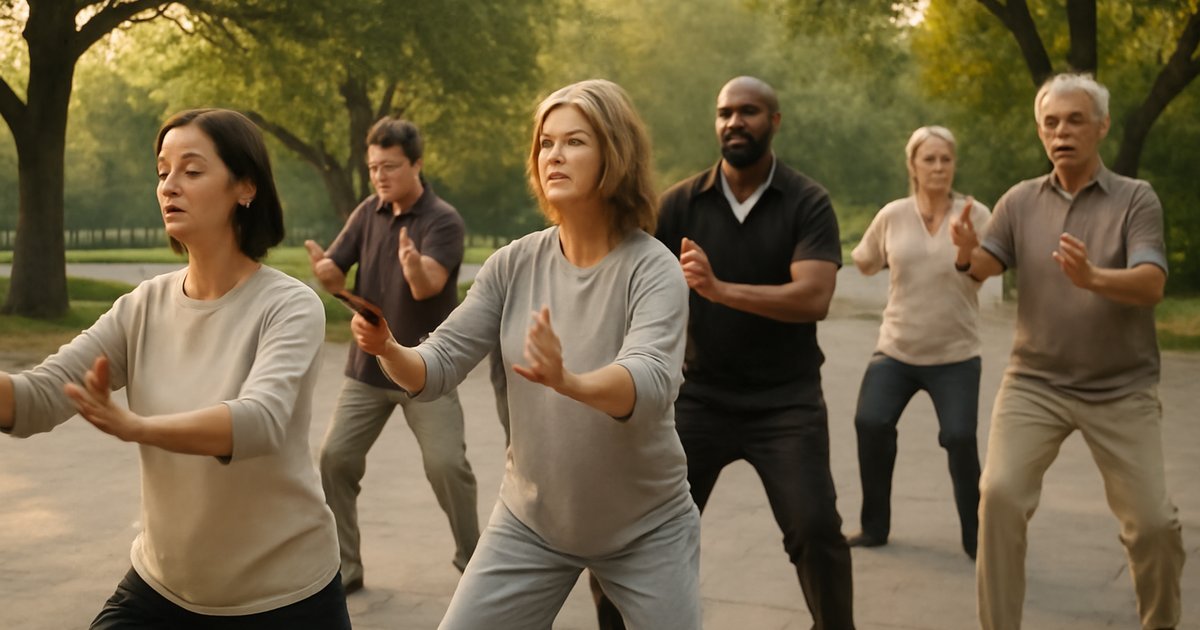
    Tai chi may look simple from the outside — a group of people moving slowly in a park. But the science behind those gentle movements is remarkably robust. For adults between 40 and 70, tai chi offers something rare: a single practice that simultaneously addresses balance, joint health, cardiovascular function, stress, sleep, and cognitive sharpness.

    You don’t need to be athletic, flexible, or pain-free to start. You just need to begin. Talk to your doctor about whether tai chi is appropriate for your specific health situation, find a qualified instructor near you, and commit to a few weeks of consistent practice.

    The research is clear. The risk is minimal. And for many adults, like Margaret, the results can be genuinely life-changing — one slow, deliberate step at a time.


    Medical Disclaimer: This article is for informational and educational purposes only. It does not constitute medical advice, diagnosis, or treatment. Always consult your physician or a qualified healthcare provider before making changes to your health routine or treatment plan.

    Medically reviewed by our editorial health team. Content follows evidence-based standards aligned with CDC and NIH guidelines.
  • Balance Training After 40: Prevent Falls & Build Stability

    Balance Training After 40: Prevent Falls & Build Stability

    The fitness skill most adults over 40 overlook — and the one that could save your life.

    Introduction

    Michael, 62, considered himself active. He walked three miles every morning, lifted weights twice a week, and watched what he ate. Then one ordinary Tuesday, he stepped off a curb wrong and ended up in the emergency room with a fractured ankle. “I had no idea my balance had gotten that bad,” he said. “I thought that was something that happened to old people.”

    Here’s the hard truth: balance begins to decline as early as your late 30s, and the consequences can be severe. According to the CDC, falls are the leading cause of injury-related death among adults aged 65 and older, and every year, about 36 million falls occur among older adults in the United States. But the encouraging news is that balance is trainable at any age.

    In this guide, you’ll learn exactly what balance and stability training involves, why it becomes critical after 40, and how to build a practical routine that protects you for decades to come.

    What Is Balance and Stability Training?

    Balance training refers to exercises specifically designed to improve your body’s ability to maintain controlled positions, whether you’re standing still, moving, or reacting to unexpected forces. Stability training, while closely related, focuses on strengthening the deep postural muscles — especially those in your core, hips, and ankles — that keep your joints aligned and your body upright.

    Your balance system relies on three interconnected inputs:

    • The vestibular system — located in your inner ear, it detects head movements and changes in position
    • Proprioception — the body’s internal sense of where your limbs are in space, fed by sensors in your muscles, joints, and tendons
    • Vision — your eyes provide critical orientation cues, especially in low-light environments

    When any one of these systems weakens — through aging, inactivity, medication side effects, or neurological changes — your overall balance is compromised.

    The National Institute on Aging notes that reduced muscle strength, slower nerve conduction, and decreased joint flexibility all contribute to the gradual deterioration of balance. These changes are normal, but they are not inevitable in their severity. Research consistently shows that targeted balance training can significantly offset these age-related declines.

    Signs Your Balance May Be Declining

    Many people don’t notice balance problems until a near-fall or actual fall brings them to attention. Recognizing earlier, subtler warning signs gives you the opportunity to act before injury occurs.

    Early warning signs:

    • Reaching for walls or furniture when walking through a room
    • Difficulty standing on one foot for more than 5 to 10 seconds
    • Feeling unsteady on uneven surfaces like grass or gravel
    • Stumbling when you turn around quickly
    • Needing to look down at your feet while walking stairs
    • Feeling dizzy or lightheaded when you stand up quickly

    More advanced signs that warrant medical evaluation:

    • Frequent stumbling or near-falls
    • Loss of balance during ordinary daily activities
    • Significant wobbling when walking in the dark
    • Feeling “off” or unsteady without a clear reason

    A 2020 study published in the British Journal of Sports Medicine found that adults who could not stand on one leg for 10 seconds had a significantly higher risk of mortality from all causes over a follow-up period. While this doesn’t mean every person with poor balance is in immediate danger, it does underscore how closely physical stability correlates with overall health status.

    This varies from person to person, and many factors — including recent illness, certain medications, and inner ear conditions — can temporarily affect balance. Always mention new or worsening balance changes to your physician.

    Causes and Risk Factors

    Understanding why balance declines after 40 helps you target the right solutions.

    Age-related physiological changes:

    • Muscle loss (sarcopenia): Adults can lose 3 to 8 percent of muscle mass per decade after age 30, according to research published in the Journal of Cachexia, Sarcopenia and Muscle. Less muscle means less joint support and slower reaction time.
    • Reduced nerve conduction speed: Proprioceptive signals travel more slowly as you age, meaning your body responds to balance threats less quickly.
    • Inner ear changes: The hair cells that detect movement in the vestibular system gradually diminish, particularly after age 50.
    • Vision decline: Even mild vision loss, including reduced contrast sensitivity and depth perception, impairs balance significantly.

    Lifestyle and medical risk factors:

    • Sedentary lifestyle — the single most modifiable risk factor
    • Medications including certain blood pressure drugs, sleep aids, antihistamines, and antidepressants
    • Chronic conditions such as diabetes (which causes peripheral neuropathy), Parkinson’s disease, and inner ear disorders
    • History of stroke or traumatic brain injury
    • Vitamin D deficiency — linked to increased fall risk in multiple NIH-supported studies
    • Poorly fitted footwear

    The CDC reports that four out of five fall-related deaths occur in adults aged 75 and older, but the balance decline that creates that vulnerability typically begins 20 to 30 years earlier. That window is your opportunity.

    Diagnosis: What to Expect from a Medical Assessment

    If you’re concerned about your balance, your primary care physician or a physical therapist can conduct a formal assessment. Knowing what to expect removes the anxiety from the process.

    Common clinical balance tests include:

    • Timed Up and Go (TUG) test: You rise from a chair, walk 10 feet, return, and sit down. A time greater than 12 seconds is associated with increased fall risk.
    • Single-leg stance test: Standing on one leg with eyes open and then closed measures the contribution of each balance system.
    • Berg Balance Scale: A 14-item functional test commonly used in clinical rehabilitation settings.
    • Romberg test: Standing with feet together, arms at sides, first with eyes open, then closed — used to distinguish between proprioceptive and vestibular causes of instability.

    Your doctor may also review your medication list, check your vitamin D and B12 levels, evaluate your vision, and assess your footwear. In some cases, referral to a vestibular specialist, neurologist, or physical therapist specializing in fall prevention may be recommended.

    Most physicians recommend a balance assessment for any adult who has experienced a fall, near-fall, or reports feeling increasingly unsteady — regardless of age.

    Balance and Stability Exercises: Building Your Routine

    Clinical evidence strongly supports structured balance training as an effective intervention for adults of all fitness levels. A 2019 Cochrane Review analyzing over 77 trials found that exercise programs that include balance and functional training reduce fall rates by approximately 23 percent in older adults.

    The key is starting at your current level and progressing gradually. Always perform balance exercises near a wall or sturdy chair for safety, especially when you’re just beginning.

    Beginner Level: Building the Foundation

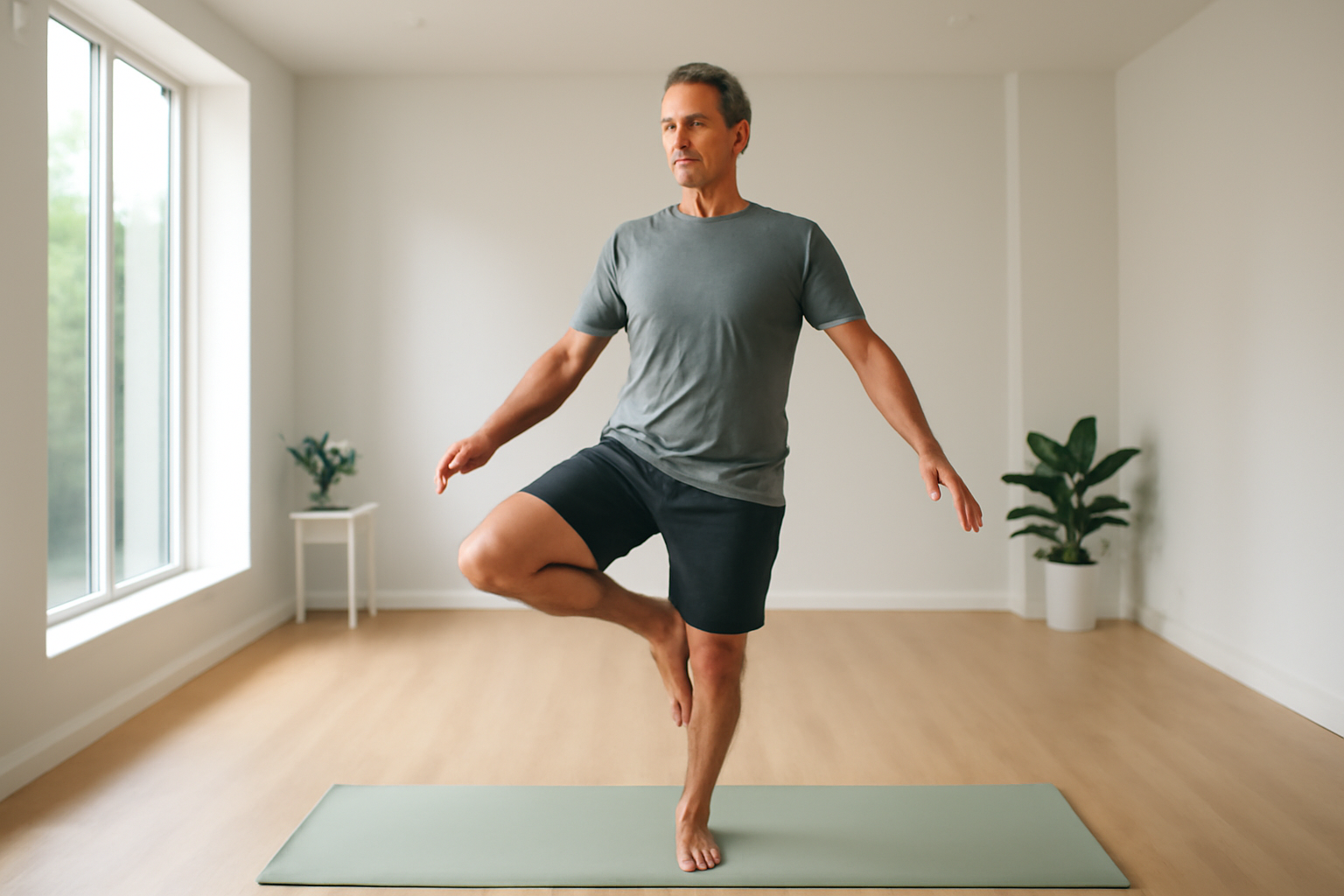
    • Single-leg stand: Stand on one foot for 10 to 30 seconds, holding a wall if needed. Switch sides. Perform 3 repetitions per leg, twice daily.
    • Heel-to-toe walking (tandem walk): Walk in a straight line placing the heel of one foot directly in front of the toes of the other. Aim for 20 steps.
    • Sit-to-stand: Rise from a chair without using your hands. This builds critical hip and quad strength. Perform 10 repetitions.
    • Weight shifts: Stand with feet hip-width apart and slowly shift your weight from foot to foot, holding each position for 3 to 5 seconds.

    Intermediate Level: Adding Challenge

    • Single-leg stand with eyes closed: Closes the visual loop and forces your vestibular and proprioceptive systems to work harder.
    • Side steps with resistance band: A mini-band around your ankles during lateral steps targets the hip abductors — critical stabilizers for the knee and ankle.
    • Standing on an unstable surface: A folded exercise mat or balance disc adds proprioceptive challenge without high risk.
    • Tai chi movements: Clinical evidence from Johns Hopkins Medicine supports tai chi as one of the most effective balance training methods for adults over 50, showing fall risk reductions of up to 47 percent in some studies.

    Advanced Level: Dynamic Stability

    • Single-leg deadlift: Holding a light weight, hinge forward at the hip with one leg extended behind. This builds hip stability and trains balance under load.
    • Lateral lunges: Step wide to one side, bending the stepping knee while the other stays straight. Builds hip strength in the frontal plane.
    • Bosu ball exercises: Squats or single-leg stands on an unstable dome surface significantly increase neuromuscular demand.

    If you’re also working on strength and cardio fitness, many of these exercises complement the work covered in our Strength Training After 40: The Complete Guide to Building Muscle Safely and our Cardio After 40: The Complete Guide to Heart-Healthy Exercise. Balance training is most effective when paired with a well-rounded fitness routine.

    Living With Balance Challenges: Day-to-Day Management and Prevention

    Exercise is only one piece of the puzzle. Managing your environment and daily habits can dramatically reduce fall risk, particularly during the years before your training adaptations fully take hold.

    Home safety modifications:

    • Install grab bars in the shower and near the toilet
    • Remove loose rugs or secure them with non-slip backing
    • Ensure all stairways have secure handrails on both sides
    • Keep pathways well-lit, particularly at night — use motion-sensor nightlights
    • Move frequently used items to shelves between waist and shoulder height

    Footwear and orthotics:

    Research suggests that footwear with thin, firm soles and low heels provides better proprioceptive feedback than thick, cushioned shoes for balance purposes. Avoid walking in socks on smooth floors. A podiatrist can assess whether custom orthotics might help address gait or ankle instability issues.

    Nutrition and supplementation:

    Vitamin D deficiency is associated with muscle weakness and increased fall risk. The NIH recommends adults aged 51 to 70 consume 600 IU of vitamin D daily, with the threshold rising to 800 IU after age 70. However, dosing should always be guided by your physician based on lab values. Adequate protein intake also supports the muscle mass maintenance critical to stability.

    If you’re interested in complementing your balance work with mobility training, our guide on Flexibility & Mobility Training: The Complete Guide for Adults Over 40 offers practical strategies that directly support stability and injury prevention.

    When to Call Your Doctor: Emergency Signs and Red Flags

    Not all balance problems are exercise-related, and some require prompt medical attention. Know the difference between a fitness challenge and a medical warning sign.

    Seek emergency care immediately if you experience:

    • Sudden, severe dizziness or vertigo with no prior history
    • Loss of balance accompanied by slurred speech, facial drooping, arm weakness, or vision changes (these may indicate stroke — call 911 immediately)
    • Sudden hearing loss combined with dizziness
    • Loss of consciousness or fainting
    • Severe headache alongside balance loss

    Schedule a non-emergency appointment if you notice:

    • Gradual but noticeable worsening of balance over weeks or months
    • Recurring dizziness upon standing up
    • A recent fall, even if no injury occurred
    • Numbness or tingling in your feet that affects how you walk
    • New medications that seem to be affecting your steadiness

    When you see your doctor, be specific: describe when it happens, how long it lasts, whether it’s associated with head movements, and any medications you’ve recently started or changed.

    Frequently Asked Questions

    How long does it take to see results from balance training?

    Most people begin noticing improvements in stability and confidence within 4 to 6 weeks of consistent practice. Clinical evidence from the Mayo Clinic suggests that meaningful reductions in fall risk can be achieved with as little as two to three sessions per week over 12 weeks. That said, this varies from person to person depending on starting fitness level and consistency.

    Is yoga effective for balance training?

    Yes — research suggests yoga is a clinically recognized approach to improving balance, proprioception, and core strength. Poses like tree pose, warrior III, and chair pose specifically challenge the same systems involved in everyday stability. Many physicians recommend yoga as a complementary approach, particularly for adults who prefer low-impact activity.

    Can medications be causing my balance problems?

    Absolutely. Several commonly prescribed medications are associated with dizziness and impaired balance, including certain antihypertensives (blood pressure drugs), benzodiazepines, anticonvulsants, opioids, and some antihistamines. Clinical evidence indicates that polypharmacy — taking multiple medications simultaneously — significantly increases fall risk. Talk to your doctor or pharmacist if you suspect your medications are affecting your steadiness. Never stop or adjust medications on your own.

    What’s the difference between balance training and core training?

    Core training focuses specifically on strengthening the muscles of the abdomen, back, pelvis, and hips. Balance training uses these muscles — along with ankle stabilizers and the neurological systems of proprioception and vestibular function — in integrated, functional movements. In practice, the two overlap significantly. Most physical therapists recommend training both together, as a strong core is foundational to better balance.

    Should I see a physical therapist or can I train on my own?

    For most healthy adults with mild balance concerns, a home-based program using the beginner exercises above is a reasonable starting point. However, if you have a history of falls, a neurological condition, significant arthritis, or unresolved dizziness, working with a licensed physical therapist — ideally one certified in vestibular rehabilitation or fall prevention — is strongly recommended by most physicians before starting independently.

    Conclusion

    Balance is a skill — and like any skill, it responds to practice, challenge, and consistency. The fact that it declines with age doesn’t mean you have to accept poor stability as inevitable. Research clearly indicates that targeted balance and stability training reduces fall risk, improves functional independence, and even correlates with better long-term health outcomes.

    Start where you are. Begin with simple single-leg stands next to the kitchen counter. Add a few minutes of mindful, heel-to-toe walking. Progress at a pace that feels safe and sustainable. Combine your balance work with strength and cardiovascular training for a complete picture of fitness after 40.

    Most importantly, talk to your doctor about your balance concerns. A conversation today could prevent an injury tomorrow — and that conversation is always worth having.


    Medical Disclaimer: This article is for informational and educational purposes only. It does not constitute medical advice, diagnosis, or treatment. Always consult your physician or a qualified healthcare provider before making changes to your health routine or treatment plan.

    Medically reviewed by our editorial health team. Content follows evidence-based standards aligned with CDC and NIH guidelines.