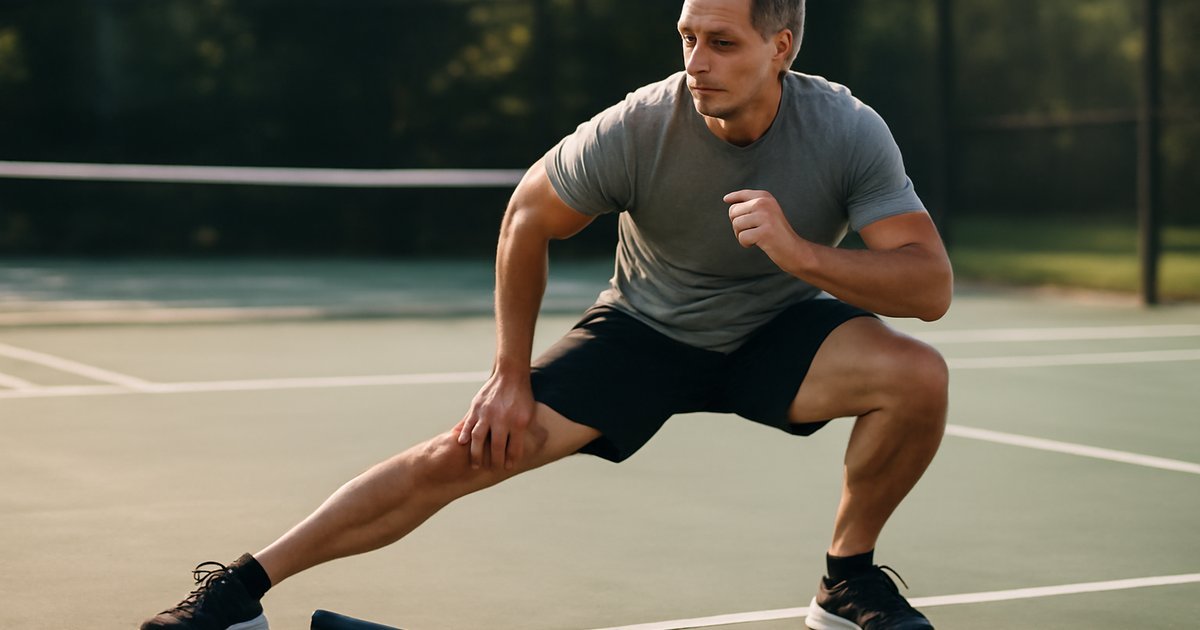
Your body can still perform at a high level after 40 — but the way you train for your sport needs to evolve with it.
Introduction
Mark, 52, had been playing recreational tennis for two decades. But after turning 40, he noticed something unsettling: he was losing a step on the court, his shoulder ached after every match, and his recovery time had doubled. He wasn’t injured — he was simply training the same way he always had, without adjusting for the changes his body had undergone.
His experience is far from unique. According to the Centers for Disease Control and Prevention (CDC), only about 28% of American adults aged 50 and older meet recommended physical activity guidelines — and many of those who do stay active fail to train in ways that actually support the sports and activities they love.
Sport-specific fitness training — exercise designed to build the exact strength, endurance, power, and mobility your chosen sport demands — is one of the most effective ways adults over 40 can continue doing what they love without burning out or breaking down. In this guide, you’ll learn what sport-specific training means, how aging changes your performance needs, and how to build a safe, effective program tailored to your sport.
What Is Sport-Specific Fitness Training?
Sport-specific fitness training refers to a structured exercise approach that targets the physical qualities most critical to performing well in a particular sport or physical activity. Rather than training for general fitness alone, you train the movement patterns, energy systems, and muscle groups your sport demands most.
A recreational golfer, for example, needs rotational power, hip mobility, and core stability — not the same qualities a competitive swimmer or weekend cyclist prioritizes. Sport-specific training acknowledges those differences and builds a program around them.
According to the National Institutes of Health (NIH), targeted exercise programs that combine strength, flexibility, and sport-relevant movements produce better functional outcomes than generalized fitness routines — particularly in adults over 40, where physiological changes make efficiency more important than volume.
This approach matters for everyday athletes too. Whether you play pickleball on weekends, train for local 5K races, swim laps, or play recreational basketball, sport-specific conditioning helps you move better, stay injury-free, and sustain performance as you age.
How Aging Changes Athletic Performance After 40
Before designing a sport-specific program, it’s important to understand what changes in your body after 40 — and why those changes affect how you should train.
Muscle mass and power output decline gradually. Research published through the NIH confirms that adults lose approximately 3–8% of skeletal muscle mass per decade after age 30, with the rate accelerating after 60. This process, called sarcopenia, reduces explosive power, speed, and strength — qualities that most sports demand.
Joint cartilage and connective tissue change. Tendons and ligaments become less elastic with age, increasing injury risk during high-impact or rapid-change-of-direction movements. Recovery from minor strains also takes longer.
Aerobic capacity (VO2 max) decreases. The American Heart Association notes that maximal oxygen uptake declines roughly 10% per decade after age 25 in sedentary individuals — though regular aerobic training can significantly slow this decline.
Reaction time and neuromuscular coordination slow. This affects sports that require quick reflexes, balance, and precise timing — from racket sports to skiing to basketball.
The good news: research consistently shows that regular, targeted training dramatically reduces these age-related declines. You may not perform exactly as you did at 25, but with smart, sport-specific programming, your 50s and 60s can still be years of strong, enjoyable performance.
Signs Your Training Isn’t Sport-Specific Enough
Many adults over 40 who stay physically active still train in ways that don’t actually prepare them for their chosen sport. Here are signs your program may need adjustment:
- Early signs your training lacks specificity:
- You feel fit at the gym but fatigued or sluggish during your sport
- You experience recurring minor injuries in sport-specific areas (shoulder in tennis, knee in running, hip in golf)
- Your performance on the court, trail, or course has plateaued despite consistent gym time
- You have excellent general endurance but poor sport-specific power or agility
- You stretch inconsistently and only after workouts, not before or on rest days
- More advanced signs worth discussing with a professional:
- Chronic joint pain that worsens during or after sport activity
- Repeated muscle strains in the same location across multiple seasons
- Significant asymmetry in strength or flexibility between dominant and non-dominant sides
- Fatigue during sport that seems disproportionate to your fitness level
This varies from person to person — some adults adapt well to general fitness programs, while others need highly targeted sport-specific work to feel and perform their best.
The Four Pillars of Sport-Specific Fitness After 40
Regardless of which sport you play, clinical evidence suggests that sport-specific programs for adults over 40 should address four core physical qualities:
1. Functional Strength
This means building strength in the specific movement patterns your sport requires — not just isolated muscle exercises. A runner benefits from single-leg deadlifts and hip-hinge patterns. A tennis player needs rotational pulling and pushing strength. A swimmer needs shoulder stability and thoracic mobility alongside upper-body pulling power.
Research suggests that compound, multi-joint strength exercises improve sport performance more effectively than isolated machine-based exercises, particularly for adults in the 40–70 age range. If you’re looking for a solid foundation, resistance band training after 40 is an excellent starting point for building functional strength with lower joint stress.
2. Cardiovascular Conditioning Matched to Sport Demands
Different sports use different energy systems. Golf is largely anaerobic with brief bursts of effort. Distance running is predominantly aerobic. Tennis mixes short explosive efforts with partial recovery — what exercise scientists call alactic and lactic anaerobic systems.
Training your cardiovascular system in sport-relevant intervals — not just steady-state cardio — prepares your body for what it actually faces during competition or play. Most physicians recommend a combination of moderate-intensity steady cardio and sport-interval training for adults over 40.
3. Mobility and Flexibility
After 40, maintaining joint range of motion becomes increasingly critical for both performance and injury prevention. Clinical evidence from Mayo Clinic indicates that adults who perform regular targeted mobility work maintain better functional movement patterns into their 60s and 70s.
Mobility training should focus on the joints your sport uses most — hips and thoracic spine for golf and tennis, ankles and hips for running and cycling, shoulders and thoracic spine for swimming.
4. Neuromuscular Coordination and Balance
As reaction time and balance naturally decline with age, training proprioception — your body’s ability to sense and react to position — becomes essential. Single-leg exercises, agility drills, and coordination-focused movements directly support sport performance and dramatically reduce fall and injury risk.
Our guide to core strength training after 40 covers stability and balance fundamentals that apply across virtually every sport.
Sport-Specific Training Examples for Common Activities
Here’s how sport-specific training looks in practice for popular activities among adults over 40:
Running and 5K/10K Training
- Key fitness needs: aerobic base, hip strength, ankle mobility, calf and Achilles resilience
- Recommended additions: single-leg squats, hip abductor strengthening, calf raises, tempo runs with walk intervals
- Injury prevention focus: hip flexor and IT band mobility, glute activation before runs
Tennis and Racket Sports
- Key fitness needs: rotational power, shoulder stability, lateral agility, reaction time
- Recommended additions: cable or band rotational rows, lateral shuffles, shoulder external rotation exercises, split-stance medicine ball throws
- Injury prevention focus: rotator cuff strengthening, elbow tendon loading exercises (for tennis elbow prevention)
Golf
- Key fitness needs: hip and thoracic rotation, core stability, glute strength, balance
- Recommended additions: hip 90/90 mobility, thoracic rotation drills, pallof press, single-leg hip hinge
- Injury prevention focus: lower back mobility, hip internal rotation
Cycling
- Key fitness needs: aerobic endurance, quad and glute power, hip flexor flexibility, upper body posture
- Recommended additions: Bulgarian split squats, hip flexor stretching, thoracic extension over a foam roller, interval cycling sessions
- Injury prevention focus: knee alignment, saddle fit, IT band mobility
For those who enjoy cycling as their primary sport, our detailed guide on cycling for fitness after 40 provides a full breakdown of training plans and injury prevention strategies.
How to Build Your Sport-Specific Program
Most physicians and sports medicine professionals recommend a simple phased approach for adults over 40 building a sport-specific program:
Phase 1 — Foundation (Weeks 1–4): Focus on general strength, mobility, and injury prevention. Identify your sport’s primary movement patterns and any existing weaknesses or asymmetries.
Phase 2 — Development (Weeks 5–10): Introduce sport-specific strength and conditioning work. Match cardiovascular training to your sport’s energy demands. Add coordination and balance exercises.
Phase 3 — Performance (Weeks 11–16): Increase specificity and intensity. Include drills that mimic sport movements. Prioritize recovery between sessions — a non-negotiable for adults over 40.
Recovery weeks: Every 3–4 weeks, reduce training volume by 30–40% to allow adaptation. Research indicates that adults over 45 require more frequent deload periods than younger athletes for optimal adaptation and injury prevention.
When to See Your Doctor or a Sports Medicine Professional
Starting or significantly modifying a sport-specific training program is generally safe for healthy adults — but there are situations where medical clearance is essential before you begin.
Schedule a visit with your physician or sports medicine provider if:
- You have been sedentary for more than 12 months and plan to start intense training
- You have cardiovascular disease, hypertension, or diabetes
- You experience chest pain, shortness of breath, or dizziness during exercise
- You have a history of joint replacement, fracture, or major surgery
- You experience joint pain that persists more than 48 hours after activity
- You have significant pain or swelling in any joint during or after sport activity
Seek emergency care immediately if during exercise you experience:
- Chest pain or pressure that doesn’t resolve with rest
- Sudden severe shortness of breath
- Fainting or near-fainting
- Sudden sharp joint pain with swelling or deformity
- Irregular or racing heartbeat accompanied by dizziness
At your next routine appointment, tell your doctor which sport you’re training for, what your program includes, and ask for any sport-specific screenings or assessments that may be appropriate for your age and health history.
Frequently Asked Questions
Is sport-specific training safe for adults over 50 or 60?
Research suggests that adults in their 50s and 60s benefit significantly from structured sport-specific training, provided it’s appropriately progressed and includes adequate recovery. The American College of Sports Medicine supports sport-specific resistance and conditioning training across all age groups with proper supervision and medical clearance when indicated.
How often should I train sport-specifically versus doing general fitness work?
Clinical evidence indicates a ratio of roughly 60–70% sport-specific training to 30–40% general fitness work is effective for recreational athletes over 40. This prevents overuse injury from excessive specificity while still building the foundational fitness your sport demands.
What if my sport is seasonal? Should I train differently in the off-season?
Most sports medicine professionals recommend using the off-season to build general strength, address mobility limitations, and correct muscular imbalances identified during the playing season. Transitioning to more sport-specific conditioning 6–8 weeks before your season begins is a widely supported approach.
Can sport-specific training help with injury prevention, not just performance?
Yes — and for adults over 40, injury prevention may be the most important benefit. According to Johns Hopkins Medicine, targeted training that addresses sport-specific movement patterns and muscle imbalances significantly reduces overuse injury rates in recreational adult athletes.
Do I need a personal trainer or sports coach to train sport-specifically?
Working with a certified personal trainer (CSCS or similar credential) or a physical therapist familiar with your sport is highly recommended, especially when starting out. However, once you understand your sport’s demands and your individual limitations, many adults successfully manage their own programs with periodic professional check-ins.
Conclusion
Your sport doesn’t care how old you are — but your training program should. After 40, the most effective path to sustained athletic performance isn’t training harder or longer; it’s training smarter and more specifically.
By understanding what your sport demands physically, addressing the changes aging brings to your body, and building a program around the four pillars of functional strength, cardiovascular fitness, mobility, and neuromuscular coordination, you can continue performing, competing, and enjoying the activities you love well into your 50s, 60s, and beyond.
Sport-specific training isn’t reserved for elite athletes. It’s one of the most practical, evidence-based approaches available to any adult who wants to stay active and capable for the long haul. Start where you are, adjust as your body adapts, and always keep your physician in the loop.
Medical Disclaimer: This article is for informational and educational purposes only. It does not constitute medical advice, diagnosis, or treatment. Always consult your physician or a qualified healthcare provider before making changes to your health routine or treatment plan.
Medically reviewed by our editorial health team. Content follows evidence-based standards aligned with CDC and NIH guidelines.