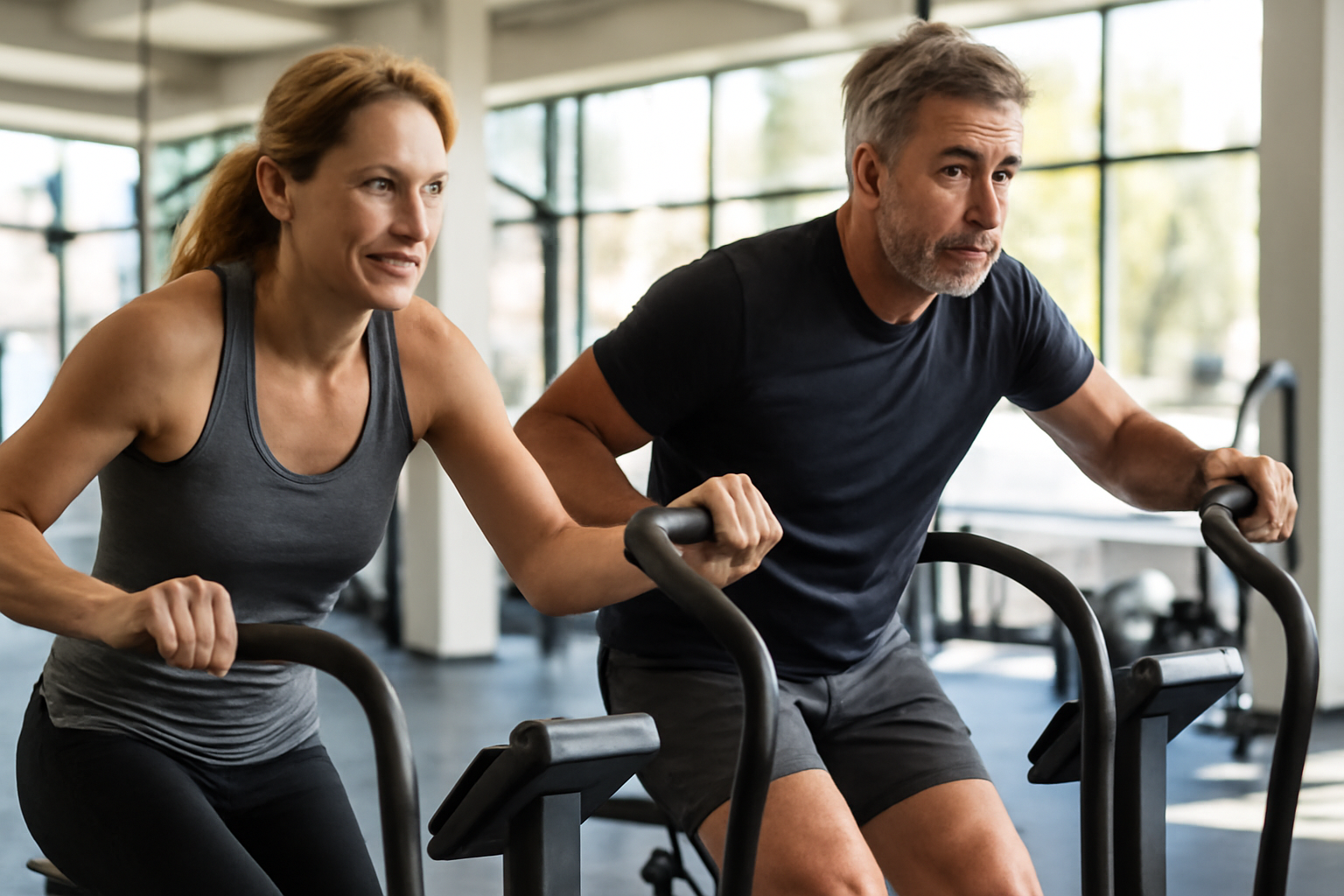
High-intensity interval training can be one of the most powerful tools for cardiovascular health, fat loss, and metabolic function — but only when done safely and strategically for your age.
When Marcus, 47, told his cardiologist he wanted to lose 25 pounds and improve his energy levels, his doctor suggested he look into high-intensity interval training. Marcus had always assumed HIIT was for college athletes and competitive CrossFitters — not a middle-aged accountant with a stiff lower back. But within three months of following a modified HIIT program, his resting heart rate dropped, he lost 18 pounds, and his blood pressure improved enough that his physician began discussing a possible medication reduction.
Stories like Marcus’s are increasingly common — and increasingly supported by science. According to the American College of Sports Medicine, HIIT is now one of the most researched exercise modalities in the world, with evidence supporting its benefits for adults across a wide age range. Yet many people over 40 avoid it entirely, either because they think it’s too intense for their bodies or because they’ve seen scary videos of extreme workouts that bear little resemblance to what most clinicians actually recommend.
In this guide, you’ll learn exactly what HIIT is, why it works especially well for adults in midlife and beyond, how to start safely, and what warning signs mean you should slow down or consult your doctor first.
What Is HIIT, and Why Does It Matter After 40?
High-intensity interval training — commonly called HIIT — is a form of cardiovascular exercise that alternates between short bursts of intense effort and recovery periods of lower-intensity movement or rest. A typical HIIT session might look like 30 seconds of fast cycling followed by 90 seconds of slow pedaling, repeated 8 to 10 times.
The core mechanism is simple: pushing your heart rate into a higher zone, then allowing partial recovery, then pushing again. This cyclical stress-and-recover pattern triggers a cascade of physiological adaptations that steady-state cardio simply cannot replicate in the same amount of time.
Why does this matter specifically after 40? Because that’s when several key biological shifts begin accelerating. Starting in your late 30s and early 40s, the body begins losing muscle mass at roughly 3 to 8 percent per decade, according to research published in the Journal of Cachexia, Sarcopenia and Muscle. Metabolic rate slows. Insulin sensitivity decreases. Cardiovascular efficiency declines. HIIT directly targets all of these changes.
A landmark meta-analysis published in the British Journal of Sports Medicine found that HIIT produced significantly greater improvements in cardiorespiratory fitness — measured as VO2 max — compared to moderate-intensity continuous training, even when total exercise time was shorter. For time-pressed adults managing careers, families, and health appointments, that efficiency matters enormously.
HIIT is not a single, fixed routine. It includes everything from treadmill sprint intervals to cycling, swimming, bodyweight circuits, rowing, and low-impact modifications designed specifically for people with joint concerns. The key principle is intensity relative to your own capacity — not someone else’s.
The Real Benefits of HIIT for Adults Over 40
The research on HIIT’s benefits for midlife adults is extensive and growing. Clinical evidence supports meaningful improvements across multiple health domains that are especially relevant to this age group.
Cardiovascular health: The American Heart Association has recognized HIIT as an effective strategy for improving cardiovascular function in adults with and without heart disease. Research suggests it improves arterial flexibility, reduces resting blood pressure, and enhances cardiac output.
Metabolic function and blood sugar regulation: According to the American Diabetes Association, physical activity that elevates heart rate significantly — as HIIT does — improves insulin sensitivity and glucose uptake in muscle cells. A 2023 clinical trial in Diabetes Care found that adults with prediabetes who completed 12 weeks of HIIT showed greater reductions in fasting blood glucose compared to the moderate-exercise control group.
Fat loss and body composition: HIIT stimulates excess post-exercise oxygen consumption (EPOC) — sometimes called the "afterburn effect" — where your body continues burning calories at an elevated rate for hours after the workout ends. Studies reviewed by the NIH indicate HIIT is particularly effective at reducing visceral fat, the metabolically dangerous fat stored around internal organs that tends to accumulate in adults over 40.
Hormonal benefits: HIIT has been shown to stimulate the release of human growth hormone (HGH) and testosterone, both of which decline naturally with age. These hormonal responses support muscle preservation, recovery, and energy levels.
Cognitive health: Research from Johns Hopkins Medicine suggests that high-intensity aerobic exercise promotes the production of brain-derived neurotrophic factor (BDNF), a protein that supports memory, focus, and long-term cognitive health — a significant consideration given that cognitive decline risk increases with age.
Time efficiency: Most effective HIIT sessions last 20 to 30 minutes, including warm-up and cool-down. For adults who struggle to find 60-minute workout windows, this is a practical advantage that translates directly into higher adherence rates.
Understanding Your Body: What Changes After 40
Before diving into a HIIT program, it’s important to understand the physiological realities of exercising in midlife. These are not reasons to avoid HIIT — they are reasons to approach it intelligently.
Longer recovery time: Muscle recovery takes more time after 40 due to reduced levels of anabolic hormones and slower protein synthesis. What a 25-year-old might recover from in 24 hours may take you 48 to 72 hours. This is completely normal, and your program should reflect it.
Joint considerations: Cartilage thins with age, and the risk of overuse injuries increases. High-impact HIIT modalities — like jump squats or box jumps — may need to be swapped for low-impact alternatives such as cycling, elliptical intervals, or swimming sprints. This doesn’t reduce the cardiovascular benefit; it protects your joints from cumulative damage.
Heart rate response: Maximum heart rate naturally declines with age. The commonly used formula estimates maximum heart rate as 220 minus your age — so a 50-year-old’s estimated maximum is around 170 beats per minute. HIIT "high-intensity" zones for most adults over 40 typically target 80 to 90 percent of that estimated maximum, not 100 percent. Training at appropriate zones reduces cardiac risk while still delivering the training stimulus.
Connective tissue vulnerability: Tendons and ligaments become less elastic after 40, making a thorough warm-up non-negotiable. Research from the Mayo Clinic suggests at least 5 to 10 minutes of progressive warm-up significantly reduces injury risk during high-intensity exercise in older adults.
This variation from person to person is real — someone who has been exercising consistently for 20 years will have a very different baseline than someone returning to exercise after a decade away. Always calibrate your effort to your own current fitness level, not an idealized benchmark.
How to Start HIIT Safely: A Step-by-Step Approach
Most physicians recommend getting medical clearance before starting a new high-intensity exercise program, especially if you are over 40, have a chronic condition, or have been sedentary for an extended period. The Physical Activity Readiness Questionnaire (PAR-Q), widely used by clinicians and certified trainers, can help identify any red flags that need evaluation first.
Once cleared, here’s how to begin safely:
Start with a 2:1 recovery ratio. For every 30 seconds of high-intensity effort, allow 60 seconds of easy movement or rest. As your fitness improves over 4 to 6 weeks, you can gradually shift toward a 1:1 or even 1:2 work-to-rest ratio.
Choose joint-friendly modalities first. Cycling, rowing, swimming, or using an elliptical machine places significantly less impact on hips, knees, and ankles than running or plyometric exercises. These are excellent starting points and can remain your primary HIIT tools indefinitely.
Limit HIIT to 2 to 3 sessions per week. The NIH and most sports medicine specialists recommend that adults over 40 allow at least 48 hours between HIIT sessions for adequate recovery. More is not better — overtraining is a real risk that can lead to injury, immune suppression, and elevated cortisol levels.
Track your perceived exertion. On a scale of 1 to 10, your high-intensity intervals should feel like a 7 to 8 — hard, but not a sprint where you can’t speak. Your recovery periods should drop back to a 3 to 4.
Prioritize the warm-up and cool-down. A 5-to-10-minute dynamic warm-up (leg swings, hip circles, arm rotations, light marching) prepares your cardiovascular system and connective tissue. A 5-minute cool-down with light walking and static stretching supports recovery and reduces next-day soreness.
For additional guidance on building a complete movement practice, our guide on Flexibility & Mobility Training for Adults Over 40 covers essential warm-up and recovery strategies that pair perfectly with a HIIT program.
Sample HIIT Workouts Designed for Adults Over 40
These sample formats are designed to be adapted to your fitness level. They are not prescriptions — always work with a certified trainer or your physician to personalize a plan.
Beginner — Low-Impact Bike Intervals (20 minutes total):
- 5-minute easy warm-up at comfortable pace
- 8 rounds: 30 seconds moderate-hard effort, 90 seconds easy pedaling
- 5-minute cool-down at gentle pace
Intermediate — Elliptical Intervals (25 minutes total):
- 5-minute progressive warm-up
- 10 rounds: 40 seconds high resistance/fast pace, 60 seconds low resistance recovery
- 5-minute cool-down with slow walking
Advanced — Bodyweight Circuit (30 minutes total):
- 8-minute warm-up including dynamic mobility work
- 4 rounds of: 40 seconds each of squat to press, modified burpees (no jump), alternating reverse lunges, mountain climbers at controlled pace — with 90 seconds rest between rounds
- 7-minute cool-down with stretching
Pair these sessions with the strength and cardio foundations described in our articles on Strength Training After 40 and Cardio After 40 for a comprehensive, well-rounded weekly fitness routine.
Living With a HIIT Routine: Recovery, Nutrition, and Consistency
The long-term success of any HIIT program depends less on the workouts themselves and more on what happens between sessions. Recovery is where adaptation actually occurs.
Sleep: The NIH identifies sleep as the single most important recovery tool. During deep sleep, your body releases growth hormone, repairs muscle tissue, and consolidates neurological patterns. Adults over 40 should aim for 7 to 9 hours of quality sleep, particularly on days following HIIT sessions.
Protein intake: Research published in the American Journal of Clinical Nutrition suggests that adults over 40 require more dietary protein than younger adults to achieve the same muscle protein synthesis response. Most sports dietitians recommend 1.2 to 1.6 grams of protein per kilogram of body weight for active older adults, though your specific needs should be discussed with a registered dietitian or your physician.
Hydration: Dehydration impairs performance, increases injury risk, and slows recovery. Clinical guidelines from the American College of Sports Medicine recommend consuming fluids before, during, and after exercise, with amounts varying based on sweat rate, temperature, and session intensity.
Active recovery days: On non-HIIT days, light movement — walking, gentle yoga, or foam rolling — promotes circulation and reduces delayed onset muscle soreness (DOMS) without adding training stress. This is distinct from complete rest and generally produces better recovery outcomes.
Progressive overload: To continue improving, your HIIT program must become progressively more challenging over time — whether through longer intervals, shorter rest periods, more rounds, or greater resistance. This principle of progressive overload is what drives continued adaptation and prevents plateaus.
When to Call Your Doctor or Seek Emergency Care
HIIT is safe for most adults over 40 when approached appropriately — but certain signs should prompt you to stop immediately and seek medical evaluation.
Stop and call 911 immediately if you experience:
- Chest pain, pressure, or tightness during or after exercise
- Shortness of breath that is disproportionate to your effort level
- Dizziness, lightheadedness, or sudden loss of balance
- Heart palpitations that feel irregular or sustained
- Sudden severe headache during exercise
- Fainting or near-fainting episodes
Schedule a physician visit if you notice:
- Persistent joint pain in the knees, hips, or ankles that lasts more than 72 hours after a session
- Unusual fatigue that doesn’t resolve with rest after 3 to 5 days
- Resting heart rate that is consistently elevated above your normal baseline
- Sleep disturbances or mood changes that worsen after starting HIIT
- Any new symptoms that concern you, even if they seem unrelated to exercise
The American Heart Association recommends that adults with known heart disease, uncontrolled hypertension, or recent cardiac events undergo a medically supervised stress test before beginning high-intensity training. This is a critical step — not an optional one.
Frequently Asked Questions About HIIT After 40
Is HIIT safe if I have high blood pressure?
Clinical evidence suggests that HIIT can actually help lower blood pressure over time, but it must be approached carefully. Extremely intense intervals can cause acute spikes in blood pressure during exertion. Most cardiologists recommend starting with moderate-intensity intervals and getting clearance from your physician before beginning. Never start HIIT for hypertension management without medical supervision.
How is HIIT different from regular cardio for someone my age?
Traditional steady-state cardio — like walking or jogging at a consistent pace — primarily trains your aerobic energy system. HIIT additionally recruits anaerobic pathways, preserves and builds muscle mass more effectively, and produces greater improvements in VO2 max per unit of time. Both have their place, and most fitness experts recommend combining them rather than choosing one exclusively.
How long before I see results from HIIT?
Research suggests that measurable cardiovascular improvements can begin appearing within 2 to 4 weeks of consistent HIIT training. Visible changes in body composition typically emerge over 8 to 12 weeks with consistent effort and appropriate nutrition. This varies from person to person depending on starting fitness, sleep quality, diet, and genetics.
Can I do HIIT if I have knee pain or arthritis?
Many people with mild to moderate knee concerns can participate in low-impact HIIT using cycling, swimming, or seated rowing. High-impact modalities involving jumping or running are generally not recommended without physician and physical therapist clearance. Always consult your orthopedist or sports medicine physician before starting HIIT if you have an active joint condition.
Do I need a gym or special equipment to do HIIT?
No. Effective HIIT can be performed entirely with bodyweight at home. Exercises like modified burpees, step-touches, marching in place at high intensity, stair climbing intervals, or resistance band circuits require no gym membership or equipment. The essential ingredient is effort — not equipment.
Conclusion
HIIT after 40 isn’t about chasing the workouts you saw on social media or competing with a younger version of yourself. It’s about using one of the most well-researched, time-efficient exercise strategies available to protect your heart, preserve your muscle, regulate your metabolism, and feel genuinely better in your body.
The science is clear: with appropriate modifications, proper warm-up, adequate recovery, and physician clearance when needed, high-intensity interval training can be both safe and profoundly effective for adults in midlife and beyond.
Start where you are. Progress steadily. Listen to your body. And always keep your healthcare provider in the loop as your program evolves. Your best years of fitness may very well be ahead of you.
Medical Disclaimer: This article is for informational and educational purposes only. It does not constitute medical advice, diagnosis, or treatment. Always consult your physician or a qualified healthcare provider before making changes to your health routine or treatment plan.
Medically reviewed by our editorial health team. Content follows evidence-based standards aligned with CDC and NIH guidelines.