A low-impact practice backed by clinical research — and one of the smartest fitness choices you can make after 40.
Introduction
Margaret, 63, had been living with mild osteoarthritis and a lingering fear of falling after her neighbor broke a hip last winter. Her doctor had recommended staying active, but high-impact exercise felt risky and intimidating. A friend suggested she try tai chi at the local community center — and within eight weeks, Margaret noticed something remarkable: she felt steadier on her feet, her knees ached less, and she was sleeping better than she had in years.
Margaret’s experience isn’t unusual. According to the CDC, falls are the leading cause of injury-related death among adults 65 and older, with nearly 36 million falls reported annually in the United States. But the problem begins long before 65 — balance decline, joint stiffness, and muscle loss start as early as your 40s.
Tai chi — a centuries-old Chinese martial art practiced as a slow, flowing sequence of movements — has emerged as one of the most evidence-supported exercises for adults in midlife and beyond. In this guide, you’ll learn what tai chi actually is, what the science says about its benefits, how to get started safely, and what to discuss with your doctor before beginning.
What Is Tai Chi?
Tai chi (pronounced tie-chee) is a mind-body practice rooted in traditional Chinese martial arts. It consists of a series of slow, deliberate movements performed in a continuous, flowing sequence, coordinated with controlled breathing and mental focus. Unlike most martial arts, tai chi is practiced gently — without forceful kicks or punches — making it accessible to people of virtually all fitness levels.
There are several styles of tai chi, including Yang, Wu, and Chen. The Yang style is the most widely practiced in the United States and is often recommended for beginners and older adults because of its gentle, expansive movements.
In the US, tai chi has grown significantly in popularity as a therapeutic exercise. The National Center for Complementary and Integrative Health (NCCIH), a division of the NIH, recognizes tai chi as a practice with meaningful clinical evidence supporting its use for balance, pain management, and cardiovascular health. Research suggests that an estimated 3.6 million Americans practice tai chi, with numbers continuing to rise as its evidence base grows.
What makes tai chi particularly valuable for adults over 40 is what it trains simultaneously: muscular strength, postural alignment, proprioception (your body’s ability to sense its position in space), breathing control, and focused attention. Very few exercises work all of these systems at once.
Signs Your Body May Benefit From Tai Chi
Not every fitness gap announces itself loudly. Many adults in their 40s, 50s, and 60s experience subtle changes that tai chi is particularly well-suited to address. Clinical evidence suggests you may benefit from starting a tai chi practice if you notice any of the following:
Early signs that tai chi may help:
- Occasional stumbling or feeling unsteady on uneven surfaces
- Stiffness in joints, especially in the morning or after sitting
- Mild anxiety or difficulty managing daily stress
- Trouble concentrating or feeling mentally scattered
- Low energy despite adequate sleep
- General muscle weakness or poor posture
More significant signals worth discussing with your doctor:
- A recent fall or near-fall experience
- A diagnosis of osteoarthritis, osteoporosis, hypertension, or Parkinson’s disease
- Chronic low back pain or knee pain
- Elevated cardiovascular risk factors
- Post-surgical recovery where low-impact movement is recommended
A 2021 meta-analysis published in JAMA Internal Medicine found that tai chi significantly reduced the rate of falls among older adults — by as much as 20 to 45 percent — compared to control groups. This figure alone makes it one of the most clinically compelling options in fall prevention.
Health Benefits: What the Research Shows
Tai chi isn’t just a wellness trend. It has been studied in hundreds of clinical trials, and its benefits are well-documented for adults in the 40-to-70 age range. Here’s what the evidence actually shows:
Balance and Fall Prevention
This is tai chi’s most robustly documented benefit. The CDC’s STEADI (Stopping Elderly Accidents, Deaths & Injuries) program includes tai chi as a recommended community-based fall prevention intervention. Research suggests that consistent practice — typically 3 or more sessions per week — produces measurable improvements in dynamic balance within 8 to 12 weeks.
Joint Health and Arthritis Relief
A landmark randomized controlled trial from Tufts Medical Center, published in the New England Journal of Medicine, found that patients with knee osteoarthritis who practiced tai chi twice weekly reported significantly less pain and better physical function compared to those in a stretching control group. Clinical evidence indicates that the slow, weight-shifting movements strengthen the muscles around joints without compressing cartilage.
Cardiovascular Health
Research suggests tai chi can modestly lower both systolic and diastolic blood pressure, particularly in adults with pre-hypertension or stage 1 hypertension. A systematic review published in the Journal of Human Hypertension found an average reduction of approximately 7 mmHg in systolic blood pressure among participants who practiced regularly.
Mental Health and Cognitive Function
The NIH’s National Institute on Aging notes that mind-body practices like tai chi may support cognitive health as we age. Clinical studies have found improvements in memory, processing speed, and executive function in adults who practice tai chi compared to sedentary controls — likely due to the dual demand of coordinating movement with focused attention.
Sleep Quality
Several clinical trials have found that tai chi practice improves sleep quality in adults with insomnia, including a study from UCLA that showed significant reductions in sleep disturbance scores among older adults after 25 weeks of tai chi practice.
Muscle Strength and Bone Health
While tai chi is low-impact, it is not low-effort. The slow, controlled movements engage core muscles, hip stabilizers, and leg musculature in ways that translate to functional strength. If you’re interested in bone density, you may want to explore how weight-bearing exercise supports bone health after 40, which can complement a tai chi routine.
Getting Started: What to Expect
One of tai chi’s greatest advantages is its accessibility. You don’t need special equipment, an athletic background, or a high fitness baseline to begin. Here’s what most physicians and exercise physiologists recommend for adults starting out:
Talk to your doctor first. This is especially important if you have cardiovascular conditions, severe joint problems, or a history of falls. Most adults can practice tai chi safely, but your provider can offer personalized guidance. This varies from person to person based on individual health history.
Start with a class, not a video. Beginners benefit significantly from in-person instruction. A certified tai chi instructor can observe your posture, correct alignment, and ensure you’re moving safely. Look for classes offered at community centers, YMCAs, hospitals, or senior wellness programs. The Arthritis Foundation and the American College of Sports Medicine both certify tai chi instructors for clinical populations.
Expect a learning curve. Most beginners find the first 4 to 6 sessions mildly frustrating — tai chi requires memorizing sequences while focusing on breath and balance simultaneously. This challenge is actually part of the benefit. Stick with it. Most people report noticeable improvement in coordination and confidence by weeks 3 to 4.
Frequency and duration: Research suggests that practicing 2 to 5 times per week for 30 to 60 minutes per session produces the most consistent health outcomes. Even two sessions per week have shown measurable balance improvements in clinical trials.
What to wear: Loose, comfortable clothing and flat-soled shoes or bare feet. Avoid cushioned running shoes, which can interfere with the ground feedback that supports balance training.
If you’re already practicing other forms of movement, tai chi pairs well with complementary disciplines. Adults who practice yoga may find familiar elements in tai chi’s emphasis on breath and body awareness — you can explore how yoga supports fitness after 40 as a companion practice.
Living With Tai Chi: Daily Practice Tips
Sustainability is everything. The most effective exercise program is the one you actually do consistently. Here’s how to build tai chi into your life for the long term:
Create a consistent time and space. Most experienced practitioners suggest morning sessions — before the day’s distractions accumulate — though any consistent time works. All you need is a small, flat surface roughly 6 by 6 feet.
Use the “5-minute rule.” On days when motivation is low, commit to just five minutes of practice. Most people find that once they start moving, they continue naturally. Clinical evidence on habit formation supports this low-threshold approach.
Practice outside when possible. Many tai chi traditions emphasize outdoor practice, and research on green exercise suggests that outdoor movement adds psychological benefits beyond the physical. A park, backyard, or even a balcony works well.
Combine tai chi with other complementary fitness approaches. Tai chi builds balance and flexibility, but it may not fully address all components of fitness. Many physicians recommend pairing it with resistance training for muscle maintenance. Resistance band training after 40 is a low-impact complement that rounds out a well-balanced fitness plan.
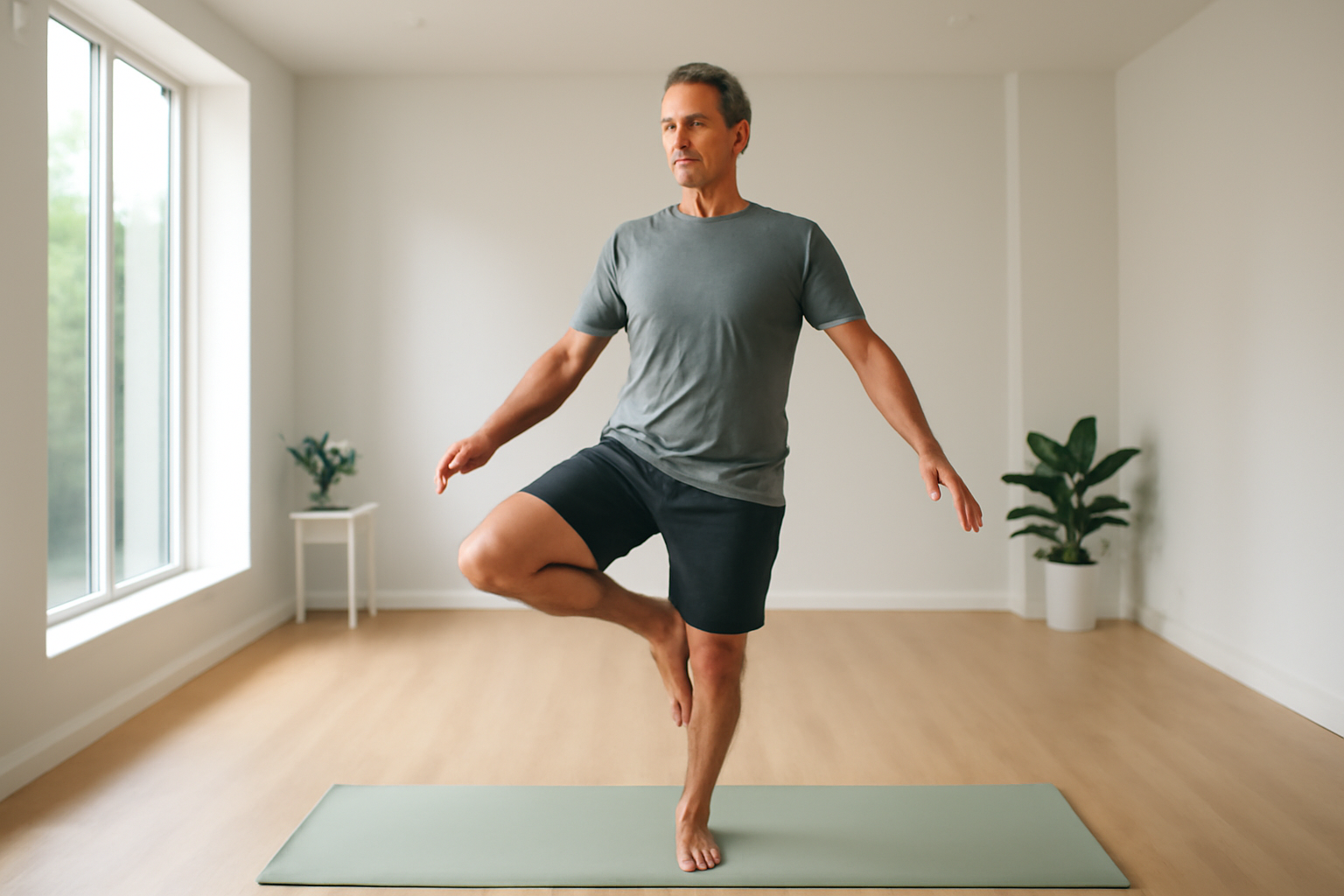
Track your progress. Simple markers like how long you can stand on one foot (a clinical balance test) or how easily you rise from a chair can help you notice improvement over time. Many practitioners also keep a brief journal noting their energy, mood, and sleep quality.
When to Call Your Doctor: Red Flags and Important Signals
Tai chi is among the safest forms of exercise available, but like any physical activity, it’s important to recognize when something may need medical attention.
Contact your doctor promptly if you experience:
- New or worsening joint pain during or after practice
- Dizziness or lightheadedness during movement
- Unusual shortness of breath during low-intensity sessions
- Heart palpitations or chest discomfort of any kind
- A fall during practice, even a minor one
Seek emergency care immediately if you experience:
- Chest pain, pressure, or tightness during or after exercise
- Sudden severe dizziness or loss of consciousness
- Severe, sudden headache unlike any you’ve had before
- Sudden numbness or weakness on one side of the body
- Difficulty speaking or understanding speech
These symptoms may indicate a cardiac or neurological event that requires immediate evaluation — do not wait to see if they resolve on their own.
What to bring to your next doctor’s visit: Tell your provider you’re practicing tai chi, how often, and for how long. Mention any balance challenges, joint concerns, or medications that affect blood pressure or dizziness, as these may be relevant to how your body responds to the practice.
Frequently Asked Questions
Is tai chi enough exercise on its own for adults over 40?
Tai chi provides meaningful benefits for balance, flexibility, and mental wellness, and it can count toward your weekly physical activity goals. However, most physicians and exercise physiologists recommend supplementing it with some form of resistance training to maintain muscle mass and bone density — both of which decline with age. Think of tai chi as an excellent foundation, not a complete fitness solution on its own.
How long before I see results from tai chi?
Clinical evidence suggests most people notice improvements in balance, mood, and sleep quality within 6 to 8 weeks of consistent practice (2 to 3 times per week). Joint pain reduction and cardiovascular benefits typically require 12 or more weeks of regular practice. Individual results vary significantly based on starting health status and consistency.
Can I practice tai chi if I have knee or hip problems?
Many people with mild to moderate knee and hip arthritis practice tai chi safely and report symptom relief. However, some tai chi postures involve deep knee bends or wide stances that may need to be modified. Always inform your instructor about your joint concerns — a qualified teacher can adjust movements to accommodate your specific needs. Check with your orthopedist or physiatrist if you have advanced arthritis or a recent joint replacement.
Is tai chi good for anxiety and depression?
Research suggests yes. A systematic review published in JAMA Psychiatry found mind-body exercises including tai chi produced moderate improvements in anxiety and depression symptoms in adults. The combination of slow movement, controlled breathing, and present-moment attention activates the parasympathetic nervous system, which counteracts the stress response. That said, tai chi is a complement to — not a replacement for — professional mental health treatment when clinically indicated.
Do I need to have any martial arts background to learn tai chi?
Absolutely not. Most beginners have no martial arts experience whatsoever. Tai chi as practiced for health in the US has been adapted specifically for fitness and wellness purposes and does not require athletic ability, flexibility, or prior training. The vast majority of people who practice tai chi for health purposes learn it from scratch as adults.
Conclusion
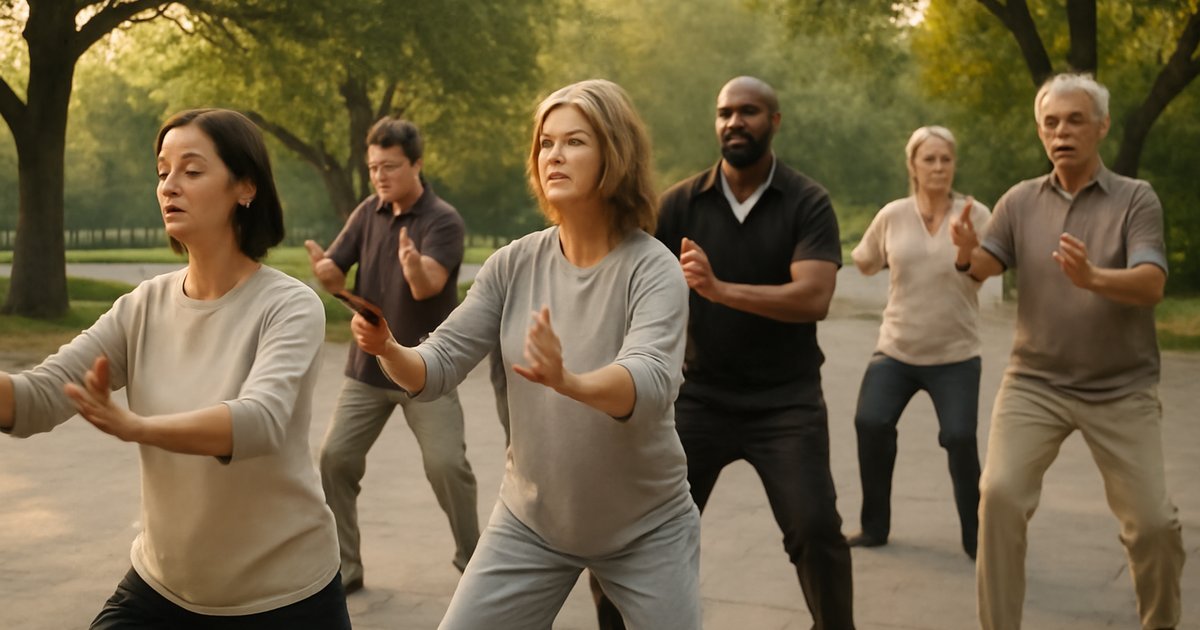
Tai chi may look simple from the outside — a group of people moving slowly in a park. But the science behind those gentle movements is remarkably robust. For adults between 40 and 70, tai chi offers something rare: a single practice that simultaneously addresses balance, joint health, cardiovascular function, stress, sleep, and cognitive sharpness.
You don’t need to be athletic, flexible, or pain-free to start. You just need to begin. Talk to your doctor about whether tai chi is appropriate for your specific health situation, find a qualified instructor near you, and commit to a few weeks of consistent practice.
The research is clear. The risk is minimal. And for many adults, like Margaret, the results can be genuinely life-changing — one slow, deliberate step at a time.
Medical Disclaimer: This article is for informational and educational purposes only. It does not constitute medical advice, diagnosis, or treatment. Always consult your physician or a qualified healthcare provider before making changes to your health routine or treatment plan.
Medically reviewed by our editorial health team. Content follows evidence-based standards aligned with CDC and NIH guidelines.