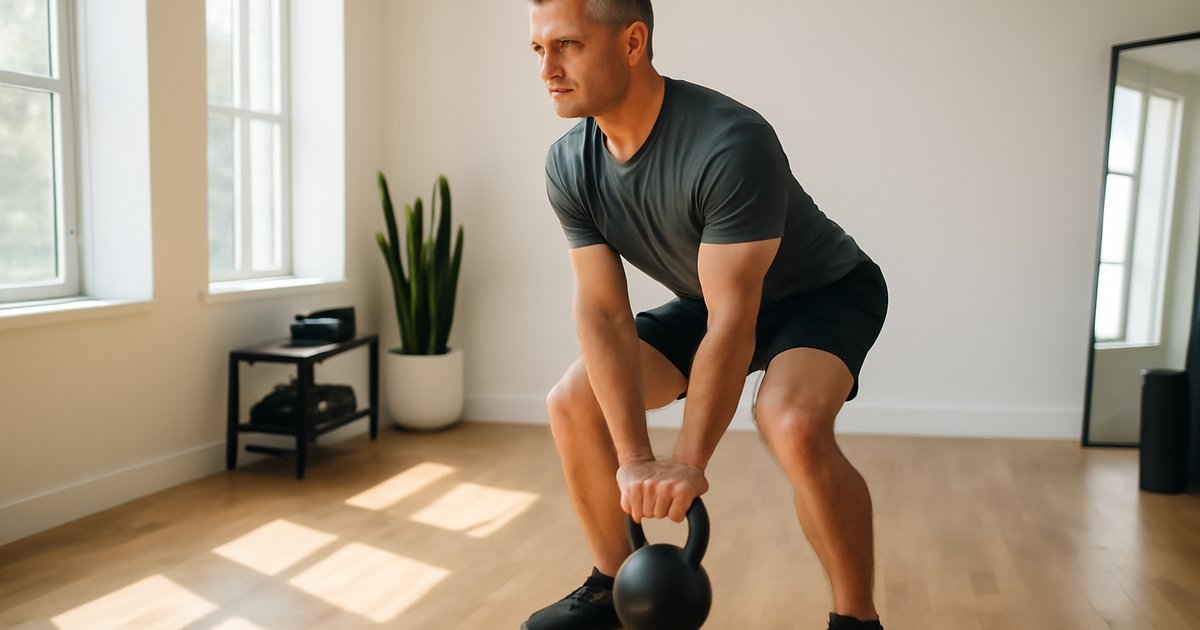
Kettlebell Training After 40: Build Strength and Burn Fat
One piece of equipment, dozens of movements — and the science to back it up for adults over 40.
Why Kettlebells Deserve a Place in Your Fitness Routine
Mark, 52, had spent years running on a treadmill and lifting machines at his local gym. He was doing everything "right" — yet he kept gaining weight around his midsection, his back ached after long workdays, and he never seemed to build the functional strength he actually needed in daily life.
A physical therapist suggested he try kettlebell training. Within twelve weeks, his posture improved, his lower back pain decreased significantly, and he had lost eight pounds without changing his diet dramatically. "I wish I had started this ten years ago," he said.
According to the CDC, fewer than 25% of American adults meet both aerobic and muscle-strengthening guidelines — and that gap widens significantly after age 40. Kettlebell training is one of the few exercise modalities that targets both in a single session.
In this guide, you’ll learn exactly what kettlebell training is, why it’s particularly well-suited for adults aged 30 to 70, what the research says about its benefits, and how to get started safely — even if you’ve never picked one up before.
What Is Kettlebell Training?
A kettlebell is a cast-iron or steel weight shaped like a cannonball with a flat base and a thick handle on top. Unlike dumbbells, the weight hangs below the handle, which shifts your center of gravity and forces your stabilizing muscles — the smaller, deeper muscles around your joints — to work constantly throughout every movement.
Kettlebell training uses dynamic, ballistic, and grinding movements that blend strength, cardiovascular conditioning, and mobility into a single workout. Common exercises include the kettlebell swing, goblet squat, Turkish get-up, and clean and press.
According to research published in the Journal of Strength and Conditioning Research, kettlebell training can simultaneously improve muscular strength, aerobic capacity, and dynamic balance — three physical qualities that decline significantly with age if left untrained.
In the United States, kettlebell use has grown steadily since the early 2000s and is now a standard tool in physical therapy clinics, CrossFit boxes, and mainstream gyms alike. It’s no longer a niche modality — it’s a clinically supported training approach for all fitness levels.
Signs Your Current Routine May Not Be Enough
You may benefit from adding kettlebell training to your program if you notice several of the following patterns:
Early warning signs that your fitness foundation needs work:
- Chronic lower back or hip tightness after sitting for long periods
- Difficulty carrying groceries, climbing stairs, or lifting objects from the floor
- Plateau in weight or body composition despite consistent cardio
- Loss of grip strength — dropping things more easily than before
- Poor posture that worsens throughout the day
- Feeling winded during moderate physical tasks
More advanced signs of deconditioning:
- Balance issues when standing on one leg or stepping over objects
- Joint pain during traditional weightlifting exercises
- Significant loss of muscle tone in legs, glutes, and core
- Fatigue after brief physical activity that used to feel effortless
A 2021 meta-analysis from the International Journal of Environmental Research and Public Health found that adults over 40 who engage in functional resistance training — which kettlebells exemplify — show measurable improvements in mobility, strength, and cardiovascular health markers in as little as eight weeks.
Why Adults Over 40 Respond So Well to Kettlebell Training
After age 40, the body undergoes several physiological changes that make kettlebell training especially valuable. Understanding these changes can help you train smarter rather than harder.
Sarcopenia — muscle loss with age
The NIH estimates that adults lose 3–8% of muscle mass per decade after age 30, with losses accelerating after 60. Resistance training, including kettlebell work, is the single most effective intervention to slow and partially reverse this process.
Hormonal shifts
Both men and women experience declining testosterone and estrogen after 40, which affects fat distribution and recovery time. Compound movements like kettlebell swings and cleans stimulate a favorable hormonal response — including a transient release of growth hormone — more effectively than isolated machine exercises.
Joint health considerations
Many adults over 40 find traditional barbell lifting aggravates old injuries. Kettlebells allow a more natural arc of movement, reducing shear forces on the knee and lower back while still loading the muscles effectively. This makes them a preferred tool in many physical therapy and orthopedic rehabilitation settings.
Cardiovascular efficiency
Research published in the Journal of Human Kinetics found that a 12-minute kettlebell workout elevated heart rate to approximately 87% of maximum — equivalent to running at a moderate pace. This means kettlebell training can provide meaningful cardiovascular conditioning without the joint impact of running, which is particularly important for adults managing knee or hip concerns.
If you’re already doing some resistance work and want to compare how kettlebells fit alongside other modalities, you might explore our guide on Dumbbell Workouts After 40: Build Strength Safely and our overview of Exercise for Bone Health After 40: Build Density & Strength for additional context.
Diagnosis: Understanding Your Fitness Starting Point
Before starting any new training program, and especially one that involves ballistic movements like kettlebell swings, it’s wise to assess where you currently stand physically. This isn’t about passing or failing — it’s about training safely and effectively.
What your doctor may evaluate before you begin:
- Blood pressure and resting heart rate
- Bone density screening if you’re over 50 or postmenopausal
- History of joint injuries, herniated discs, or cardiovascular conditions
- Balance and gait assessment if fall risk is a concern
Self-assessment basics:
- Can you perform a bodyweight squat with good form — knees tracking over toes, chest upright, hips below parallel?
- Can you perform a hip hinge — pushing hips back while keeping your spine neutral — without rounding your lower back?
- Can you hold a plank for 20–30 seconds without compensating?
If any of these movements are uncomfortable or feel unstable, working with a certified personal trainer or physical therapist for your first few sessions is a reasonable and worthwhile investment. The American Council on Exercise and the National Strength and Conditioning Association both certify trainers in kettlebell instruction specifically.
Most physicians will support kettlebell training for adults over 40 when it begins at an appropriate weight — typically 8–12 kg (18–26 lbs) for women and 12–16 kg (26–35 lbs) for men new to the practice — and progresses gradually.
Kettlebell Training: Exercises, Plans, and Evidence
Kettlebell training is built around a small set of foundational movements that can be combined in hundreds of ways. Here’s what clinical and performance research supports most strongly for adults over 40:
The Kettlebell Swing
The swing is the cornerstone movement of kettlebell training. It trains the posterior chain — glutes, hamstrings, lower back — through a powerful hip hinge. A 2012 study in the Journal of Strength and Conditioning Research found that consistent swing training significantly reduced chronic lower back pain in participants.
It is not a squat — it’s a hinge. The power comes from driving your hips forward explosively, not from lifting with your arms or squatting down.
The Goblet Squat
Holding a kettlebell at chest height counterbalances your weight, making it easier to squat deeper with better form. Research suggests this is one of the safest and most effective squat variations for adults who have knee or hip limitations.
The Turkish Get-Up
This full-body movement takes you from lying on the floor to standing upright while holding a kettlebell overhead. It builds shoulder stability, hip mobility, and core strength simultaneously — and clinical evidence indicates it can improve functional movement patterns relevant to fall prevention in older adults.
The Clean and Press
A two-phase movement that combines a hip-powered pull to rack the bell at shoulder height, followed by an overhead press. It trains full-body coordination, grip strength, and overhead stability — all of which tend to decline significantly after 40.
Sample Weekly Structure for Adults Over 40
Research supports three training sessions per week with at least one full rest day between sessions. This frequency allows adequate recovery while producing consistent adaptation:
- Day 1: Swings, goblet squats, core work — 30–40 minutes
- Day 2: Rest or light walking, stretching
- Day 3: Turkish get-ups, rows, single-leg deadlifts — 30–40 minutes
- Day 4: Rest or low-impact activity
- Day 5: Full-body circuit combining swings, cleans, and presses — 30–45 minutes
- Days 6–7: Active recovery, mobility work, or gentle walking
For complementary mobility work to support your kettlebell practice, our guide on Stretching After 40: Routines for Flexibility & Pain Relief offers a structured approach to maintaining the range of motion kettlebell training demands.
Living With Your Program: Day-to-Day Management and Prevention
Consistency matters far more than intensity. A moderate kettlebell routine practiced three times a week, year-round, will produce dramatically better outcomes than aggressive bursts followed by long breaks.
Practical strategies that support long-term success:
- Prioritize warm-up: Spend 8–10 minutes on hip circles, thoracic rotations, and bodyweight hinges before picking up any weight. Cold tissue is more vulnerable to strain.
- Progress weight slowly: Add weight only when you can perform all reps of an exercise with clean, controlled technique. Most adults benefit from spending 4–6 weeks at each weight before progressing.
- Protect your hands: Kettlebell handles can cause callusing and tearing. Chalk, light gloves, or hand care routines help maintain training consistency.
- Track your sessions: A simple log of exercises, weights, and sets helps you recognize progress and signals when you may be overtraining or plateauing.
- Fuel appropriately: Protein intake is especially important after 40 to support muscle repair. Most clinical guidelines suggest 0.7–1 gram of protein per pound of bodyweight for active adults — discuss your specific needs with your physician or a registered dietitian.
Prevention benefits beyond the gym:
Regular kettlebell training has been associated in research with reductions in fasting blood glucose, improved lipid profiles, lower resting blood pressure, and better insulin sensitivity — all of which are meaningful preventive health factors for adults in the 40–70 age range.
When to Call Your Doctor or Seek Emergency Care
Kettlebell training is generally safe for healthy adults, but like any physical training, it carries risks that require medical attention in certain circumstances.
Contact your doctor before starting or continuing if you experience:
- New or worsening joint pain that persists for more than 48 hours after a session
- Sharp or radiating pain in the back, hip, or shoulder during or after exercise
- Unusual swelling in a joint following training
- Persistent dizziness or lightheadedness during workouts
- Numbness or tingling in the arms or legs during or after training
Seek emergency medical care immediately if you experience:
- Chest pain, pressure, or tightness during exercise
- Sudden shortness of breath that doesn’t resolve with rest
- Heart palpitations that feel rapid, irregular, or uncomfortable
- Sudden severe headache during exertion
- Loss of consciousness or near-fainting during a workout
These symptoms are not typical exercise discomfort — they require evaluation. Do not return to training until you’ve been cleared by a healthcare provider.
What to tell your doctor at your next visit:
Mention that you’re starting kettlebell training, describe the weight and volume you plan to use, and ask whether any existing conditions — including blood pressure, cardiovascular history, or joint issues — require modification to your program.
Frequently Asked Questions About Kettlebell Training After 40
Q: Is kettlebell training safe if I have lower back pain?
Research suggests that properly performed kettlebell swings can actually strengthen the muscles that support the lumbar spine and reduce chronic low back pain over time. However, if you have an active disc injury, herniation, or spinal stenosis, you should consult your physician or physical therapist before beginning. Technique matters enormously — poor form during swings or deadlifts can aggravate existing conditions.
Q: How heavy should my first kettlebell be?
Most fitness professionals recommend that women new to kettlebell training begin with an 8 kg (18 lb) bell and men with a 12 kg (26 lb) bell for most foundational movements. This varies by individual fitness level. When in doubt, go lighter and perfect your technique before adding load. This varies from person to person based on prior training experience and any existing physical limitations.
Q: Can kettlebell training help with weight loss after 40?
Clinical evidence indicates that kettlebell training burns a substantial number of calories — the American Council on Exercise estimates approximately 20 calories per minute during high-effort kettlebell circuits — while also building lean muscle that raises your resting metabolic rate. Combined with appropriate nutrition, it can meaningfully support body composition goals for adults over 40.
Q: How does kettlebell training compare to traditional weightlifting for older adults?
Both modalities build strength, but kettlebell training uniquely combines conditioning, mobility, and stability training in a single session. For adults with limited training time or those managing multiple fitness goals simultaneously, research suggests kettlebells offer a more efficient training stimulus. That said, both approaches have merit and many adults benefit from combining them.
Q: How long before I see results from kettlebell training?
Most adults report noticeable improvements in energy, posture, and daily functional strength within four to six weeks of consistent three-day-per-week training. Body composition changes — visible muscle tone and fat reduction — typically emerge at eight to twelve weeks, consistent with findings from most resistance training research in this age group.
A Realistic, Empowering Path Forward
Kettlebell training after 40 isn’t about training like you did at 25. It’s about training in a way that reflects where you are now — and builds toward where you want to be at 55, 65, or beyond.
The research is consistent: adults who maintain regular resistance training age better, manage chronic conditions more effectively, and maintain their independence longer. Kettlebells are one of the most practical, evidence-supported tools for making that happen — accessible, time-efficient, and adaptable to virtually any fitness level.
Start conservatively. Focus on technique over weight. Work with a qualified trainer if you’re new to the movements. And most importantly, keep showing up. The cumulative effect of consistent effort is what produces lasting change.
Talk with your physician about incorporating kettlebell training into your routine, especially if you’re managing any chronic conditions. This guide is a starting point — your healthcare team is your partner in making it work safely for you.
Medical Disclaimer: This article is for informational and educational purposes only. It does not constitute medical advice, diagnosis, or treatment. Always consult your physician or a qualified healthcare provider before making changes to your health routine or treatment plan.
Medically reviewed by our editorial health team. Content follows evidence-based standards aligned with CDC and NIH guidelines.