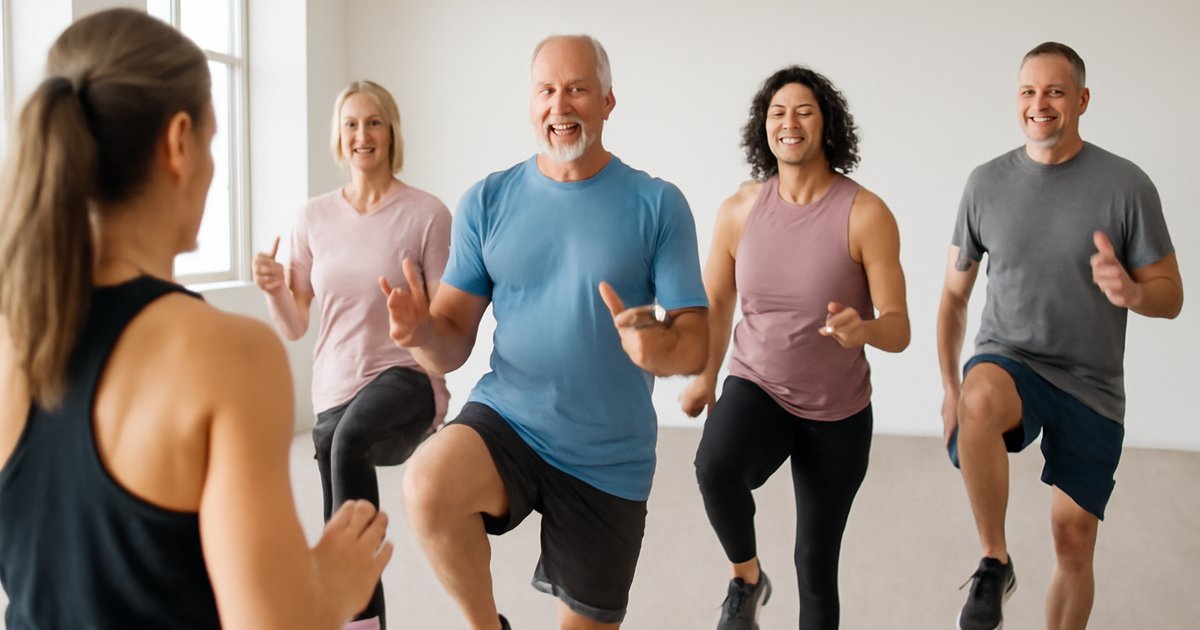
The social workout that could be the most powerful medicine you’re not taking yet.
Introduction
When Michael, 54, walked into his first group cycling class, he almost walked right back out. He hadn’t exercised consistently in years, his knees ached on stairs, and everyone around him looked like they knew exactly what they were doing. Six months later, he’s lost 22 pounds, his blood pressure has dropped significantly, and — perhaps most surprisingly — he says the best part of his week is Tuesday and Thursday mornings with his class.
Michael’s story isn’t unusual. According to the Physical Activity Guidelines for Americans, published by the U.S. Department of Health and Human Services, fewer than 25% of adults aged 50 and older meet the recommended weekly exercise targets. Yet research consistently shows that adults who exercise in group settings are significantly more likely to stick with their routines long-term.
If you’re over 40 and looking for a sustainable, effective way to get moving, group fitness classes may offer something solo workouts simply can’t: community, structure, accountability, and fun. In this guide, you’ll learn the science-backed benefits, how to choose the right class for your body and goals, and how to get started safely.
What Are Group Fitness Classes?
Group fitness classes are instructor-led exercise sessions conducted with multiple participants, typically in a gym, community center, studio, or online platform. They span an enormous range of formats — from high-energy cycling and dance cardio to gentler options like water aerobics, yoga, and chair-based strength training.
Unlike personal training or solo gym workouts, group classes offer a structured environment where a certified instructor guides every movement, cues proper form, and adjusts the pace. Most classes run between 45 and 60 minutes and are designed to accommodate a range of fitness levels through modifications.
According to the American College of Sports Medicine (ACSM), group fitness is one of the fastest-growing segments of the fitness industry, with millions of Americans participating weekly across formats including Zumba, Pilates, spinning, barre, boot camp, and aqua fitness. For adults in the 40-to-70 age range, this diversity of options is especially valuable — because no single class fits every body or health profile.
The key distinction that makes group fitness particularly powerful isn’t the exercise itself — it’s the psychological and social architecture around it. When you show up to a class, people notice. That accountability is clinically meaningful.
Health Benefits Backed by Science
The benefits of group fitness for adults over 40 extend well beyond burning calories. Research suggests that structured group exercise delivers advantages across physical, mental, and social dimensions of health — all of which become increasingly important as we age.
Cardiovascular and metabolic health: A landmark study published in the Journal of the American Osteopathic Association found that participants in group fitness classes reported significantly lower levels of stress and higher quality of life compared to those who exercised alone — even when total workout volume was similar. Cardiovascular classes, in particular, support heart health in ways consistent with AHA guidelines recommending 150 minutes of moderate aerobic activity per week.
- Improved cardiovascular endurance — regular aerobic group classes strengthen the heart muscle and improve circulation
- Better blood sugar regulation — consistent moderate exercise improves insulin sensitivity, which is especially critical for the 96 million American adults with prediabetes, per CDC data
- Increased muscle mass and bone density — strength-based classes help counteract the natural decline in muscle mass (sarcopenia) that accelerates after age 40
- Weight management support — group classes provide caloric expenditure alongside behavioral reinforcement that helps sustain healthy habits
Mental health benefits: The NIH has documented the well-established link between regular physical activity and reduced symptoms of depression and anxiety. Group exercise adds a social layer that amplifies these effects. Clinical evidence indicates that the sense of belonging and shared effort in group settings triggers oxytocin release and reduces cortisol — the primary stress hormone.
For those managing chronic stress, this dual physical-social intervention can be particularly impactful.
Adherence and consistency: Perhaps the most practically significant benefit is this — people simply show up more. A 2017 study in PLOS ONE found that individuals who exercised in group settings were more likely to maintain their routines over time compared to solo exercisers. For adults over 40 trying to build sustainable habits, this matters enormously.
Choosing the Right Class for Your Body and Goals
Not every group fitness class is appropriate for every person — and that’s entirely okay. The key is matching the class format to your current fitness level, health conditions, and personal preferences. Here’s a practical breakdown by category:
Low-impact options (ideal for beginners, joint issues, or chronic conditions):
- Water aerobics / aqua fitness — buoyancy reduces joint stress by up to 90%, making this ideal for arthritis, obesity, or post-surgical recovery. If you’re exercising with arthritis, this is often a first recommendation from physical therapists.
- Chair yoga — gentle seated stretches improve flexibility, balance, and breathing with minimal injury risk
- Walking clubs — social, accessible, and clinically beneficial for cardiovascular and bone health
- Tai chi — research published by the NIH shows tai chi significantly reduces fall risk in older adults by improving balance and proprioception
Moderate-intensity options (for those with a baseline of activity):
- Barre classes — combines ballet-inspired movements with strength and flexibility work; low-impact but highly effective for core and lower-body toning
- Pilates — emphasizes core strength, posture, and controlled movement; widely used in rehabilitation settings
- Group cycling (indoor spinning) — non-weight-bearing cardio that’s easy on joints while delivering strong cardiovascular benefits
- Dance fitness (Zumba, line dancing) — combines cardio with coordination training; research suggests dance-based exercise also supports cognitive function in older adults
Higher-intensity options (for those already active and cleared by a physician):
- Boot camp / circuit training — combines strength and cardio in intervals; highly effective but requires proper form guidance
- Group strength training — barbell or dumbbell-based classes build muscle mass critical for metabolic health and bone density after 40
This varies from person to person, and your health history should always inform your choice. Speaking with your physician before starting a new exercise program — especially if you have a cardiovascular condition, diabetes, or musculoskeletal issues — is always the right first step.
How to Get Started: A Practical Step-by-Step Guide
Starting group fitness after a long break — or for the first time — can feel intimidating. But most experienced instructors and regular class members will tell you the same thing: everyone was a beginner once, and the community almost always welcomes newcomers warmly.
Here’s how to set yourself up for success:
Step 1: Get medical clearance. Before beginning any new exercise program, especially if you’re over 40 with a chronic condition or haven’t exercised regularly, schedule a visit with your physician. The PAR-Q (Physical Activity Readiness Questionnaire) is a standard tool doctors use to assess exercise safety — ask about it if your provider doesn’t bring it up.
Step 2: Identify your goals and constraints. Are you primarily focused on weight management, stress reduction, social connection, or managing a specific condition? Do you have joint pain, balance issues, or cardiovascular concerns? Answering these honestly will help narrow your class options significantly.
Step 3: Try before you commit. Most gyms, YMCAs, and studios offer a free trial class or first-week discount. Take advantage of this. Don’t judge a format by one class — instructors, class energy, and participant community vary widely.
Step 4: Arrive early and introduce yourself. Tell the instructor you’re new and mention any health considerations. A good certified instructor will offer modifications and keep an eye on your form. This one step dramatically reduces injury risk and increases comfort.
Step 5: Start with two classes per week. Clinical evidence suggests that two structured exercise sessions per week is sufficient to produce measurable health improvements in deconditioned adults. Resist the urge to do too much too soon — overuse injuries are the most common reason people quit.
Step 6: Track your progress beyond the scale. Note improvements in energy levels, sleep quality, mood, and how you feel during daily activities. These non-scale victories are powerful motivators and often occur before weight changes become visible. For insights on how nutrition supports your efforts, see our guide on exercise nutrition after 40.
Living With Your Group Fitness Routine: Staying Consistent
Getting started is one thing. Staying consistent over months and years is where the real health transformation happens. Here are evidence-supported strategies for long-term adherence:
Schedule it like a medical appointment. Research on behavior change consistently shows that exercise adherence improves when workouts are pre-scheduled rather than planned spontaneously. Put your classes in your calendar with the same non-negotiable status as a doctor’s visit.
Find your people. The social connection in group fitness is clinically meaningful — it’s not just a nice bonus. According to Harvard Health research, strong social ties are associated with lower rates of depression, cognitive decline, and even cardiovascular disease. If you find a class where you genuinely enjoy the people, you’ve found something that will carry you through the low-motivation days.
Allow for rest and recovery. Your body — especially after 40 — needs adequate recovery time between sessions. Most exercise physiologists recommend at least one full rest day between intense workouts for this age group. Soreness is normal; sharp or persistent pain is not. Listen to your body.
Mix modalities. Rotating between different class types — a cardio session one day, strength-based class another, and gentle yoga or stretching a third day — supports balanced fitness and reduces overuse injury risk.
Consider online options. Since 2020, the availability of high-quality live and on-demand group fitness classes via apps and streaming platforms has exploded. These provide flexibility when travel, weather, or scheduling makes in-person attendance difficult — while still offering much of the community element through live-stream formats.
When to Call Your Doctor or Seek Emergency Care
Group fitness is safe for the vast majority of adults over 40 when approached thoughtfully. However, it’s critical to recognize warning signs that require immediate attention.
Stop exercising immediately and call 911 if you experience:
- Chest pain, pressure, or tightness during or after exercise
- Sudden shortness of breath that is disproportionate to exertion
- Dizziness, fainting, or near-fainting
- Severe, sudden headache during exercise
- Heart palpitations with chest discomfort or lightheadedness
- Sudden weakness or numbness in face, arm, or leg — potential stroke signs
Schedule a non-emergency doctor’s appointment if you notice:
- Joint pain that persists more than 48 hours after a class
- Swelling in joints after exercise
- Consistent fatigue that doesn’t resolve with rest
- Any new or worsening symptoms related to an existing condition
- Significant changes in your resting heart rate or blood pressure readings
At your next routine visit, tell your doctor which classes you’re attending and at what intensity. This allows your physician to monitor your health markers in context and make recommendations specific to your program.
Frequently Asked Questions
Q: Is group fitness safe if I have high blood pressure or heart disease?
Many adults with well-managed cardiovascular conditions participate safely in group fitness, but physician clearance is essential first. Low-to-moderate intensity classes like water aerobics, walking groups, or gentle yoga are often recommended starting points. Your doctor may also request a stress test before you begin more vigorous classes.
Q: What if I’m significantly overweight — can I still take group classes?
Absolutely. Many classes are specifically designed for higher-weight participants, and low-impact formats like water aerobics, chair fitness, and walking clubs are excellent entry points. Instructors at reputable facilities are trained to offer modifications. Research suggests that even modest increases in physical activity produce significant health benefits regardless of weight loss.
Q: How do I know if an instructor is qualified?
Look for instructors certified by nationally recognized organizations such as ACE (American Council on Exercise), NASM (National Academy of Sports Medicine), ACSM, or the Aerobics and Fitness Association of America (AFAA). Many gyms post instructor credentials on their websites or class schedules.
Q: How quickly will I see results from group fitness classes?
This varies from person to person, but clinical evidence suggests most adults notice improvements in energy, sleep quality, and mood within two to four weeks of consistent exercise. Measurable changes in cardiovascular fitness typically appear within six to eight weeks. Visible body composition changes usually require three or more months of consistent effort combined with nutrition adjustments.
Q: Are virtual group fitness classes as effective as in-person ones?
Research suggests that virtual group classes can be highly effective, particularly when they are live rather than pre-recorded — because the real-time social element preserves much of the accountability benefit. For those with mobility limitations, health conditions, or transportation barriers, virtual classes are a clinically sound alternative to in-person sessions.
Conclusion
Group fitness classes represent one of the most well-rounded, sustainable exercise strategies available to adults over 40. They deliver cardiovascular and strength benefits, support mental health, reduce fall risk, and — crucially — dramatically improve the likelihood that you’ll actually keep exercising long-term.
You don’t need to be athletic, young, or in perfect shape to walk into a class. You just need to take that first step. Start with a format that feels manageable, get clearance from your physician, and give yourself permission to be a beginner.
The research is clear: movement is medicine, and doing it with others makes it more powerful. Your body — and your social life — will thank you.
Medical Disclaimer: This article is for informational and educational purposes only. It does not constitute medical advice, diagnosis, or treatment. Always consult your physician or a qualified healthcare provider before making changes to your health routine or treatment plan.
Medically reviewed by our editorial health team. Content follows evidence-based standards aligned with CDC and NIH guidelines.