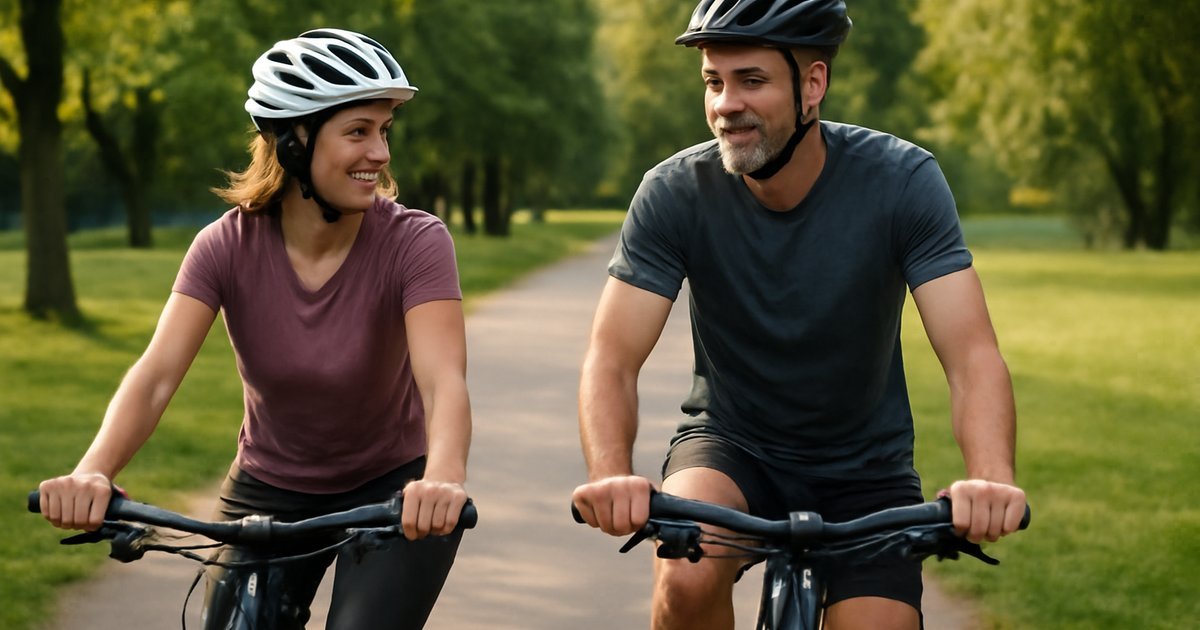
Tag: joint-friendly workout

  • Cycling for Fitness After 40: Benefits, Tips & Plans

    Cycling for Fitness After 40: Benefits, Tips & Plans

    Your joints may not love high-impact exercise anymore — but your cardiovascular system still needs a serious workout.

    Mark, 54, had been a runner for two decades. Then one morning his knees simply said no. Persistent pain forced him to stop, and within six months he had gained weight, lost energy, and felt more anxious than ever. His doctor suggested cycling. Within eight weeks of riding three times a week, Mark had dropped 12 pounds, lowered his resting heart rate, and was sleeping better than he had in years.

    His story is not unusual. According to the CDC, fewer than 25% of American adults meet the national guidelines for both aerobic and muscle-strengthening activity — and the numbers drop sharply after age 40. The reasons are familiar: joint pain, busy schedules, physical limitations, and the feeling that the workouts that once worked no longer feel safe.

    Cycling — whether outdoors or on a stationary bike — offers a powerful solution. It delivers meaningful cardiovascular, metabolic, and musculoskeletal benefits with significantly lower impact on your joints than running or other high-intensity activities. In this guide, you will learn exactly how cycling supports your health after 40, how to start safely, and how to build a sustainable routine that gets real results.

    What Is Cycling as a Fitness Activity?

    Cycling is a rhythmic, low-to-moderate impact aerobic exercise that engages the major muscle groups of the lower body — quadriceps, hamstrings, glutes, and calves — while also activating the core and, to a lesser extent, the upper body for balance and posture.

    It is classified as a non-weight-bearing exercise, meaning your body weight is supported by the seat rather than your legs, which dramatically reduces the mechanical stress placed on your knees, hips, and ankles. This makes it one of the most joint-friendly cardio options available for adults over 40.

    The American Heart Association recognizes cycling as an effective form of moderate-intensity aerobic exercise and includes it among the activities that contribute to the recommended 150 minutes of moderate aerobic activity per week for adults. Research published through the NIH confirms that regular cycling is associated with reduced risk of cardiovascular disease, type 2 diabetes, obesity, and even certain cancers.

    Cycling comes in several forms:

    • Road cycling: Outdoor riding on paved surfaces; excellent scenery and variable terrain
    • Mountain biking: Off-road trails; higher intensity and balance demands
    • Stationary or indoor cycling: Year-round accessibility, no traffic risk, controllable resistance
    • Spin classes: Group-based indoor cycling with instructor guidance and music
    • Recumbent cycling: Seated in a reclined position; ideal for those with back or hip issues

    Regardless of which format you choose, the health benefits are substantive and well-supported by clinical evidence.

    Signs Your Body Is Ready for Cycling — and Signs to Check First

    Cycling is broadly safe for most adults, but it is important to recognize when your body is signaling readiness versus when you should consult a physician before starting.

    Signs you are likely ready to begin:

    • You can walk for 30 minutes without significant discomfort
    • You have no recent unresolved cardiovascular events
    • Your blood pressure is managed, even if on medication
    • You have basic balance adequate for stationary riding or outdoor riding with support
    • Your physician has cleared you for moderate aerobic activity

    Signs to discuss with your doctor first:

    • Chest pain or shortness of breath during light activity
    • Uncontrolled hypertension (blood pressure consistently above 160/100 mmHg)
    • Severe osteoporosis or recent fractures
    • Active knee or hip replacement recovery
    • Peripheral artery disease or significant leg cramping during walking

    A 2023 review published in the Journal of Aging and Physical Activity found that supervised cycling programs were safe and beneficial for adults over 50, including those with mild to moderate cardiovascular risk factors, when initiated at low intensity and progressed gradually.

    Causes of Fitness Decline After 40 — and How Cycling Helps

    Understanding why fitness changes after 40 helps explain why cycling is such an effective countermeasure.

    Muscle loss (sarcopenia): After age 40, adults lose approximately 1% of muscle mass per year without resistance training. Cycling builds and preserves leg muscle, particularly when you ride at higher resistance or tackle inclines.

    Slowing metabolism: Basal metabolic rate declines with age due partly to hormonal shifts and partly to the muscle loss described above. Regular cycling burns significant calories — typically 400 to 600 calories per hour at moderate intensity — helping to offset this metabolic slowdown.

    Joint degeneration: Osteoarthritis affects more than 32 million Americans, according to the CDC, and becomes increasingly prevalent after 45. Unlike running, cycling moves the joint through its range of motion without excessive loading, which clinical evidence suggests may actually support cartilage health over time.

    Cardiovascular risk increase: The American Heart Association reports that cardiovascular disease risk climbs sharply in middle age. Cycling is one of the most efficient ways to improve VO2 max (a measure of cardiovascular fitness), lower resting heart rate, and reduce arterial stiffness.

    Mental health challenges: Depression and anxiety affect an estimated 16 million American adults, with rates increasing among those managing chronic illness. Clinical trials consistently show that regular aerobic exercise, including cycling, produces measurable improvements in mood, anxiety scores, and stress resilience through mechanisms involving endorphins, cortisol regulation, and neuroplasticity.

    If you are also managing weight alongside your fitness goals, our guide on exercise for weight management after 40 offers a thorough complementary framework.

    Diagnosis: Understanding Your Starting Fitness Baseline

    Before beginning a cycling routine, a brief self-assessment — ideally guided by your healthcare provider — helps you start at the right level and track meaningful progress.

    What your doctor may evaluate:

    • Resting heart rate: A healthy resting heart rate for adults is generally 60 to 100 beats per minute. Athletes often run lower. This gives you a cardiovascular baseline.
    • Blood pressure: Exercise intensity should be calibrated to your blood pressure status.
    • HbA1c and fasting glucose: If you have diabetes or prediabetes, knowing your metabolic baseline helps track how exercise improves insulin sensitivity.
    • Joint assessment: A physical therapist can identify movement restrictions or imbalances that affect bike fit and technique.
    • Body composition: Knowing your current weight, BMI, and muscle-to-fat ratio gives you a starting benchmark.

    Self-assessment tools:

    • The Talk Test: At moderate intensity, you should be able to speak in short sentences but not hold a full conversation comfortably
    • Perceived Exertion Scale (Borg Scale): Aim for a 12-14 out of 20 during moderate-intensity rides
    • Heart Rate Zones: Most fitness experts recommend targeting 50-70% of your maximum heart rate (roughly 220 minus your age) for moderate aerobic benefit

    Treatment Options: Building a Cycling Fitness Plan After 40

    A well-structured cycling plan after 40 balances cardiovascular conditioning, muscle engagement, and adequate recovery. Here is how clinical exercise science and sports medicine physicians typically recommend approaching it.

    Phase 1 — Foundation (Weeks 1-4):

    Start with 20-30 minute rides at low to moderate resistance, three times per week. Focus on smooth pedaling technique (a cadence of 80-90 RPM is widely recommended) and proper posture. Avoid the tendency to push too hard too soon — the leading cause of early burnout and overuse injury.

    Phase 2 — Building (Weeks 5-10):

    Increase session duration to 40-50 minutes. Introduce one slightly more challenging ride per week — either longer duration or moderate resistance increase. Total weekly cycling time should approach 120-150 minutes.

    Phase 3 — Conditioning (Weeks 11+):

    Meet or exceed the AHA recommendation of 150 minutes of moderate aerobic activity per week, distributed across 3-5 sessions. Incorporate interval elements: 2-3 minutes of higher effort followed by 3-4 minutes of easy pedaling. Research from Mayo Clinic suggests interval training significantly improves cardiovascular fitness and metabolic markers, even in older adults.

    Complementary practices:

    • Strength training 2x per week: Cycling is predominantly lower body. Adding upper body and core work prevents imbalances. Our article on core strength training after 40 covers this well.
    • Stretching and mobility work: Hip flexors, hamstrings, and lower back tighten during cycling. A 10-minute post-ride stretch routine supports flexibility and reduces soreness.
    • Proper bike fit: Seat height, handlebar position, and cleat alignment matter enormously. A professional bike fitting session reduces injury risk by ensuring your joints move through optimal angles.

    Living With Cycling as a Fitness Lifestyle — and Staying Consistent

    Many adults over 40 start a cycling routine with enthusiasm but struggle to maintain it past the first few months. Here is what the evidence suggests about long-term adherence and the practical strategies that make a real difference.

    Choose the format that fits your life: A $25 per month gym membership with stationary bikes eliminates weather excuses. An outdoor route through a park makes exercise feel like a reward. Neither is objectively better — the one you actually do is the right choice.

    Schedule it like a medical appointment: Research in behavioral psychology consistently shows that people who schedule exercise at a fixed time and treat it as non-negotiable are significantly more likely to maintain the habit long term.

    Track measurable progress: Metrics motivate. A simple fitness tracker or even a written log of distance, duration, and heart rate shows you concrete improvement over weeks — which reinforces the behavior.

    Join a community: Group cycling classes and local bike clubs dramatically improve adherence. Social accountability and shared enthusiasm are powerful motivators. If this appeals to you, our guide to group fitness classes after 40 offers helpful guidance on finding the right fit.

    Nutrition matters: Cycling at moderate intensity burns meaningful calories. Ensure you are fueling adequately before rides (especially morning sessions) and recovering with protein and complex carbohydrates afterward. Dehydration is a common and easily preventable performance limitier — aim for consistent fluid intake throughout the day.

    Rest and recovery: This varies from person to person, but most sports medicine physicians recommend at least one to two full rest days per week for adults over 40, and avoiding back-to-back hard sessions. Overtraining — doing too much too soon — is one of the most common reasons adults abandon a new fitness routine.

    When to Call Your Doctor — Emergency Signs During or After Cycling

    Cycling is safe for the vast majority of healthy adults, but it is essential to recognize warning signs that require immediate medical attention.

    Call 911 immediately or go to the nearest emergency room if you experience:

    • Chest pain, chest tightness, or pressure during or after cycling
    • Sudden shortness of breath disproportionate to your effort level
    • Lightheadedness, dizziness, or fainting during exercise
    • Rapid or irregular heartbeat that does not resolve within a few minutes of rest
    • Sudden severe pain in a joint, muscle, or limb
    • Sudden numbness or weakness in arms or legs

    Contact your doctor at your next available appointment if you notice:

    • Persistent knee or hip pain that worsens with each session
    • Numbness or tingling in hands, feet, or groin area (common with improper bike fit)
    • Fatigue that does not improve with rest
    • Unexplained weight gain despite consistent exercise
    • Mood changes, persistent anxiety, or disrupted sleep after starting your program

    At your next routine visit, tell your doctor you have started cycling and share your current duration, intensity, and any symptoms. This allows them to monitor relevant markers — heart rate response, blood pressure, glucose levels if applicable — and provide personalized guidance.

    Frequently Asked Questions About Cycling After 40

    Is cycling good for weight loss after 40?
    Clinical evidence indicates that cycling contributes meaningfully to weight management when combined with a balanced diet. Research suggests moderate-intensity cycling burns 400 to 600 calories per hour depending on body weight and effort. However, weight loss also depends heavily on overall caloric intake, hormonal factors, and sleep quality. Most physicians recommend viewing cycling as one component of a broader health strategy rather than a standalone weight loss solution.

    Is cycling hard on the knees?
    For most adults, cycling is significantly easier on the knees than running or other high-impact activities. Clinical evidence supports cycling as a recommended exercise for adults with mild to moderate osteoarthritis of the knee, as it moves the joint without excessive compressive loading. However, improper bike fit — particularly incorrect seat height — can cause or worsen knee pain. Always start at low resistance and ensure a proper bike setup.

    How often should adults over 40 cycle for health benefits?
    Most physicians and the American Heart Association recommend aiming for at least 150 minutes of moderate-intensity aerobic activity per week. For cycling, this translates to approximately three to five sessions of 30 to 50 minutes each. This varies from person to person based on fitness level, health status, and goals.

    Can I cycle if I have high blood pressure?
    Most adults with managed hypertension can safely cycle at moderate intensity with physician approval. Research suggests that regular aerobic exercise, including cycling, may help lower systolic blood pressure by an average of 4-9 mmHg over time, according to findings supported by the American Heart Association. Always check with your doctor before beginning an exercise program if you have cardiovascular risk factors.

    Is outdoor cycling or a stationary bike better after 40?
    Both offer comparable cardiovascular and metabolic benefits. Stationary bikes offer controlled environments, eliminate traffic risks, and allow precise intensity control — advantages that make them particularly appealing for beginners or those with balance concerns. Outdoor cycling adds the benefits of fresh air, varied terrain, and psychological engagement with the environment. Research suggests both formats improve fitness markers effectively. The best choice is whichever one you will stick with consistently.

    Conclusion

    Cycling is one of the most accessible, effective, and joint-friendly forms of exercise available to adults over 40. Whether you choose a stationary bike at the gym, a road bike on the weekend, or a spin class with neighbors, the cardiovascular, metabolic, and mental health benefits are real and well-documented.

    The key is to start at an appropriate intensity, progress gradually, fuel and recover properly, and listen to your body throughout. Cycling does not require athletic ability, expensive equipment, or years of experience. It requires consistency, realistic expectations, and the willingness to begin.

    As always, talk to your physician before starting a new exercise program — especially if you manage a chronic condition. With the right plan and professional guidance, cycling can become a cornerstone of your long-term health and wellness strategy well into your 60s and 70s.


    Medical Disclaimer: This article is for informational and educational purposes only. It does not constitute medical advice, diagnosis, or treatment. Always consult your physician or a qualified healthcare provider before making changes to your health routine or treatment plan.

    Medically reviewed by our editorial health team. Content follows evidence-based standards aligned with CDC and NIH guidelines.

  • Low-Impact Exercise After 40: The Complete Guide

    Low-Impact Exercise After 40: The Complete Guide

    Your joints deserve a smarter workout — and so does your long-term health.

    Mark, 52, had spent years believing that exercise meant punishment — burning lungs, aching knees, and the kind of soreness that kept him on the couch for three days after every gym session. When his doctor suggested low-impact exercise after a knee injury, he was skeptical. Six months later, he’d lost 18 pounds, his blood pressure had dropped, and he was moving better than he had in his 30s.

    Mark’s story isn’t unusual. According to the CDC, nearly 54 million American adults live with some form of arthritis, and millions more manage joint pain, chronic back issues, or post-surgical recovery — conditions that make high-impact workouts feel impossible or even dangerous. Yet physical inactivity remains one of the leading preventable causes of chronic disease in the United States.

    The good news: low-impact exercise delivers powerful, evidence-backed health benefits — including improved cardiovascular fitness, stronger muscles, better bone density, and sharper mental health — without hammering your joints. This guide breaks down everything you need to know about low-impact exercise after 40, from the science behind it to practical routines you can start this week.

    What Is Low-Impact Exercise?

    Low-impact exercise refers to any physical activity in which at least one foot — or another body part — maintains contact with the ground or a supportive surface at all times, significantly reducing the forces transmitted through your joints during movement. Unlike high-impact activities such as running or jumping, low-impact workouts minimize ground reaction force, which is the pressure your body absorbs with each step or landing.

    This distinction matters enormously as we age. Research published by the NIH confirms that musculoskeletal injuries — particularly to knees, hips, and ankles — become increasingly common after age 40, partly because cartilage naturally thins and tendons lose some elasticity over time. Low-impact movement works with your body’s changing physiology rather than against it.

    Common low-impact exercises include:

    • Walking (brisk or moderate pace)
    • Swimming and water aerobics
    • Cycling (stationary or outdoor)
    • Elliptical machine training
    • Yoga and tai chi
    • Pilates
    • Rowing (machine or on water)
    • Dance fitness (low-impact formats)

    Crucially, "low-impact" does not mean "low-intensity." Research suggests you can achieve the same cardiovascular and muscular benefits as high-impact training while dramatically reducing injury risk — making this approach ideal for adults over 40, especially those managing joint conditions, excess weight, or recovering from injury.

    Why Low-Impact Exercise Matters More After 40

    By the time most adults reach their 40s, several physiological changes are already underway that make joint-friendly exercise not just beneficial but strategically important.

    According to the American College of Sports Medicine (ACSM), adults begin losing approximately 3 to 5 percent of muscle mass per decade after age 30 — a process called sarcopenia. Without consistent resistance-based movement, this accelerates significantly after 40. Simultaneously, bone density begins declining, increasing fracture risk, particularly in women approaching menopause.

    The CDC reports that adults aged 45 to 64 experience the highest rates of activity-related musculoskeletal injuries among working-age adults. High-impact training can exacerbate these risks, particularly for those who are deconditioned or returning to exercise after a long break.

    Low-impact exercise addresses all of these challenges simultaneously:

    • Cardiovascular health: Sustained, moderate-intensity low-impact cardio strengthens the heart and improves VO2 max — your body’s capacity to use oxygen efficiently — with comparable results to running, per research from the Mayo Clinic.
    • Muscle preservation: Water-based resistance training and Pilates have been shown in clinical studies to effectively maintain and even build lean muscle mass in adults over 40.
    • Joint protection: Aquatic exercise, in particular, reduces compressive load on weight-bearing joints by up to 90 percent, according to findings published in the Arthritis Foundation’s clinical guidelines.
    • Mental health benefits: A 2024 meta-analysis from the NIH confirmed that low-impact aerobic exercise significantly reduces symptoms of anxiety and depression in adults aged 40 to 70, with effects comparable to pharmaceutical interventions in mild-to-moderate cases.

    This varies from person to person, of course — individual fitness levels, existing conditions, and goals all influence which type of low-impact training is most appropriate for you.

    Signs You Should Prioritize Low-Impact Exercise

    Not everyone over 40 needs to avoid high-impact workouts entirely. However, clinical evidence indicates that low-impact training should be your primary — or sole — mode of exercise if you experience any of the following:

    • Early signs (consider transitioning to low-impact):
      • Persistent joint pain lasting more than 48 hours after exercise
      • Knee or hip stiffness in the morning lasting longer than 30 minutes
      • Recurring shin splints or stress reactions in the feet or legs
      • Recent weight gain that increases load on lower-body joints
      • General deconditioning after a period of inactivity (6 months or more)
    • Stronger indicators (low-impact strongly recommended):
      • Diagnosed osteoarthritis, rheumatoid arthritis, or osteoporosis
      • History of joint replacement (hip, knee, shoulder)
      • Chronic lower back pain or herniated discs
      • Cardiovascular conditions requiring supervised exercise programs
      • Post-surgical recovery (with physician clearance)

    A study from Johns Hopkins Medicine found that adults with knee osteoarthritis who switched from running to aquatic or cycling-based cardio reported a 62 percent reduction in exercise-related pain while maintaining equivalent fitness improvements over 12 weeks.

    The Best Low-Impact Exercises After 40: What the Evidence Says

    Not all low-impact options are created equal. Here’s a clinically informed breakdown of the most effective choices for adults over 40, organized by health benefit.

    For Heart Health: Walking and Cycling

    Brisk walking remains one of the most evidence-supported exercises for cardiovascular health at any age. The American Heart Association recommends at least 150 minutes of moderate-intensity aerobic activity per week — and brisk walking qualifies fully. A landmark study published in the New England Journal of Medicine found that walking reduced the risk of cardiovascular events by 30 percent in adults over 50, even when compared to more vigorous exercise formats.

    Stationary cycling offers a similarly powerful cardiovascular stimulus with near-zero joint impact. Research from the Cleveland Clinic suggests cycling is particularly effective for adults with knee osteoarthritis, delivering cardiorespiratory benefits while simultaneously strengthening the quadriceps muscles that support and protect the knee joint.

    For Full-Body Strength and Flexibility: Swimming and Water Aerobics

    Aquatic exercise is arguably the most joint-friendly modality available. Water provides natural resistance in all directions, meaning every stroke or movement challenges your muscles — while buoyancy eliminates up to 90 percent of the gravitational load on your joints.

    Clinical evidence from the Arthritis Foundation indicates that adults with arthritis who participated in aquatic exercise programs three times per week showed significant improvements in pain levels, joint function, and mood within eight weeks. Swimming, in particular, works virtually every major muscle group simultaneously, making it one of the most efficient full-body workouts available for older adults.

    For Core Strength and Posture: Pilates and Yoga

    Pilates, developed originally for rehabilitation, focuses on controlled, precise movements that strengthen the deep stabilizing muscles of the core, spine, and hips — areas that are critically important for posture, balance, and injury prevention after 40. Research published by the NIH confirms that 12 weeks of Pilates training significantly reduced chronic lower back pain and improved functional mobility in adults aged 45 to 65.

    Yoga — particularly gentle, restorative, or Hatha formats — complements low-impact fitness by improving flexibility, balance, and the mind-body connection. Studies from Harvard Health suggest that consistent yoga practice is associated with reduced cortisol levels, better sleep quality, and improved blood pressure control in middle-aged adults.

    If you’re already incorporating flexibility work into your routine, you may find our guide on Flexibility & Mobility Training: The Complete Guide for Adults Over 40 a valuable complement to the low-impact approach outlined here.

    For Calorie Burn and Endurance: Elliptical Training and Rowing

    The elliptical machine mimics the movement pattern of running without the repetitive impact — making it an excellent option for adults who love the feel of cardio but need to protect their knees and hips. Studies from the American Council on Exercise (ACE) have shown that elliptical training elevates heart rate to levels comparable to jogging while reducing joint stress by approximately 75 percent.

    Rowing — whether on a machine or on water — provides an exceptional combination of cardiovascular training and full-body resistance work. Because roughly 60 percent of the rowing stroke is driven by the legs and 40 percent by the upper body and core, it builds balanced muscular strength while keeping impact minimal.

    How to Build Your Low-Impact Routine: A Practical Framework

    Clinical guidelines from the American College of Sports Medicine suggest that adults over 40 aim for the following each week:

    • 150–300 minutes of moderate-intensity aerobic activity (brisk walking, cycling, swimming)
    • 2–3 days of muscle-strengthening activity targeting all major muscle groups
    • 2–3 days of flexibility and mobility work (yoga, stretching, Pilates)
    • Balance training incorporated 2–3 days per week — especially important for fall prevention after 50

    A well-rounded sample weekly schedule might look like this:

    • Monday: 40-minute brisk walk + 15-minute Pilates core session
    • Tuesday: 45-minute aquatic exercise class or swimming
    • Wednesday: Active recovery — gentle yoga or stretching (see our guide on recovery days after 40 for why this step matters)
    • Thursday: 40-minute stationary bike + bodyweight strength circuit
    • Friday: 30-minute elliptical session + balance exercises
    • Saturday: Outdoor walk, recreational cycling, or a gentle yoga class
    • Sunday: Full rest or light stretching

    Most physicians recommend starting conservatively — especially if you’ve been inactive for more than a few months — and gradually increasing duration and intensity over four to six weeks. This approach reduces injury risk and allows your cardiovascular and musculoskeletal systems to adapt safely.

    Maximizing Results: Tips Backed by Clinical Evidence

    Getting the most from low-impact exercise after 40 involves more than just showing up. These evidence-based strategies can significantly amplify your results:

    • Prioritize consistency over intensity: Research from the NIH consistently shows that frequency and regularity of exercise produce greater long-term health outcomes than occasional high-intensity efforts. Aim for movement most days of the week, even if individual sessions are shorter.
    • Add resistance progressively: Low-impact doesn’t mean easy. Water resistance, resistance bands, and bodyweight progressions can all challenge your muscles effectively. Increasing resistance gradually — every two to three weeks — triggers continued muscle adaptation.
    • Don’t neglect balance work: Falls are the leading cause of injury-related death among adults over 65, according to the CDC. Incorporating balance challenges — such as single-leg stands, heel-to-toe walking, or tai chi — into your low-impact routine is critically important. Our article on Balance Training After 40 covers this in depth.
    • Warm up and cool down: Clinical evidence from the American Council on Exercise indicates that a five- to ten-minute dynamic warm-up (gentle movements that gradually increase range of motion) reduces soft-tissue injury risk and improves exercise performance. A similar cool-down period supports recovery and flexibility.
    • Track your perceived exertion: Most physicians recommend exercising at a moderate intensity — roughly a 5 or 6 on a 1-to-10 effort scale — where you can speak in short sentences but couldn’t sing comfortably. This is sometimes called the "talk test."

    When to Call Your Doctor — and What Needs Immediate Attention

    Low-impact exercise is generally safe for most adults, but certain symptoms should prompt a call to your healthcare provider before continuing any fitness program.

    Schedule a visit with your doctor if you experience:

    • Joint pain that worsens progressively despite reducing exercise intensity
    • Swelling in one or both joints that persists for more than 24 hours
    • Unexplained fatigue or weakness that doesn’t resolve with rest
    • Shortness of breath during activities that previously felt manageable
    • Dizziness, lightheadedness, or heart palpitations during or after exercise

    Seek emergency care immediately (call 911) if you experience:

    • Chest pain, tightness, or pressure during or after exercise
    • Sudden severe shortness of breath
    • Loss of consciousness or near-fainting
    • Sudden severe joint or muscle pain following a movement (may indicate acute injury or tear)
    • Sudden severe headache during exercise

    Before starting any new exercise program — particularly if you have a chronic health condition, take prescription medications, or have been inactive for an extended period — the American Heart Association recommends consulting with your physician first. A pre-exercise health evaluation can identify any conditions that require monitoring or modification.

    Frequently Asked Questions

    Q: Can low-impact exercise help me lose weight after 40?
    A: Absolutely. Clinical evidence indicates that consistent moderate-intensity low-impact exercise — particularly when combined with attention to diet — is effective for weight management in adults over 40. Research from the NIH suggests that aerobic exercise like brisk walking or cycling, performed five or more days per week, produces meaningful reductions in visceral fat (the dangerous abdominal fat linked to metabolic disease) even without dramatic dietary changes. The key is consistency over time rather than intensity.

    Q: Is low-impact exercise enough to build muscle, or do I need to lift heavy weights?
    A: Research suggests that low-impact resistance training — including water-based exercise, resistance bands, and bodyweight progressions — can effectively preserve and build lean muscle mass in adults over 40, particularly when performed with sufficient volume and progressive resistance. However, if building significant muscle is a primary goal, your physician or a certified fitness professional may recommend incorporating some form of progressive resistance training alongside your low-impact cardio.

    Q: How long before I see results from low-impact exercise?
    A: Most people begin noticing improvements in energy, mood, and sleep quality within two to four weeks of consistent exercise. Measurable cardiovascular improvements typically appear within six to eight weeks, according to the American College of Sports Medicine. Visible changes in body composition generally take eight to twelve weeks or longer, depending on diet and individual factors. This varies from person to person.

    Q: Is yoga or Pilates enough, or do I also need cardio?
    A: Yoga and Pilates are outstanding for flexibility, core strength, balance, and mental well-being — but most clinical guidelines, including those from the CDC and ACSM, also recommend dedicated cardiovascular exercise for heart health and metabolic benefits. Most physicians recommend combining practices: use yoga or Pilates two to three days per week alongside aerobic activities like walking, swimming, or cycling on other days.

    Q: Can I do low-impact exercise if I have a knee replacement?
    A: Many adults successfully return to regular low-impact exercise following knee replacement surgery, but timing and specific activities must be guided by your orthopedic surgeon and physical therapist. Swimming, cycling, and walking are commonly recommended post-replacement activities — often introduced in a graduated program beginning weeks after surgery. Never start an exercise program post-surgery without explicit physician clearance.

    Conclusion

    Low-impact exercise isn’t a compromise — it’s a strategy. For adults over 40, it represents one of the most scientifically sound, sustainable, and joint-friendly ways to maintain cardiovascular health, preserve muscle mass, support mental well-being, and protect your body for the decades ahead.

    Whether you’re stepping into the pool for the first time, rediscovering the rhythm of a morning walk, or finding your breath on a yoga mat — these movements matter. They add up, day by day, into a healthier, more capable version of you.

    Talk to your doctor before making significant changes to your exercise routine, especially if you have existing health conditions. With the right guidance and a consistent plan, low-impact exercise can be one of the most powerful health investments you make after 40.


    Medical Disclaimer: This article is for informational and educational purposes only. It does not constitute medical advice, diagnosis, or treatment. Always consult your physician or a qualified healthcare provider before making changes to your health routine or treatment plan.

    Medically reviewed by our editorial health team. Content follows evidence-based standards aligned with CDC and NIH guidelines.