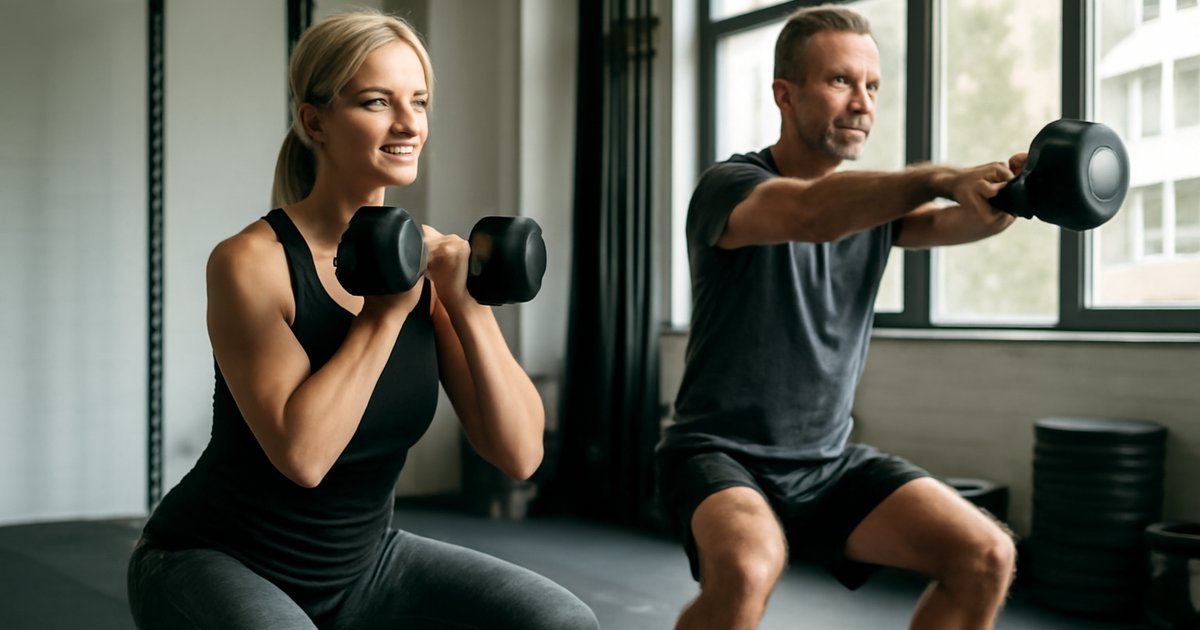
How to harness the power of high-intensity functional training without wrecking your joints or your recovery time.
Introduction
When Mark, 52, first walked into a CrossFit-style gym, he almost walked right back out. The barbell movements, the jumping, the pace — it all seemed built for someone twenty years younger. But six months later, Mark had dropped 18 pounds, improved his resting heart rate, and — perhaps most importantly — he could carry groceries up three flights of stairs without losing his breath.
His story is far from unique. According to the CDC, fewer than 25% of American adults meet both the aerobic and muscle-strengthening guidelines set by the Physical Activity Guidelines for Americans. That gap becomes even more pronounced after age 40, when muscle mass naturally begins to decline at a rate of 3–8% per decade — a process clinicians call sarcopenia.
CrossFit-style functional fitness training offers a compelling answer: compound, full-body movements performed at scalable intensity levels that build real-world strength, cardiovascular endurance, and metabolic health. The key for adults over 40 is working smarter, not just harder. This guide will show you exactly how to do that.
What Is CrossFit-Style Functional Fitness?
CrossFit-style training refers to high-intensity functional fitness (HIFF) — a training methodology that combines elements of Olympic weightlifting, gymnastics, metabolic conditioning, and bodyweight movements in varied, constantly changing workouts.
The defining characteristic of this approach is its focus on functional movements: exercises that replicate real-life patterns such as squatting, hinging, pushing, pulling, and carrying. Unlike isolated machine-based exercise, functional training recruits multiple muscle groups simultaneously, improving neuromuscular coordination alongside raw strength.
According to research published in the Journal of Strength and Conditioning Research, participants in HIFF programs showed significant improvements in VO2 max (a measure of cardiovascular fitness) and body composition after just 10 weeks of training. These gains were comparable to — and in some measures superior to — traditional endurance and resistance training protocols.
For adults over 40, the appeal is practical: one structured session can simultaneously address cardiovascular health, muscular strength, flexibility, and metabolic conditioning. That efficiency matters when time, energy, and recovery capacity are finite resources.
Signs Your Current Fitness Routine Isn’t Enough
Before exploring how to train this way, it helps to recognize whether your current approach has gaps. Consider whether you’re experiencing any of the following:
- Early signs your fitness needs a reboot:
- Fatigue climbing stairs or carrying moderate loads
- Gradual weight gain despite consistent calorie awareness
- Stiffness that lingers more than a day after light activity
- Declining grip strength or difficulty opening jars
- Resting heart rate trending upward over recent months
- Loss of confidence in physical tasks you once did easily
- More advanced signs requiring medical evaluation first:
- Chest discomfort or unusual shortness of breath during mild exertion
- Joint pain that persists during rest, not just during activity
- Unexplained dizziness or heart palpitations during exercise
- Swelling in the legs or ankles after activity
A 2023 meta-analysis published via NIH-supported research confirmed that sedentary adults over 40 who begin structured functional training show measurable improvements in balance, muscle mass, and metabolic markers within 8–12 weeks — but only when they start at an appropriate intensity level for their baseline fitness.
Causes and Risk Factors: Why Aging Changes How You Should Train
Understanding why your body responds differently to exercise after 40 helps you train more intelligently rather than simply training less.
Hormonal shifts: Testosterone and human growth hormone — both critical for muscle repair and synthesis — decline significantly with age. The American Urological Association notes that testosterone levels in men drop approximately 1–2% per year beginning in their 30s. In women, perimenopause and menopause accelerate muscle loss and increase visceral fat accumulation.
Connective tissue changes: Tendons, ligaments, and cartilage become less elastic and more injury-prone after 40. Collagen turnover slows, meaning recovery from repetitive stress takes longer. This is why joint-friendly scaling matters enormously in high-intensity training.
Reduced recovery capacity: Research suggests that adults over 40 require 48–72 hours of recovery between intense sessions targeting the same muscle groups, compared to the 24–48 hours often cited for younger adults.
Metabolic slowdown: Basal metabolic rate declines roughly 10% per decade after age 40, primarily due to muscle loss. The irony is powerful: the very training that feels hardest to begin is also the most effective at reversing this metabolic slowdown.
Risk factors that call for extra caution include: uncontrolled hypertension, recent joint surgery, diagnosed osteoporosis, Type 2 diabetes with peripheral neuropathy, or any cardiovascular condition. If any of these apply to you, always obtain medical clearance before starting high-intensity training.
Diagnosis: Assessing Your Baseline Before You Begin
Jumping into CrossFit-style workouts without an honest baseline assessment is one of the most common — and costly — mistakes adults make. A structured starting point dramatically reduces injury risk and improves long-term adherence.
Medical clearance: The American College of Sports Medicine recommends that adults over 45 with one or more cardiovascular risk factors obtain physician clearance before beginning vigorous exercise programs. A standard workup may include resting ECG, blood pressure evaluation, and basic metabolic panel.
Movement screening: A qualified fitness professional can perform a Functional Movement Screen (FMS) or similar assessment to identify mobility restrictions, movement asymmetries, or compensatory patterns that increase injury risk under load.
Self-assessment benchmarks: Before scaling up intensity, clinical evidence indicates it’s wise to confirm you can perform these movement patterns with good form and no pain:
- Air squat to parallel depth (hip crease below knee)
- Hip hinge (Romanian deadlift) with a broomstick maintaining neutral spine
- Push-up: at least 5 full-range repetitions from the floor
- Single-leg balance: hold for 10 seconds on each side without wobbling
- Overhead reach: arms fully extended overhead without excessive lower back arch
If any of these reveal significant limitations, address them first through targeted stretching and flexibility work or posture correction exercises before adding load or intensity.
Treatment Options: How to Structure CrossFit-Style Training After 40
The good news: you don’t need to do what a 25-year-old competitive athlete does. CrossFit-style training is inherently scalable, meaning every movement and every workout can be modified to match your current capacity while still delivering meaningful results.
The Core Principles for Adults Over 40
1. Master the movements before adding intensity. Clinical evidence strongly supports a skill-before-speed approach. Spend your first four to six weeks learning foundational movement patterns — squats, deadlifts, presses, rows, and carries — using light loads or bodyweight only. Your nervous system needs time to encode proper motor patterns.
2. Scale intelligently, not lazily. Scaling doesn’t mean avoiding challenge. It means selecting the version of an exercise that is appropriately hard for your current capacity. Box squats instead of full depth squats. Dumbbell deadlifts before barbell deadlifts. Ring rows instead of pull-ups. Progressively reduce those modifications as your capacity improves.
3. Limit high-intensity sessions to 3 per week. Most physicians and sports medicine specialists recommend that adults over 40 cap true high-intensity sessions at two to three per week, with active recovery or lower-intensity movement on remaining days. This protects your joints and allows adequate hormonal recovery between sessions.
4. Prioritize recovery as a training variable. Recovery is not optional — it is when adaptation actually occurs. Incorporate active recovery tools such as foam rolling and self-myofascial release, adequate protein intake (research suggests 1.2–1.6 grams per kilogram of body weight for active adults over 40), and 7–9 hours of sleep per night.
A Sample Weekly Structure
- Monday: Strength focus — barbell or dumbbell compound movements (squat, press) + short metabolic finisher (8–10 min)
- Tuesday: Active recovery — 30 min brisk walk, yoga, or light mobility work
- Wednesday: Metabolic conditioning — kettlebell circuits, rowing, or dumbbell complexes
- Thursday: Rest or gentle movement — stretching, walking, tai chi
- Friday: Functional strength — deadlift pattern, carries, pull variations + brief conditioning
- Saturday: Longer conditioning effort — moderate-paced rowing, cycling, or partner workout
- Sunday: Full rest or very light movement
This structure aligns with guidelines from the American College of Sports Medicine and provides a sustainable foundation without overtaxing recovery systems.
Living With This Training Style: Long-Term Management and Prevention
One of the most underappreciated aspects of CrossFit-style training for older adults is its community element. Research from Harvard Health Publishing suggests that social accountability in fitness settings significantly improves long-term adherence — a major predictor of actual health outcomes.
Nutrition timing matters more after 40. Consuming 20–40 grams of high-quality protein within 2 hours post-workout supports muscle protein synthesis, which becomes less efficient with age. Clinical evidence from NIH-supported studies indicates that leucine-rich protein sources (whey, eggs, chicken, Greek yogurt) are particularly effective at stimulating muscle repair in older adults.
Progressive overload remains essential. Your body adapts to whatever you repeatedly ask of it. Every 4–6 weeks, evaluate whether you can add slightly more weight, perform more repetitions, reduce rest intervals, or complete a workout faster. Small, consistent progress compounds dramatically over months and years.
Mobility is your insurance policy. Adults over 40 who neglect flexibility and mobility work are significantly more likely to experience overuse injuries that sideline them for weeks. Dedicate at least 10 minutes post-workout and one dedicated session per week to mobility-focused movement.
Track your effort, not just your performance. Using a simple 1–10 perceived exertion scale helps you avoid the trap of always training at maximum intensity. Most sessions should feel like a 6–7 out of 10 — challenging but controllable. Reserve true 8–9 efforts for two or fewer sessions per week.
When to Call Your Doctor or Seek Emergency Care
High-intensity training is generally safe for healthy adults over 40, but certain warning signs require immediate attention. Know the difference between normal discomfort and genuine red flags.
Stop immediately and call 911 if you experience:
- Chest pain, pressure, or tightness during or after exercise
- Sudden shortness of breath disproportionate to effort
- Dizziness, lightheadedness, or fainting
- Irregular or rapid heartbeat with associated symptoms
- Sudden severe headache during intense exertion
- Numbness or weakness in one arm or side of the body
Schedule a physician visit within 1–2 weeks if you notice:
- Joint pain that persists more than 72 hours after training
- Swelling in a specific joint that doesn’t resolve with rest and ice
- Persistent fatigue or performance decline despite adequate rest
- Unusual mood changes, irritability, or sleep disruption following training
What to tell your doctor: Bring a log of your recent workouts, including frequency, duration, and intensity. Note when symptoms began relative to your training schedule. This information helps your physician determine whether symptoms are training-related or have another cause.
Frequently Asked Questions
Q: Is CrossFit-style training safe for someone over 50 with no prior gym experience?
A: Research suggests yes — with appropriate scaling and proper coaching. The key is beginning with qualified instruction, focusing on movement quality before intensity, and obtaining medical clearance if you have cardiovascular risk factors. Most reputable functional fitness gyms offer beginner-specific programs designed exactly for this population.
Q: How long before I see results from CrossFit-style training after 40?
A: Clinical evidence indicates most adults notice meaningful improvements in energy, strength, and body composition within 8–12 weeks of consistent training. Cardiovascular improvements (resting heart rate, VO2 max) may become measurable in as few as 4–6 weeks. This varies from person to person based on baseline fitness, nutrition, sleep quality, and training consistency.
Q: Can I do CrossFit-style workouts if I have knee or back pain?
A: Many adults with chronic joint pain participate successfully in functional fitness by using appropriate movement modifications. However, it is essential to have your condition evaluated by a physician or physical therapist first. A trained coach can then adapt movements to avoid aggravating your specific issue while still delivering meaningful fitness benefits.
Q: What is the biggest mistake adults over 40 make when starting high-intensity training?
A: Most physicians and fitness professionals agree the most common mistake is progressing too fast, too soon — increasing weight, intensity, or volume before the body has adapted to the baseline demand. Adults over 40 need longer adaptation windows than younger athletes. Patience in the first 8–12 weeks pays dividends for years afterward.
Q: Do I need to join a CrossFit gym, or can I train this way at home?
A: You can absolutely apply functional fitness principles at home with minimal equipment — dumbbells, a resistance band, and a kettlebell cover the vast majority of foundational movements. That said, working with a qualified coach even temporarily is strongly recommended to establish sound movement patterns. Once those are ingrained, home training becomes a viable long-term option.
Conclusion
CrossFit-style functional fitness isn’t just for elite athletes or the perpetually young. For adults over 40, it represents one of the most time-efficient, evidence-backed approaches to building real-world strength, improving cardiovascular health, and slowing the metabolic and muscular decline that aging brings.
The secret isn’t training harder — it’s training smarter. That means scaling movements appropriately, honoring your recovery, fueling your body well, and progressing gradually but consistently. It means listening to your body’s signals and knowing when to push and when to pull back.
Most importantly, it means starting. Every week you delay is a week of potential improvement left on the table. With your physician’s clearance, a qualified coach’s guidance, and the strategies outlined in this article, you have everything you need to begin building the fittest, strongest version of yourself — at any age.
Medical Disclaimer: This article is for informational and educational purposes only. It does not constitute medical advice, diagnosis, or treatment. Always consult your physician or a qualified healthcare provider before making changes to your health routine or treatment plan.
Medically reviewed by our editorial health team. Content follows evidence-based standards aligned with CDC and NIH guidelines.