Exercise for Bone Health After 40: Build Density & Strength
The right fitness routine can slow bone loss, reduce fracture risk, and keep you strong and independent well into your later decades.
Why Your Bones Need Attention After 40
Margaret, 54, had always considered herself active. She walked regularly, watched what she ate, and never thought twice about her bones — until a routine DEXA scan (a bone density test) revealed she had osteopenia, the precursor to osteoporosis. Her doctor told her that the right exercise program, started now, could make a meaningful difference. She was both surprised and motivated.
Margaret’s story is far from unusual. According to the National Institutes of Health (NIH), approximately 54 million Americans have low bone density or osteoporosis, and the risk increases sharply after age 40. Most people don’t realize bone loss is happening until a fracture occurs — often from a fall that wouldn’t have mattered at 30.
The good news? Exercise is one of the most powerful tools available to protect your bones. In this guide, you’ll learn which types of exercise build bone density, how to exercise safely if you already have bone loss, and what clinical evidence says about the best fitness strategies for skeletal health after 40.
What Is Bone Health — and Why Does It Change After 40?
Bone is living tissue. Throughout your life, specialized cells called osteoblasts build new bone while osteoclasts break down old bone. This continuous remodeling process keeps your skeleton strong — but it requires the right inputs: mechanical stress, adequate nutrition, and hormonal support.
Peak bone mass is typically reached in your late 20s to early 30s. After that, bone remodeling gradually shifts toward net bone loss. For women, this process accelerates dramatically at menopause due to the sharp decline in estrogen, a hormone that protects bone. Men experience a slower but steady decline in testosterone that also affects skeletal integrity over time.
The CDC reports that osteoporosis-related fractures affect about 2 million Americans each year, contributing to significant disability, loss of independence, and in some cases, life-threatening complications. Hip fractures alone have a one-year mortality rate of up to 20-30% in older adults, according to data published by the American Academy of Orthopaedic Surgeons.
The critical insight: bone responds to mechanical loading. When muscles contract and pull on bone, or when your body bears weight, it sends signals that stimulate bone-forming cells. No loading, no stimulus. That’s why exercise — the right kind — is irreplaceable for bone health.
Signs That Your Bone Health May Be at Risk
Bone loss is often called a "silent disease" because it progresses without obvious symptoms. Still, certain signs and risk factors should prompt you to speak with your doctor.
Early warning signs and risk factors include:
- Loss of height (more than 1 inch over time)
- Posture changes, such as a forward-rounding of the upper back (called kyphosis)
- Bone fracture from a minor injury or fall
- Chronic back pain without a clear cause
- Family history of osteoporosis or hip fracture
- Low body weight or a history of eating disorders
- Long-term use of corticosteroids (like prednisone)
- History of smoking or heavy alcohol use
- Premature menopause or low testosterone levels
- Calcium or vitamin D deficiency
Red flags requiring prompt medical attention:
- A fracture after a low-impact fall or minor trauma
- Sudden, severe back pain (can signal a vertebral compression fracture)
- Significant loss of height over a short period
A study published in the Journal of Bone and Mineral Research found that women with a first fragility fracture (a break from a minor fall) had a two-to-four times higher risk of a subsequent fracture — making early intervention critical.
The Best Types of Exercise for Bone Density
Not all exercise builds bone equally. The two most effective categories are weight-bearing exercise and resistance training. Research consistently supports combining both for the strongest skeletal outcomes.
Weight-Bearing Aerobic Exercise
Weight-bearing exercise means any activity where you support your own body weight against gravity. This mechanical loading directly stimulates bone formation. Examples include:
- Brisk walking or hiking
- Dancing (highly effective due to varied directional forces)
- Tennis and racquet sports
- Stair climbing
- Low-impact aerobics classes
- Jogging (if your joints tolerate it)
A landmark meta-analysis published in Osteoporosis International found that weight-bearing exercise programs produced statistically significant improvements in lumbar spine and hip bone mineral density in postmenopausal women. Even walking — one of the most accessible forms — was associated with slower bone loss at the hip compared to sedentary controls. For more detail on structured walking programs, see our guide on Walking for Fitness After 40: Benefits, Tips & Plans.
Resistance Training
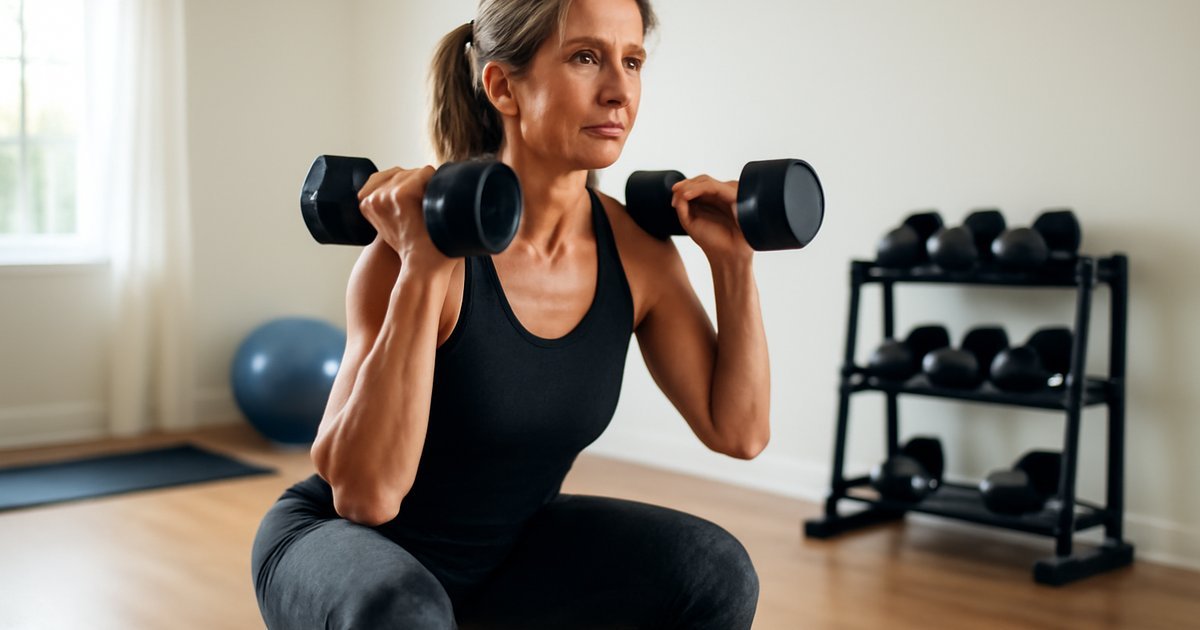
Strength training — using free weights, machines, resistance bands, or body weight — is arguably the most powerful tool for bone health. When muscles contract forcefully against resistance, they create pulling forces on bones that stimulate osteoblast activity. Research suggests that progressive resistance training can increase bone mineral density at the spine and hip by 1-3% over six to twelve months.
Key exercises for bone health through resistance training include:
- Squats and lunges (load-bearing for hips and spine)
- Deadlifts (at appropriate weight with good form)
- Hip hinge movements
- Overhead pressing (for spinal loading)
- Rows and pulling movements (for thoracic spine health)
If you’re newer to resistance training or prefer equipment-free options, Resistance Band Training After 40 is an excellent place to start — bands provide meaningful resistance with lower injury risk for beginners.
Impact and Jumping Activities
Higher-impact activities generate greater ground reaction forces, which are particularly strong signals for bone remodeling. A study from the American Journal of Health Promotion found that women who performed brief bouts of jumping (10 jumps twice daily) showed measurable improvements in hip bone density over four months. If your joints are healthy, incorporating:
- Jump rope
- Box step-ups with a downward step
- Skipping or hopping drills
- Low-level jumping jacks
…can add meaningful bone stimulus to your routine. This varies from person to person, so always consult your doctor before adding impact if you have a history of joint problems or existing bone loss.
Balance and Posture Training
While not a direct bone-builder, balance training dramatically reduces the risk of falls — which is the primary cause of osteoporotic fractures. Clinical evidence from the NIH indicates that balance and strength training can reduce fall risk by up to 23% in older adults. Tai chi, single-leg standing exercises, and stability work all belong in a bone-protective routine. Our article on Core Strength After 40: Build Stability & Reduce Back Pain covers complementary exercises that also support spinal health.
How to Structure Your Bone-Building Workout Program
Most physicians and physical therapists recommend a minimum of 30 minutes of weight-bearing exercise on most days, combined with resistance training two to three times per week. Here’s a practical weekly framework:
Sample Weekly Structure:
- Monday: Resistance training (lower body focus — squats, lunges, hip hinges)
- Tuesday: 30-40 minutes brisk walking or dancing
- Wednesday: Resistance training (upper body and spine — rows, presses, deadlifts)
- Thursday: Balance training and core work (20-30 minutes)
- Friday: Weight-bearing cardio (stair climbing, hiking, aerobics class)
- Saturday: Active recovery — gentle walking, yoga, or stretching
- Sunday: Rest or light activity
The American College of Sports Medicine (ACSM) recommends that resistance training for bone health use moderate-to-high loads — typically 70-85% of your one-repetition maximum — for 8-12 repetitions. That said, individuals with osteoporosis or significant joint issues should work with a physical therapist or certified trainer experienced in bone health to determine appropriate loads.
Progression matters. Bone responds to novel mechanical stress. If you perform the same exercises at the same intensity indefinitely, adaptation slows. Gradually increasing weight, adding new movement patterns, or incorporating varied directional loading keeps the stimulus fresh.
Exercising Safely When You Already Have Bone Loss
If you’ve been diagnosed with osteopenia or osteoporosis, exercise remains strongly recommended — but with important modifications to minimize fracture risk.
Movements to approach cautiously or avoid:
- High-impact activities like running on hard surfaces (for severe osteoporosis)
- Forward spinal flexion under load (e.g., crunches, bent-over rowing with poor form)
- Twisting movements with heavy resistance
- Activities with a high fall risk (downhill skiing, rollerblading) without protective gear
Safer alternatives that still build bone:
- Walking on flat, well-lit surfaces
- Water aerobics (less bone-building but safe for very high-risk individuals)
- Chair-based resistance exercises
- Wall push-ups, seated leg presses, and supported squats
- Tai chi for balance
The National Osteoporosis Foundation (now the Bone Health & Osteoporosis Foundation) recommends that people with osteoporosis work with a physical therapist to design an individualized program. A clinical professional can identify which exercises are appropriate for your specific bone density scores and medical history.
Nutrition and Lifestyle Factors That Support Exercise’s Benefits
Exercise’s bone-building effects are amplified — or undermined — by what you eat and other lifestyle choices. Clinical evidence indicates that adequate calcium and vitamin D are essential for bone remodeling triggered by exercise.
The NIH recommends:
- Calcium: 1,000 mg/day for adults 19-50; 1,200 mg/day for women over 50 and men over 70
- Vitamin D: 600-800 IU/day, with many physicians recommending higher levels based on individual blood tests
Food sources of calcium include dairy products, fortified plant milks, leafy greens (kale, bok choy), almonds, and canned fish with bones. Vitamin D comes primarily from sun exposure and fortified foods, with supplementation often needed in northern latitudes or for those who spend little time outdoors.
Other bone-supportive habits:
- Adequate protein intake (supports bone matrix and muscle repair)
- Limiting alcohol to no more than one drink daily for women, two for men
- Avoiding smoking (significantly impairs bone remodeling)
- Managing medications: discuss with your doctor if you’re on long-term corticosteroids, PPIs, or certain anticonvulsants, all of which can affect bone density
When to Call Your Doctor — and Emergency Signs
Exercise for bone health is safe for the vast majority of adults, but certain situations require medical guidance before or during a fitness program.
Schedule a doctor’s appointment if:
- You’ve never had a bone density test and are a woman over 65 (or postmenopausal under 65 with risk factors) or a man over 70
- You’ve experienced a fracture from a minor fall or impact
- You’re taking medications known to affect bone density
- You have chronic pain that limits your movement
- You want to start a high-intensity or impact exercise program and have concerns about bone health
Seek emergency care immediately if:
- You experience sudden severe back pain, especially after a fall or lifting — this can indicate a vertebral fracture
- A limb appears deformed or you cannot bear weight after a fall
- You have numbness, tingling, or weakness in the arms or legs following a fall
Frequently Asked Questions
Can exercise actually reverse osteoporosis?
Research suggests that exercise can slow bone loss and modestly increase bone mineral density in some individuals — but it is not a cure for established osteoporosis. The goal of exercise is to build and maintain bone density, reduce fall risk, and improve muscle strength, all of which reduce fracture risk. For significant bone loss, your doctor may recommend medications in addition to exercise and nutrition.
How long before I see results in my bone density?
Bone remodeling is slow. Clinical trials typically show measurable improvements in bone mineral density after 6 to 12 months of consistent exercise. Bone density is usually re-measured by DEXA scan every 1-2 years, so patience and consistency are essential.
Is swimming or cycling good for bone health?
Swimming and cycling are excellent for cardiovascular fitness and muscle strength, but because they are non-weight-bearing, they provide minimal direct bone stimulus. If you enjoy these activities, clinical evidence indicates you should supplement them with weight-bearing exercise for bone protection. Check out our guides on Swimming for Fitness After 40 and Cycling for Fitness After 40 for balanced program ideas.
What if I have joint pain — can I still do bone-building exercise?
Yes, in most cases. Many bone-building exercises can be modified for people with joint pain. Water-based resistance training, chair-based strengthening, and low-impact weight-bearing movements (like walking) can all support bone health without excessive joint stress. A physical therapist can tailor a program to your specific limitations.
At what age is it too late to benefit from exercise for bones?
Clinical evidence strongly suggests it is never too late to benefit. Studies have shown improvements in bone density and fall prevention in adults well into their 70s and 80s from targeted exercise programs. Starting earlier is better, but starting now is always worthwhile.
Take Action for Your Bones Today
Bone health may feel abstract until a fracture makes it very real. But the research is clear and reassuring: consistent, targeted exercise — especially weight-bearing activities and resistance training — can meaningfully protect your skeletal health after 40. You don’t need to do everything at once. Even beginning with a 30-minute walk several times a week and two strength sessions is a significant step in the right direction.
Talk to your primary care physician about getting a baseline bone density scan, reviewing your calcium and vitamin D levels, and discussing whether your current fitness routine is bone-protective. With the right approach and professional support, building stronger bones after 40 is not only possible — it’s one of the most valuable investments you can make in your long-term health and independence.
Medical Disclaimer: This article is for informational and educational purposes only. It does not constitute medical advice, diagnosis, or treatment. Always consult your physician or a qualified healthcare provider before making changes to your health routine or treatment plan.
Medically reviewed by our editorial health team. Content follows evidence-based standards aligned with CDC and NIH guidelines.