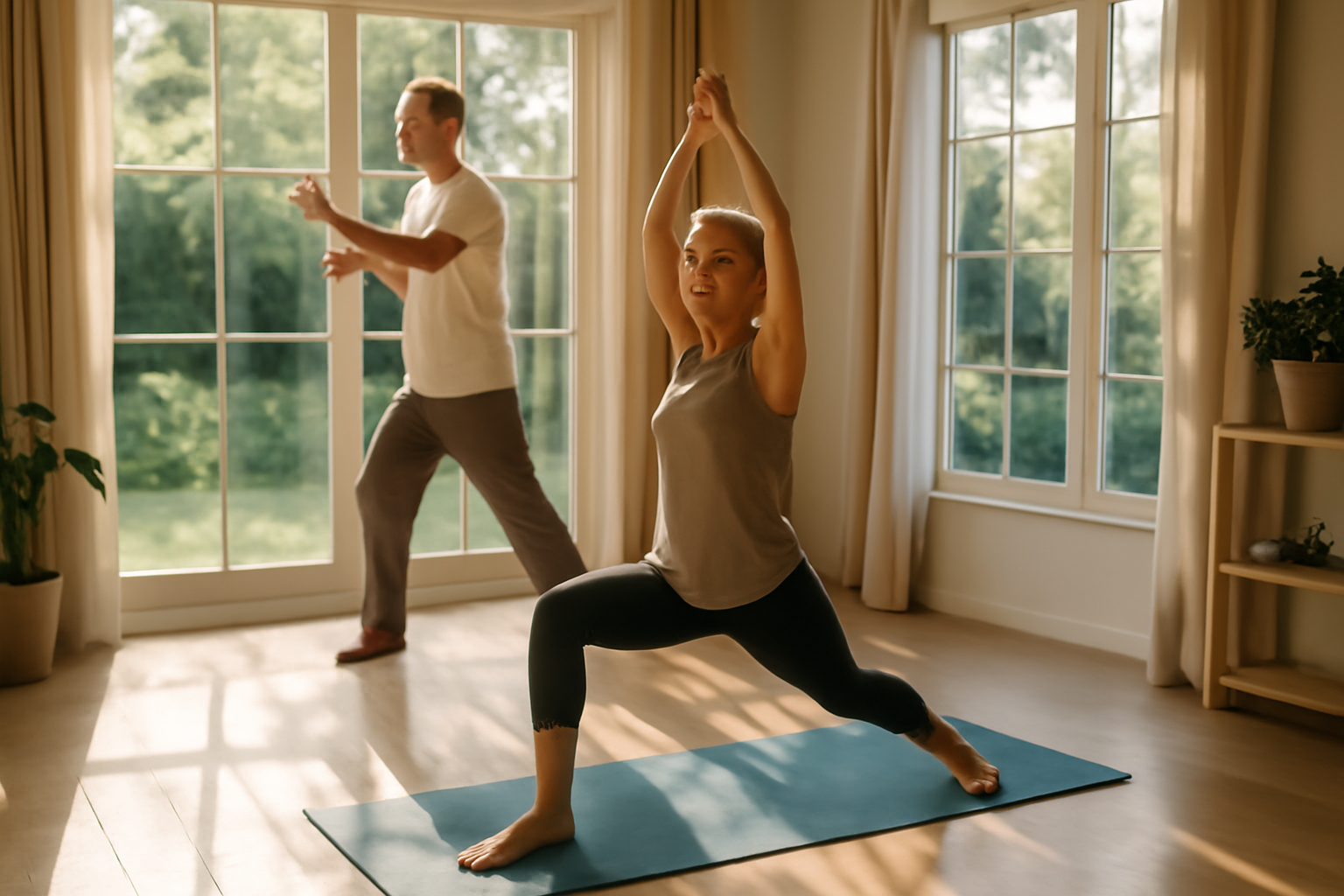
The exercises that calm your mind may also be the ones that protect your body longest.
Introduction
When David, 54, was told by his cardiologist that chronic stress was raising his blood pressure as much as his diet was, he expected to leave with another prescription. Instead, his doctor recommended something surprising: a structured mind-body exercise program. Within four months, David’s resting blood pressure had dropped meaningfully, his sleep had improved, and he told his doctor he felt "ten years younger."
David’s experience isn’t unusual. According to the National Institutes of Health, mind-body practices such as yoga, tai chi, and qigong are now among the most widely used complementary health approaches in the United States, with more than 21 million Americans practicing yoga alone. For adults over 40, these disciplines offer something traditional gym workouts often don’t: a simultaneous training of the nervous system, the musculoskeletal system, and — increasingly backed by research — the cardiovascular and immune systems.
In this guide, you’ll learn what mind-body exercise actually is, how it benefits your physical and mental health after 40, which practices are best suited to your goals, and how to get started safely — with your doctor’s support.
What Is Mind-Body Exercise?
Mind-body exercise refers to any structured physical practice that intentionally links movement with focused breathing, mental attention, or meditative awareness. Unlike conventional workouts that primarily target muscles or cardiovascular output, mind-body disciplines train the connection between your brain, nervous system, and body.
The most clinically studied forms include:
- Yoga — A practice originating in ancient India, now offered in dozens of modern styles. It combines physical postures (asanas), controlled breathing (pranayama), and meditative focus.
- Tai chi — A gentle Chinese martial art practiced as a slow, flowing sequence of movements coordinated with breath. Often described as "meditation in motion."
- Qigong — A system of coordinated body posture, movement, breathing, and meditation used for health and self-cultivation.
- Pilates — A method developed in the early 20th century emphasizing core strength, postural alignment, and breath-controlled movement.
According to the NIH National Center for Complementary and Integrative Health (NCCIH), research on these practices has expanded significantly, with hundreds of peer-reviewed clinical trials now examining their effects on conditions ranging from chronic pain to anxiety to heart disease.
For adults over 40, these practices matter for a specific reason: as the body ages, the nervous system becomes less efficient at regulating stress responses, inflammation, and motor control. Mind-body exercise appears to directly address all three.
Signs You May Benefit Most From Mind-Body Exercise
Not every adult needs the same fitness approach. Mind-body exercise is particularly well-suited for people experiencing the following:
Physical signs:
- Chronic muscle tension, especially in the neck, shoulders, and lower back
- Poor posture after years of desk work or sedentary habits
- Joint stiffness or reduced range of motion that limits other forms of exercise
- Recurring falls or balance issues — a concern that increases sharply after age 65, according to the CDC
- Chronic pain conditions such as osteoarthritis or fibromyalgia
- High resting heart rate or elevated blood pressure related to stress
Mental and emotional signs:
- Persistent low-level anxiety or difficulty "turning off" at night
- Disrupted sleep or difficulty falling asleep
- Low motivation to exercise due to burnout from high-intensity routines
- A sense of disconnect between physical activity and mental well-being
A 2021 meta-analysis published through the NIH found that adults who practiced yoga or tai chi at least twice per week reported significantly lower perceived stress levels compared to sedentary controls — with effects comparable to low-dose pharmacological interventions for mild anxiety.
This varies from person to person, and a conversation with your physician is the right starting point for determining which practice fits your health history.
Causes of the Mind-Body Disconnect After 40
Understanding why mind-body exercise becomes especially relevant after 40 requires a brief look at what changes inside the body during midlife.
Chronic stress and cortisol dysregulation: The American Psychological Association has consistently found that adults aged 35-55 report among the highest stress levels of any age group. Elevated cortisol over time contributes to visceral fat accumulation, immune suppression, cardiovascular risk, and disrupted sleep architecture.
Autonomic nervous system aging: The autonomic nervous system — which controls involuntary functions like heart rate, digestion, and stress response — becomes less adaptable with age. Heart rate variability (HRV), a key marker of nervous system health, typically declines after 40. Research suggests that regular mind-body practice can measurably improve HRV, supporting better recovery, mood regulation, and stress resilience.
Sarcopenia and postural decline: After age 40, adults lose approximately 3-8% of muscle mass per decade without intervention, according to data from the NIH. This affects posture, balance, and functional movement — all areas where Pilates and yoga provide targeted benefit.
Inflammation: Low-grade chronic inflammation — sometimes called "inflammaging" — becomes more prevalent after midlife and is linked to conditions including heart disease, type 2 diabetes, and depression. Clinical evidence from multiple NIH-supported studies indicates that regular mind-body practice reduces inflammatory biomarkers such as C-reactive protein (CRP) and interleukin-6.
What the Research Actually Shows: Benefits by Practice
Let’s look specifically at what clinical evidence supports for each major mind-body discipline, particularly in adults over 40.
Yoga
Yoga’s benefits are among the most researched in integrative medicine. According to the Johns Hopkins Arthritis Center, yoga has been shown to reduce pain and improve function in adults with osteoarthritis of the knee. The American Heart Association has acknowledged yoga as a complementary strategy for improving cardiovascular risk factors including blood pressure, resting heart rate, and lipid profiles.
A 2023 analysis supported by the NIH found that adults over 50 who practiced yoga 2-3 times per week demonstrated significant improvements in spinal flexibility, static balance, and self-reported quality of life compared to controls. For adults already dealing with mobility and flexibility challenges, yoga offers a structured, measurable path forward.
Tai Chi
Tai chi’s evidence base for fall prevention is especially strong. According to the CDC’s STEADI (Stopping Elderly Accidents, Deaths & Injuries) initiative, tai chi is one of the few interventions with consistent clinical evidence for reducing fall risk in older adults. A landmark trial published in the New England Journal of Medicine found that older adults practicing tai chi reduced fall risk by up to 47%.
Beyond fall prevention, research suggests tai chi improves executive function, cognitive processing speed, and working memory in adults over 50 — benefits that most traditional exercise programs don’t claim. If balance and fall prevention are priorities for you, tai chi may be the single most evidence-backed choice available.
Qigong
Qigong is less widely studied than yoga or tai chi in Western clinical settings, but available evidence is promising. A 2022 systematic review found that qigong practice was associated with reductions in fatigue, anxiety, and sleep disturbance in adults with chronic conditions. The Mayo Clinic recognizes qigong as a low-risk complementary practice appropriate for adults at varying fitness levels.
Pilates
Pilates, while it originated outside Eastern traditions, meets the clinical definition of mind-body exercise through its emphasis on breath, neuromuscular control, and postural awareness. Clinical evidence from the Cleveland Clinic and published in multiple peer-reviewed journals supports Pilates for reducing chronic low back pain — one of the most common complaints in adults aged 40-70 — and for improving core stability and functional movement.
How to Get Started: A Practical Framework
Starting a mind-body practice doesn’t require flexibility you don’t have or experience you haven’t built. Most disciplines are designed to be accessible at any starting point.
Step 1: Identify your primary goal. Are you focused on stress reduction? Fall prevention? Chronic pain management? Flexibility? Your answer will guide which practice fits best.
Step 2: Get medical clearance. If you have cardiovascular disease, osteoporosis, recent surgery, or any musculoskeletal injury, speak with your physician before beginning. Most mind-body practices are low-impact and broadly safe, but your doctor may recommend modifications.
Step 3: Start with guided instruction. Self-teaching through video alone can work for general wellness, but working with a certified instructor — at least initially — reduces injury risk and ensures proper form. Look for instructors certified through recognized bodies such as the Yoga Alliance, the American Tai Chi and Qigong Association, or the Pilates Method Alliance.
Step 4: Aim for consistency over intensity. Research consistently shows that frequency matters more than session length for mind-body benefits. Two to three sessions per week of 30-45 minutes each is a well-supported starting target, according to multiple NIH-reviewed protocols.
Step 5: Complement your existing routine. Mind-body exercise works best as part of a balanced fitness plan. If you’re already doing cardiovascular training, adding yoga or tai chi on alternate days gives your body active recovery while building neuromuscular and mental health benefits simultaneously.
Living With a Mind-Body Practice: What Sustains It
One of the most common challenges adults face with mind-body exercise isn’t beginning — it’s continuing past the first few weeks. Here’s what research and clinical experience suggest helps people sustain the habit:
- Community matters. Group classes — whether in-person or live-streamed — significantly improve adherence compared to solo practice. The social accountability element is real and measurable.
- Track non-scale outcomes. Monitor sleep quality, resting heart rate, stress levels, or pain scores — not just weight or appearance. Mind-body practices often show their benefits in these "invisible" markers first.
- Give it eight weeks. Most clinical trials show statistically meaningful improvements in stress, sleep, or pain after 6-8 weeks of consistent practice. Many people quit at week two or three, before benefits fully emerge.
- Accept beginner status. Inflexibility, difficulty balancing, or an active mind during meditation are not signs you’re doing it wrong — they’re signs you need the practice.
When to Call Your Doctor: Red Flags and Important Conversations
Mind-body practices are generally among the safest forms of exercise available for adults over 40. However, there are situations that require medical evaluation before or during a practice:
Seek immediate care if you experience:
- Chest pain, pressure, or tightness during or after exercise
- Sudden shortness of breath disproportionate to exertion level
- Dizziness, fainting, or loss of balance that is new or severe
- Sharp joint pain (distinct from general muscle soreness)
- Numbness or tingling in the arms, legs, or face during practice
Discuss with your doctor at your next visit:
- Whether specific yoga poses should be modified if you have osteoporosis, glaucoma, or a history of stroke
- Any medications you’re on that may affect balance or heart rate during exercise
- Whether mind-body practice could complement your current mental health treatment plan
- How to integrate these practices with any existing physical therapy or rehabilitation
Frequently Asked Questions
Q: Is yoga safe if I have osteoporosis?
A: Many yoga poses are safe and beneficial for bone health — weight-bearing postures in particular. However, certain deep forward folds and spinal twists may increase fracture risk in people with low bone density. Most physicians and physical therapists recommend a chair yoga or modified yoga program supervised by an instructor trained in working with osteoporosis. Always disclose your diagnosis to your instructor.
Q: How is tai chi different from meditation?
A: Tai chi involves continuous, flowing physical movement performed with meditative awareness — it’s an active, standing practice. Traditional seated meditation involves no physical movement. Both train the nervous system’s stress-response system, but tai chi simultaneously builds balance, strength, and coordination in ways seated meditation does not.
Q: Can Pilates replace strength training after 40?
A: Pilates builds functional core strength and neuromuscular control effectively, but it does not typically provide sufficient progressive resistance to fully prevent age-related muscle loss (sarcopenia) on its own. Clinical guidelines from the American College of Sports Medicine recommend that adults over 40 engage in resistance training using progressive overload. Pilates works excellently as a complement, not a complete replacement.
Q: How quickly will I see results from mind-body exercise?
A: This varies from person to person. Many people report improved sleep quality and reduced stress within 2-4 weeks of consistent practice. Measurable improvements in flexibility, balance, and blood pressure markers typically appear in clinical studies after 6-12 weeks. Physical changes in strength and body composition may take longer and depend on frequency and the specific practice.
Q: Do I need special equipment or a gym membership to start?
A: No. A non-slip yoga mat ($20-50) is the main investment for yoga, qigong, and many Pilates routines. Tai chi requires only comfortable clothing and a space large enough to take a few steps in any direction. Many high-quality, instructor-led classes are now available through streaming platforms, hospital wellness programs, and community centers — including free options through some Medicare Advantage plans.
Conclusion
Mind-body exercise isn’t a trend or a substitute for medical care — it’s a clinically supported, low-risk category of physical activity with a growing body of evidence behind it. For adults over 40 navigating the realities of stress, aging joints, hormonal shifts, and the desire to stay active without injury, practices like yoga, tai chi, qigong, and Pilates offer something genuinely valuable: a way to train your body and your nervous system at the same time.
The most important step is the first one. Talk to your doctor about your goals, get started with proper instruction, and give your practice the consistency it needs to show you what it can do. Your body at 40, 50, or 60 is more capable of positive change than you may realize — and the research agrees.
Medical Disclaimer: This article is for informational and educational purposes only. It does not constitute medical advice, diagnosis, or treatment. Always consult your physician or a qualified healthcare provider before making changes to your health routine or treatment plan.
Medically reviewed by our editorial health team. Content follows evidence-based standards aligned with CDC and NIH guidelines.