Water Aerobics After 40: Benefits, Routines & Tips
Low-impact, high-reward — aquatic exercise may be one of the most effective fitness tools available to adults over 40.
Why Water Aerobics Deserves a Spot in Your Fitness Routine
Margaret, 62, had been avoiding exercise for two years after a knee replacement. Her orthopedic surgeon cleared her for light activity, but every land-based workout left her joints aching. Then she tried water aerobics at her local YMCA — and within six weeks, she noticed something remarkable: stronger legs, less stiffness in the morning, and a mood she hadn’t felt in years.
Margaret’s story isn’t unusual. According to the CDC, nearly 54 million Americans have been diagnosed with arthritis, and many more live with chronic joint pain, obesity-related strain, or post-injury limitations that make traditional exercise feel impossible. Water aerobics — also called aquatic exercise or aqua fitness — offers a compelling alternative.
In this guide, you’ll learn exactly what water aerobics is, the science-backed benefits it offers adults over 40, how to get started safely, and what to watch for if you’re managing a health condition. Whether you’re a beginner or returning to fitness after a break, the pool may be the most doctor-friendly gym in town.
What Is Water Aerobics?
Water aerobics is a form of aerobic exercise performed in a swimming pool, typically in chest- or waist-deep water. Unlike lap swimming, most water aerobics routines don’t require you to put your face underwater or know how to swim at an advanced level.
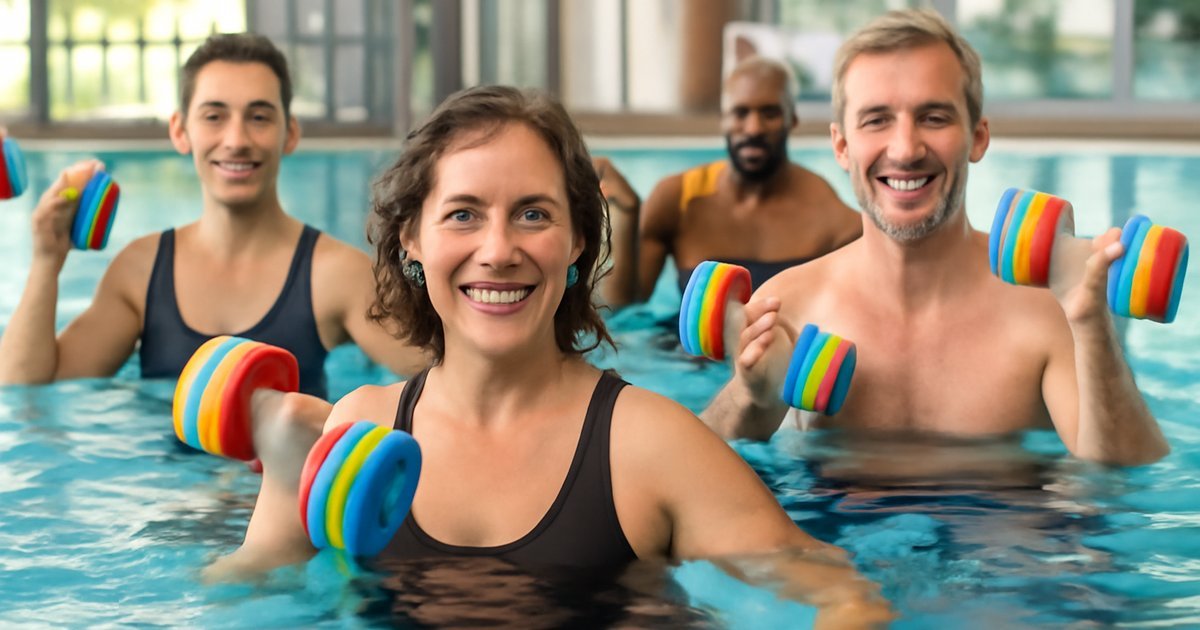
Classes and home routines typically involve rhythmic movements — walking, jogging, jumping jacks, leg lifts, arm curls — performed against water resistance. Some routines use foam dumbbells, resistance gloves, or kickboards to add intensity.
Water provides natural resistance in all directions, which means your muscles work harder without the impact forces your joints absorb during land-based exercise. According to research published by the American College of Sports Medicine, the buoyancy of water reduces effective body weight by up to 90% when submerged to the neck — dramatically decreasing joint stress while preserving muscular challenge.
This combination makes water aerobics particularly well-suited for adults over 40 who are managing joint conditions, recovering from injury, carrying extra weight, or simply looking for a sustainable long-term fitness option.
Signs That Water Aerobics Might Be Right for You
Not everyone needs a special reason to try aquatic fitness — but certain situations make it an especially strong match. Consider water aerobics if you experience or identify with any of the following:
Early signs that land-based exercise isn’t working well for you:
- Knee, hip, or ankle pain during walking, jogging, or gym workouts
- Morning stiffness that worsens after high-impact activity
- Swelling in joints after exercise
- Fear of falling or balance concerns on land
- Recovering from orthopedic surgery or injury
- Difficulty sustaining cardio workouts due to joint discomfort
Health conditions commonly linked to aquatic exercise benefits:
- Osteoarthritis and rheumatoid arthritis
- Obesity or metabolic syndrome
- Fibromyalgia
- Type 2 diabetes
- Hypertension (high blood pressure)
- Chronic low back pain
- Post-cardiac rehabilitation (with physician approval)
A study published in the Journal of Aging and Physical Activity found that older adults who participated in aquatic exercise programs reported significantly greater adherence rates compared to land-based programs — suggesting that people actually stick with it, which is the most important fitness variable of all.
Causes and Risk Factors That Make Land Exercise Difficult After 40
Understanding why exercise becomes harder after 40 helps explain why water aerobics is such a strong fit for this life stage. Several physiological shifts occur that change how your body tolerates and recovers from physical stress.
Joint degeneration: Cartilage — the cushioning tissue inside joints — naturally thins with age. The CDC estimates that osteoarthritis affects more than 32 million US adults, making it the most common form of arthritis. High-impact exercise can accelerate discomfort in already-compromised joints.
Muscle mass decline: After age 40, adults lose roughly 3–8% of muscle mass per decade in a process called sarcopenia. This loss is accelerated if physical activity decreases, creating a cycle that makes land-based workouts feel more taxing.
Bone density changes: Estrogen decline in women (particularly around menopause) and gradual testosterone shifts in men contribute to reduced bone density, increasing injury risk during high-impact activity.
Balance and coordination shifts: Proprioception — your body’s ability to sense its own position — diminishes with age, raising fall risk during weight-bearing exercise. Water provides a naturally stabilizing environment that reduces this risk.
Cardiovascular deconditioning: A sedentary period (from injury, illness, or life demands) can reduce cardiovascular fitness significantly. Water aerobics allows gradual reconditioning without the intensity spikes that could strain an undertrained heart or lungs.
These factors combine to make land exercise harder and more injury-prone — not because you’re less capable, but because your body’s recovery and structural needs have changed. Water aerobics meets those needs directly.
Getting a Diagnosis or Clearance Before Starting
Most healthy adults can begin a gentle water aerobics program without a physician visit — but if you have an existing health condition, it’s worth a quick conversation with your doctor first. Here’s what to expect and what to ask:
Who should check with a doctor before starting:
- Anyone with cardiovascular disease, recent heart attack, or uncontrolled hypertension
- People recovering from surgery in the past 6 months
- Those with open wounds or skin infections (pool chemicals can worsen these)
- Individuals with severe asthma triggered by chlorine or humidity
- Adults with inner ear disorders that affect balance in water
What your doctor may assess: Resting heart rate, blood pressure, joint range of motion, and overall cardiovascular clearance. For those post-surgery, your orthopedic or physical therapist may provide specific water exercise guidelines.
According to Mayo Clinic, aquatic exercise is widely recommended as part of rehabilitation programs for orthopedic and cardiovascular conditions — but individual clearance ensures you’re starting at the right intensity for your current health status.
At your appointment, ask: “Is there any reason I shouldn’t begin a low-intensity water aerobics class? Are there movements I should avoid given my current condition?”
Treatment Options: How Water Aerobics Fits Into Your Overall Health Plan
Water aerobics isn’t a replacement for medical treatment — but clinical evidence suggests it complements many conventional therapies meaningfully. Here’s how it integrates across common health conditions:
For arthritis management: A Cochrane systematic review found that aquatic exercise produced small but clinically meaningful improvements in pain and physical function in people with hip and knee osteoarthritis. It’s widely used as a complement to anti-inflammatory medications and physical therapy.
For cardiovascular health: Research published in the Journal of Human Hypertension found that regular aquatic exercise significantly reduced both systolic and diastolic blood pressure in hypertensive adults. The American Heart Association recognizes moderate-intensity aerobic exercise — including water aerobics — as part of standard heart health recommendations.
For blood sugar management: The American Diabetes Association supports aerobic exercise as a cornerstone of Type 2 diabetes management. Aquatic workouts have been shown to improve insulin sensitivity and glycemic control in adults with diabetes, comparable to land-based aerobic programs of similar intensity.
For fibromyalgia: Clinical evidence, including a meta-analysis in the Archives of Physical Medicine and Rehabilitation, indicates that warm-water aquatic exercise is one of the most effective non-pharmacological interventions for fibromyalgia — reducing pain, fatigue, and depression scores.
For mental health: Exercise in general reduces cortisol (the stress hormone) and increases endorphins. The social nature of group water aerobics classes adds an additional layer — research from Johns Hopkins suggests that socially connected exercise environments improve long-term adherence and reduce depressive symptoms in older adults.
If you’re taking medications for any of these conditions, discuss with your physician how adding exercise may affect your needs — some individuals find that consistent exercise allows for medication adjustments over time, always under medical supervision.
Living Well With Water Aerobics: Routines, Tips & What to Expect
Starting water aerobics doesn’t require fancy gear or advanced swimming ability. Here’s a practical framework for getting started and staying consistent.
Finding a class or starting solo: Most YMCAs, community recreation centers, and fitness clubs offer water aerobics classes. Look for beginner or “silver” classes specifically designed for older adults. If you prefer solo workouts, many facilities have open lap swim times during which you can follow a guided routine.
A beginner-friendly 30-minute routine:
- Warm-up (5 minutes): Walk back and forth across the pool, swing arms gently, circle shoulders
- Cardio block (15 minutes): Alternating water jogging in place, jumping jacks (modified — feet touch bottom), cross-country ski motion, and side shuffles
- Strength block (7 minutes): Arm curls with foam dumbbells, leg kicks forward and back, water push-and-pull with cupped hands
- Cool-down (3 minutes): Slow walking, gentle neck and shoulder stretches at the pool edge
Frequency recommendation: Most clinical guidelines recommend 150 minutes of moderate-intensity aerobic activity per week for adults. For water aerobics, this translates to approximately 3–5 sessions of 30–50 minutes each. Start with 2–3 sessions weekly and progress gradually.
Gear that helps:
- Water shoes for grip and foot protection
- Foam dumbbells for resistance variation
- A waterproof heart rate monitor to track intensity
- A kickboard for lower body isolation exercises
Tracking intensity without a heart rate monitor: Use the "talk test." At moderate intensity, you should be able to speak in short sentences but not sing. If you can hold a full conversation without effort, increase your pace or add resistance equipment. If you can’t speak at all, slow down.
For a complementary land-based strength option, consider pairing water aerobics with resistance band training after 40, which offers similarly joint-friendly strength work. And if you’re interested in expanding your cardio options, cycling for fitness after 40 is another low-impact option worth exploring.
What to expect in the first 4–8 weeks: Most adults report reduced joint stiffness, improved energy levels, and better sleep within the first month. Visible muscular changes and cardiovascular improvements typically emerge between weeks 6–12 with consistent effort. This varies from person to person based on starting fitness level, frequency, and individual health status.
When to Call Your Doctor or Seek Emergency Care
Water aerobics is among the safest exercise modalities available — but it’s still physical exertion, and certain symptoms warrant attention.
Stop exercising and call 911 if you experience:
- Chest pain, pressure, or tightness during or after exercise
- Sudden shortness of breath not explained by exertion level
- Dizziness, fainting, or near-fainting in the water
- Sudden severe joint pain (not routine muscle soreness)
- Heart palpitations that feel rapid, irregular, or alarming
Contact your doctor (non-emergency) if you notice:
- Joint swelling that persists more than 24 hours after exercise
- Skin rash or irritation that may indicate pool chemical sensitivity
- Ear pain or infection after repeated pool use (swimmer’s ear)
- Unusual fatigue or weakness that doesn’t improve with rest
- Blood sugar readings that are consistently unusual after workouts (for those managing diabetes)
At your next routine appointment, consider telling your doctor: "I’ve started a water aerobics program 3 times a week. I’d like to discuss whether my current medications or monitoring routines need any adjustment."
Frequently Asked Questions About Water Aerobics After 40
Is water aerobics enough exercise on its own, or do I need to add other workouts?
Water aerobics can absolutely serve as your primary form of exercise, especially if you’re managing joint conditions or returning to fitness after a break. However, if your goal includes significant muscle building or bone density improvement, clinical evidence suggests complementing aquatic workouts with some weight-bearing or resistance-based activity on land. Your specific needs should guide this — your physician or a certified personal trainer can help you design a balanced program.
Do I need to know how to swim to do water aerobics?
No. Most water aerobics exercises are performed in chest- or waist-deep water, with your feet on the pool floor. You don’t need to submerge your head or perform swimming strokes. Many participants who are not confident swimmers participate safely in group classes.
Can water aerobics help with weight loss?
Research suggests yes — as a calorie-burning aerobic activity. A 155-pound person burns approximately 400–500 calories per hour of vigorous water aerobics, according to estimates from the Harvard Medical School. However, like all exercise, it works best for weight management when paired with appropriate nutritional habits. No exercise alone guarantees weight loss; individual results vary based on intensity, frequency, diet, and metabolic factors.
Is warm water better than cool water for arthritis or fibromyalgia?
Clinical evidence suggests warm water (between 83–90°F) tends to provide greater pain relief and muscle relaxation for people with arthritis and fibromyalgia compared to cooler temperatures. Many therapeutic pools and aquatic therapy facilities maintain water at these temperatures. Community lap pools may be cooler, which is typically fine for healthy adults but less ideal for those with these specific conditions.
How is water aerobics different from aquatic physical therapy?
Aquatic physical therapy (also called hydrotherapy) is a medically supervised intervention provided by a licensed physical therapist, usually following injury or surgery. It involves individualized exercises targeting specific rehabilitation goals. Water aerobics is a fitness activity — generally less individualized and not medically supervised. If you’re post-surgery or managing a serious orthopedic condition, ask your physician whether aquatic physical therapy is appropriate before transitioning to general water aerobics classes.
Conclusion: The Pool as Your Most Sustainable Fitness Partner After 40
Water aerobics isn’t just for seniors recovering from surgery — it’s a legitimate, evidence-backed fitness tool that challenges your cardiovascular system, strengthens your muscles, and protects your joints simultaneously. For adults over 40 navigating the real physical demands of aging bodies, that combination is rare and valuable.
The research consistently shows that people stick with water aerobics longer than many land-based alternatives — and consistency is what actually produces results over months and years. Whether you join a group class, follow a solo pool routine, or combine aquatic exercise with walking for fitness after 40, the key is finding an approach that feels sustainable for your body and your life.
Start with two sessions a week, listen to your body, and involve your healthcare provider as a partner in the process. The pool is waiting — and your joints will thank you.
Medical Disclaimer: This article is for informational and educational purposes only. It does not constitute medical advice, diagnosis, or treatment. Always consult your physician or a qualified healthcare provider before making changes to your health routine or treatment plan.
Medically reviewed by our editorial health team. Content follows evidence-based standards aligned with CDC and NIH guidelines.