A low-impact, joint-friendly approach to building muscle, improving mobility, and protecting long-term health — backed by clinical evidence.
Consider Mark, a 54-year-old accountant who spent years avoiding strength training because his knees couldn’t handle the stress of free weights and gym machines. His doctor kept telling him he needed more resistance exercise to protect his bone density and slow the muscle loss that comes with age. Then a physical therapist introduced him to resistance bands — and everything changed. Within three months, Mark had regained functional strength, reduced his lower back pain, and was exercising five days a week without joint discomfort.
Mark’s story isn’t unusual. According to the CDC, adults lose 3–8% of muscle mass per decade after age 30, with that rate accelerating significantly after 60. This age-related muscle loss, called sarcopenia, increases the risk of falls, fractures, metabolic dysfunction, and reduced independence. Resistance training is one of the most clinically validated tools to slow this process — and resistance bands offer a versatile, affordable, and joint-friendly way to get there.
In this guide, you’ll learn exactly what resistance band training is, why it works especially well for adults in their 40s, 50s, 60s, and beyond, and how to build a practical, evidence-based routine you can use at home or at the gym.
What Is Resistance Band Training?
Resistance band training is a form of strength exercise that uses elastic bands — made of latex, rubber, or fabric — to create tension against your muscles during movement. Unlike free weights, which rely on gravity, resistance bands create progressive tension throughout the full range of motion, meaning your muscles are working from start to finish of each movement.
Bands come in several forms: loop bands (circular, great for lower body), therapy bands (flat strips, often used in rehabilitation), and tube bands with handles (versatile for upper and full-body work). Resistance levels typically range from light to extra-heavy, and they can be combined to increase difficulty as you build strength.
According to the American College of Sports Medicine (ACSM), resistance training — including elastic resistance — is recommended for all healthy adults, with particular emphasis for older populations who need to preserve lean muscle mass, joint stability, and bone health. Research published in the Journal of Human Kinetics found that elastic resistance training produces comparable gains in muscular strength and endurance to free weight training, especially for adults who are new to exercise or returning after a long break.
This matters enormously for adults over 40, who may face barriers like joint pain, prior injuries, limited gym access, or simply the intimidation factor of heavy-weight environments.
Signs Your Body Needs More Strength Training
Many adults over 40 recognize the signs of declining muscle strength, even if they don’t connect them to sarcopenia or musculoskeletal decline. Knowing what to look for can motivate earlier action.
Early signs that your strength is declining:
- Difficulty carrying groceries or lifting objects that once felt easy
- Increased fatigue during everyday tasks like climbing stairs
- Noticeable changes in body composition — less muscle tone, more fat around the midsection
- Mild stiffness or reduced range of motion in joints
- Slower recovery from minor physical exertion
More advanced signs requiring medical evaluation:
- Significant unintentional weight loss combined with muscle weakness
- Balance problems or multiple unexplained falls
- Difficulty rising from a chair without using your arms
- Chronic joint pain that limits basic mobility
- Extreme fatigue not explained by sleep or lifestyle factors
A 2021 study published in The Journals of Gerontology found that adults who engaged in at least two sessions of resistance exercise per week had significantly better grip strength, walking speed, and functional independence scores compared to sedentary peers. Grip strength, in particular, has emerged as a reliable clinical marker of overall health and longevity.
If you recognize several of these early signs, resistance band training may be one of the most impactful steps you can take — and it’s one your doctor is likely to encourage.
Why Resistance Bands Work Especially Well After 40
There are compelling physiological and practical reasons why resistance bands are particularly well-suited for adults in midlife and beyond. This isn’t a compromise for those who can’t handle "real" weights — it’s a strategically sound training tool.
Joint-friendly by design. Because bands don’t rely on gravity, the forces they create are distributed more evenly across the joint. There’s no sudden load at the end of a movement, which reduces the peak stress on cartilage in knees, hips, and shoulders — areas that often become vulnerable after 40.
Variable resistance builds stabilizer muscles. As you stretch a band, resistance increases. This forces your stabilizer muscles — the smaller muscles that support joint integrity — to engage throughout the entire range of motion. Research from the Journal of Physical Therapy Science found that elastic resistance significantly activates stabilizer muscles compared to machine-based training, which can be particularly protective for adults with joint instability.
Scalable and progressive. You can easily increase or decrease resistance by changing band thickness, adjusting your grip, or combining bands. This makes progressive overload — gradually increasing the challenge to stimulate muscle growth — entirely achievable without complex equipment.
Accessible and affordable. A full set of resistance bands typically costs $15–$50, requires no gym membership, and can be used almost anywhere. For adults managing chronic conditions or with limited mobility, this accessibility removes a significant barrier to consistent training. If you’re already exercising at home, you may want to explore our guide on Home Gym Workouts After 40 for a complete setup plan.
Supported by clinical rehabilitation. Resistance bands are standard equipment in physical therapy and cardiac rehabilitation programs across the US. Their safety profile and clinical validation make them a trusted tool for post-surgical recovery, chronic pain management, and osteoporosis prevention.
Causes and Risk Factors: Why Muscle Loss Accelerates After 40
Understanding why your body changes after 40 can help you approach resistance training with the right mindset — not as vanity, but as preventive medicine.
Hormonal shifts. Both men and women experience declining levels of anabolic hormones — testosterone, growth hormone, and estrogen — starting in their 30s and accelerating through their 40s and 50s. These hormones play critical roles in muscle protein synthesis, meaning the body becomes less efficient at building and repairing muscle tissue. According to the NIH, testosterone levels in men decline approximately 1–2% per year after age 30.
Reduced physical activity. Career demands, family responsibilities, and accumulated minor injuries often lead adults to become less physically active through their 40s. The less you use your muscles, the faster they atrophy — a process accelerated by hormonal changes.
Chronic low-grade inflammation. Aging is associated with increased systemic inflammation, often called "inflammaging." This inflammatory environment impairs muscle repair and accelerates breakdown. Regular resistance training has been shown to reduce inflammatory markers including C-reactive protein (CRP), making it one of the few lifestyle interventions that directly addresses this underlying mechanism.
Poor nutrition — especially inadequate protein. Many adults over 40 consume insufficient protein to support muscle maintenance, especially as caloric needs shift. The American Dietetic Association suggests that older adults may need 1.2–1.6 grams of protein per kilogram of body weight daily — significantly more than traditional recommendations. Pairing resistance band training with adequate protein intake dramatically improves outcomes.
Risk factors for accelerated decline include: sedentary lifestyle, smoking, excessive alcohol use, vitamin D deficiency, poor sleep quality, obesity, and chronic conditions like type 2 diabetes or cardiovascular disease.
How to Get Started: A Beginner-Friendly Resistance Band Routine
Before beginning any new exercise program, it’s important to speak with your physician — especially if you have a chronic condition, recent injury, or have been sedentary for an extended period. Your doctor may recommend a baseline assessment or refer you to a physical therapist for proper form guidance.
Once cleared, the following framework aligns with ACSM guidelines for resistance training in adults over 40:
Frequency: 2–3 days per week, with at least 48 hours of rest between sessions targeting the same muscle groups. Rest days are not optional — they’re when muscle repair and growth actually occur. For more on recovery protocols, see our article on Core Strength After 40.
Sets and Reps: For beginners, 2–3 sets of 10–15 repetitions per exercise is appropriate. Research suggests that for older adults, moderate resistance with higher repetitions (12–20) produces excellent strength and endurance gains with lower injury risk than heavy, low-rep approaches.
Foundational exercises to include:
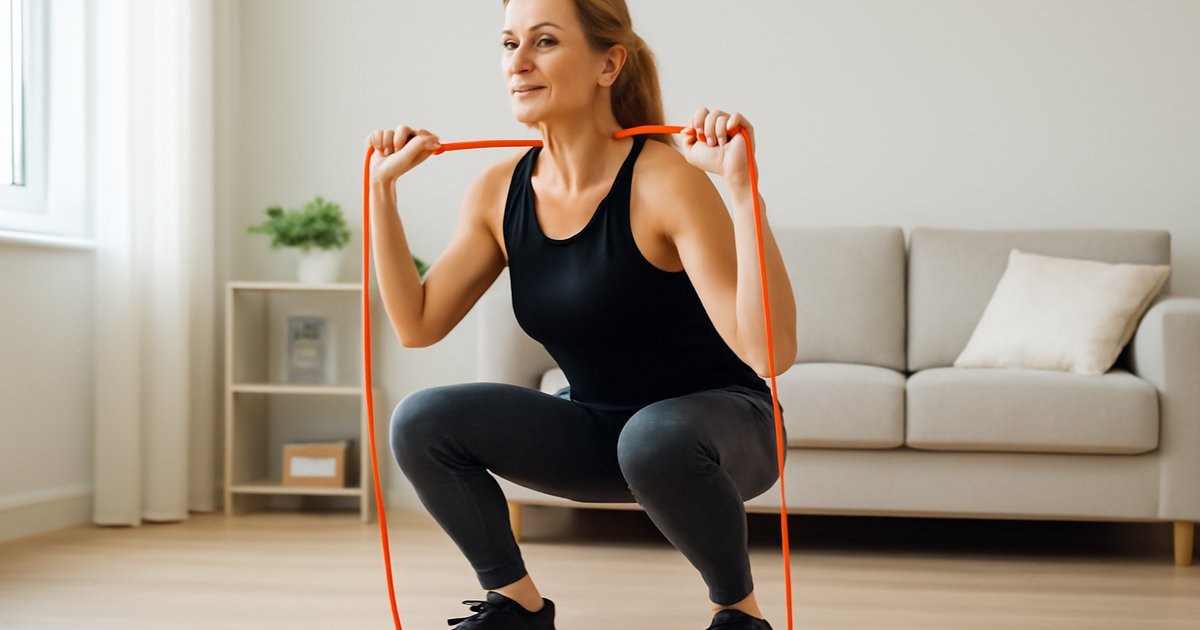
- Banded Squat: Stand on band, hold handles at shoulder height, squat to 90 degrees. Builds quads, glutes, and core.
- Seated Row: Sit with legs extended, loop band around feet, pull handles toward your torso. Targets back, biceps, and rear shoulders.
- Banded Chest Press: Loop band behind your back, press handles forward from chest height. Works chest, shoulders, and triceps.
- Lateral Band Walk: Step inside loop band at ankle height, walk sideways with slight bend in knees. Activates hip abductors and glutes — critical for knee health.
- Standing Bicep Curl: Stand on band, curl handles toward shoulders. Targets biceps and forearms.
- Overhead Press: Stand on band, press handles upward from shoulder height. Works shoulders and triceps.
- Glute Bridge with Band: Lying on back, loop band across hip crease, bridge upward. Strengthens glutes and lower back.
Warm-up and cool-down: Always begin with 5–10 minutes of light cardio (walking, cycling) and dynamic stretching. End with 5 minutes of static stretching targeting the muscles worked. This is especially important after 40, when joint lubrication and muscle elasticity require more deliberate preparation. Consider complementing resistance training with a regular walking routine for cardiovascular health.
Living With Your Resistance Band Practice: Making It Sustainable
The most effective exercise program is the one you actually do consistently. Research consistently shows that adherence — not the specific training modality — is the most powerful predictor of long-term health outcomes.
Track your progress. Keep a simple log of exercises, band resistance used, sets, and reps. Progression over time — even small increases in resistance or repetitions — is a powerful motivator and ensures your muscles are being challenged appropriately.
Schedule training like an appointment. Studies from the American Journal of Health Behavior consistently show that adults who schedule exercise in advance and treat it as a non-negotiable commitment are significantly more likely to maintain long-term habits.
Address soreness appropriately. Mild muscle soreness (delayed onset muscle soreness, or DOMS) 24–48 hours after training is normal and expected, especially for beginners. Moderate stretching, light movement, and adequate hydration typically resolve it within 48–72 hours. Sharp or joint-specific pain during or after exercise, however, is a signal to stop and consult a healthcare provider.
Pair with balanced nutrition. Protein timing matters. Clinical evidence suggests consuming 20–30 grams of high-quality protein within two hours of a resistance training session supports muscle protein synthesis, particularly in adults over 50 whose anabolic response is blunted compared to younger individuals.
Consider adding a training partner or online class. Social accountability significantly improves exercise adherence across all age groups. Group-based resistance training programs also provide coached instruction, reducing injury risk for beginners.
When to Call Your Doctor: Red Flags During Exercise
While resistance band training is among the safest exercise modalities available, there are situations that require immediate medical attention or professional evaluation before continuing.
Stop exercising and call 911 or seek emergency care immediately if you experience:
- Chest pain, pressure, or tightness during or after exercise
- Shortness of breath disproportionate to your exertion level
- Dizziness, lightheadedness, or fainting
- Heart palpitations (rapid, irregular, or pounding heartbeat)
- Sudden severe pain in a joint or muscle
- Numbness or tingling radiating down the arm or leg
Schedule a non-emergency appointment if you notice:
- Persistent joint swelling after workouts that doesn’t resolve within 48 hours
- Pain that consistently worsens with exercise rather than improving over weeks
- Unexplained fatigue or weakness that isn’t improving with adequate rest
- Signs of overtraining: disrupted sleep, mood changes, declining performance
At your next scheduled visit, tell your doctor: that you’ve started a resistance training program, what types of exercises you’re performing, and whether you’ve experienced any discomfort. Most physicians will want to know — and will likely encourage you to continue.
Frequently Asked Questions
Are resistance bands as effective as weights for building muscle after 40?
Research suggests yes — for most functional strength and muscle maintenance goals, resistance bands produce comparable results to free weights. A 2019 meta-analysis published in SAGE Open Medicine found no statistically significant difference in strength gains between elastic and conventional resistance training. Bands may actually have advantages for older adults due to their joint-friendly variable resistance profile.
How long before I see results from resistance band training?
Most individuals report noticeable improvements in functional strength and energy levels within 4–6 weeks of consistent training. Visible changes in muscle tone typically appear at 8–12 weeks. Clinical evidence indicates that even modest improvements in strength within the first month are associated with meaningful reductions in fall risk and improved metabolic markers.
Can I do resistance band training if I have arthritis or joint pain?
In many cases, yes — but always with your physician’s or physical therapist’s guidance first. The Arthritis Foundation actually recommends resistance training as a first-line strategy for managing joint pain, noting that stronger muscles reduce the load on affected joints. Bands are often preferred over free weights in arthritis management because they allow controlled, pain-free ranges of motion. For more guidance, this may pair well with our existing content on exercising with arthritis.
How do I choose the right resistance level?
Start with a band that allows you to complete 12–15 repetitions with good form while feeling moderate — not easy — effort by the final reps. You should feel challenged but not be straining or losing form. When 15 repetitions feel easy, it’s time to progress to a heavier band. This varies from person to person based on baseline fitness, muscle group, and specific exercise.
Is resistance band training safe for people with osteoporosis?
Clinical evidence indicates that resistance training is one of the most effective interventions for slowing bone density loss in adults with osteoporosis or osteopenia. The NIH’s National Institute on Aging specifically recommends resistance exercises for bone health. However, individuals with diagnosed osteoporosis should work with their healthcare provider and potentially a physical therapist to identify exercises that are appropriate given their specific bone health status and fracture risk.
The Bottom Line
Resistance band training isn’t a shortcut or a compromise — it’s a clinically validated, highly effective tool for building strength, protecting joints, preserving bone density, and maintaining functional independence as you age. For adults in their 40s, 50s, 60s, and beyond, it may be one of the smartest investments you make in your long-term health.
The CDC’s physical activity guidelines recommend that all adults engage in muscle-strengthening activities at least two days per week — and resistance bands offer one of the most accessible, affordable, and evidence-backed ways to meet that recommendation. Whether you’re just starting out or returning to exercise after a long break, bands provide a safe and scalable entry point.
Start with two sessions per week, focus on consistency over intensity, and keep your physician informed about your progress. Small, sustainable steps taken now translate into meaningful health outcomes over the years ahead.
This article is for informational and educational purposes only. It does not constitute medical advice, diagnosis, or treatment. Always consult your physician or a qualified healthcare provider before making changes to your health routine or treatment plan.
Medically reviewed by our editorial health team. Content follows evidence-based standards aligned with CDC and NIH guidelines.