Poor posture isn’t just about appearances — it’s a serious musculoskeletal issue that drives pain, fatigue, and long-term spinal damage in millions of American adults.
Mark, 52, spent years working at a desk before his chronic neck pain became unbearable. His doctor told him something he didn’t expect: the root cause wasn’t arthritis or a herniated disc — it was years of forward head posture and rounded shoulders that had gradually reshaped how his spine bore weight. A targeted posture correction program changed his quality of life within months.
According to the National Institutes of Health, musculoskeletal disorders — many of which are directly linked to poor posture — affect more than 126 million Americans and are the leading cause of disability in adults over 40. Yet posture is rarely discussed as a primary intervention in preventive care.
This guide will walk you through what poor posture actually is, why it worsens after 40, the most effective posture correction exercises backed by clinical research, and when you should see a healthcare provider. Whether you’re managing back pain, recovering from injury, or simply being proactive about your spinal health, this article gives you the tools to start improving today.
What Is Poor Posture — and Why Does It Worsen After 40?
Posture refers to the alignment of your body segments — head, shoulders, spine, hips, knees, and ankles — relative to one another and to gravity. Ideal posture distributes mechanical stress evenly across joints and muscles, minimizing wear and energy expenditure.
Poor posture occurs when chronic misalignment forces certain muscles and joints to compensate for others. Over time, some muscles shorten and tighten (called hypertonicity), while opposing muscles lengthen and weaken — a pattern clinicians call muscle imbalance.
After 40, several biological changes accelerate postural decline:
- Muscle mass loss (sarcopenia): Adults lose up to 3–5% of muscle mass per decade after 30, per the NIH. Weakened core and back muscles struggle to hold the spine upright.
- Disc degeneration: Intervertebral discs lose hydration and height, reducing spinal flexibility and shock absorption.
- Reduced proprioception: The body’s awareness of its own position in space diminishes, making postural correction harder to sustain automatically.
- Prolonged sedentary behavior: The CDC reports that fewer than 25% of American adults meet federal physical activity guidelines — and desk work compounds postural dysfunction daily.
Common postural problems in adults over 40 include forward head posture (head shifted forward of the shoulders), thoracic kyphosis (excessive rounding of the upper back), anterior pelvic tilt (lower back arching excessively), and flat-back posture (loss of natural lumbar curve).
Research suggests these patterns are not inevitable — they are largely correctable with consistent, targeted exercise.
Signs and Symptoms of Postural Dysfunction
Poor posture rarely announces itself dramatically at first. The warning signs often build slowly and are easy to attribute to aging or stress.
Early signs:
- Tension headaches, especially at the base of the skull
- Nagging neck stiffness, particularly after sitting or sleeping
- Rounded shoulders that feel difficult to pull back
- Mid-back tightness or fatigue after standing
- Hip flexor tightness and difficulty standing fully upright
- Mild lower back discomfort after long periods of sitting
More advanced signs:
- Persistent or radiating neck and back pain
- Visible forward head position (chin jutting forward)
- Noticeable hump at the upper back (dowager’s hump)
- Reduced range of motion in the shoulders, hips, or spine
- Numbness or tingling in the arms or legs (nerve compression)
- Breathing difficulty due to compressed chest cavity
- Balance problems or increased fall risk
A 2021 study published in the Journal of Physical Therapy Science found that adults with forward head posture of more than 2 cm from the neutral line experienced significantly higher rates of chronic cervical pain and reduced lung capacity compared to those with neutral alignment.
Causes and Risk Factors
Understanding what drives poor posture helps you target the right interventions. Causative factors fall into three broad categories.
Lifestyle and occupational factors are the most prevalent in US adults. Prolonged sitting — an average American adult sits 6–8 hours daily, per CDC data — is perhaps the single biggest driver of postural dysfunction. Screen use, driving, and smartphone habits reinforce forward head and rounded shoulder patterns.
Musculoskeletal imbalances develop when certain movements are repeated far more than their opposites. Sitting all day chronically shortens hip flexors and tightens chest muscles while weakening glutes, deep core stabilizers, and scapular retractors (muscles that pull the shoulder blades back).
Structural and medical factors include:
- Osteoporosis — affects 10 million Americans and can cause vertebral compression fractures that alter spinal curvature (NIH)
- Scoliosis (abnormal lateral spinal curvature)
- Previous injuries or surgeries that alter movement patterns
- Neurological conditions such as Parkinson’s disease
- Obesity — excess abdominal weight shifts the center of gravity and increases lumbar stress
Psychological stress also plays a documented role. Research from Harvard Medical School suggests chronic stress activates the body’s protective posture — shoulders drawn inward, head forward — which can become habitual over time.
Diagnosis: What to Expect
If you’re experiencing pain or functional limitations related to posture, a proper evaluation is the right starting point. Self-assessment tools (like the wall test, where you stand with your heels touching a wall and check if your head, shoulders, and buttocks contact it naturally) can offer clues — but they don’t replace clinical assessment.
What a healthcare provider may assess:
- Static postural analysis — visual observation of alignment from multiple angles
- Range-of-motion testing for the spine, hips, and shoulders
- Muscle length and strength testing to identify imbalances
- Functional movement screening
- Neurological assessment if tingling or weakness is present
Imaging (X-ray or MRI) may be ordered if structural problems like disc herniation, fractures, or scoliosis are suspected. Physical therapists, orthopedic specialists, and sports medicine physicians are well-positioned to evaluate postural dysfunction. Most primary care physicians can also provide an initial referral.
Clinical evidence indicates that early intervention — before chronic pain patterns become entrenched — yields significantly better outcomes. If symptoms have been present for more than a few weeks, scheduling an evaluation sooner rather than later is advisable.
Posture Correction Exercises: What the Evidence Supports
The most effective posture correction programs combine three elements: strengthening weak muscles, stretching tight ones, and retraining neuromuscular awareness. Research suggests that consistency over 8–12 weeks produces measurable improvements in spinal alignment and pain reduction.
Below are evidence-supported exercises organized by target area. Always warm up for 5 minutes before starting, and consult your physician if you have existing spinal conditions.
1. Chin Tucks (Cervical Retraction)
This is one of the most clinically validated exercises for forward head posture. Sit or stand tall. Gently draw your chin straight back — as if making a double chin — without tilting your head up or down. Hold 3–5 seconds, release. Aim for 10–15 repetitions, 2–3 times daily. A randomized controlled trial published in the Journal of Orthopaedic & Sports Physical Therapy found that cervical retraction exercises significantly reduced neck pain and improved head position in office workers over 6 weeks.
2. Wall Angels
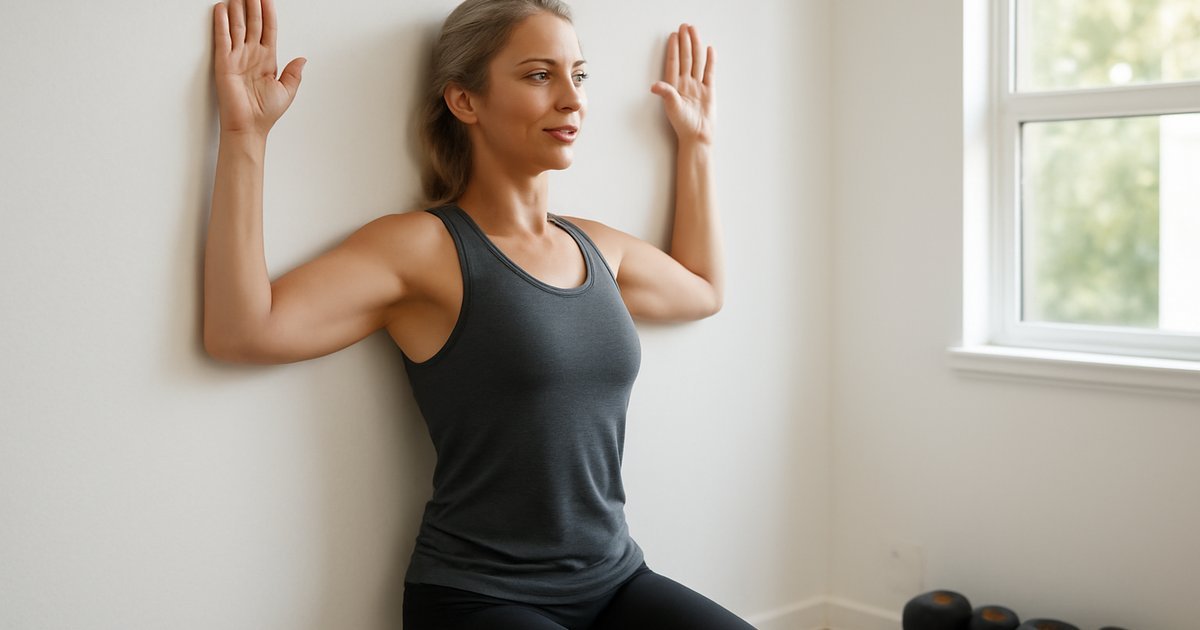
Stand with your back flat against a wall, feet about 4 inches out. Press your lower back, mid-back, and head against the wall. Raise your arms to a goalpost position (elbows at shoulder height, bent 90°). Slowly slide your arms up the wall as high as possible while keeping all contact points touching. Return and repeat 10 times. This exercise activates the lower trapezius and serratus anterior — muscles critical for scapular control and shoulder blade positioning.
3. Thoracic Extension Over a Foam Roller
Place a foam roller horizontally on the floor. Sit in front of it, then lean back so the roller is at your mid-back (not your lower back or neck). Support your head with your hands. Gently extend over the roller, opening the chest. Hold 20–30 seconds, breathing deeply. Move the roller slightly up or down to address different thoracic segments. Research from the Cleveland Clinic supports thoracic mobility work as a key component of kyphosis management.
4. Dead Bug
This core stability exercise targets deep spinal stabilizers without loading the spine. Lie on your back with arms pointing toward the ceiling, knees bent at 90° (tabletop position). Slowly lower your right arm overhead while simultaneously extending your left leg — keep your lower back pressed to the floor throughout. Return to start and switch sides. Perform 8–10 reps per side. The Mayo Clinic recommends dead bug variations as a safe, effective core exercise for adults with lower back concerns.
5. Hip Flexor Stretch (Kneeling Lunge Stretch)
Kneel on your right knee, left foot forward. Keeping your torso upright, shift your weight gently forward until you feel a stretch in the front of your right hip and thigh. Hold 30 seconds per side, 2–3 times. Tight hip flexors are a major driver of anterior pelvic tilt — a posture pattern that increases lumbar strain. This varies from person to person in terms of tightness, so adjust depth to your comfort level.
6. Scapular Squeezes (Prone Y-T-W)
Lie face down on a mat, arms extended in a Y position (thumbs up). Squeeze your shoulder blades together and lift your arms slightly off the floor. Hold 3 seconds, lower. Repeat in T (arms straight out to sides) and W (elbows bent at 90°) positions. Perform 8–10 reps in each position. These movements directly target the lower and middle trapezius, which are chronically underactive in most desk workers.
7. Glute Bridge
Lie on your back with knees bent and feet flat. Press through your heels to lift your hips until your body forms a straight line from shoulders to knees. Squeeze your glutes at the top, hold 2–3 seconds, lower. Perform 15–20 repetitions. Weak glutes are intimately linked to both anterior pelvic tilt and lower back pain. Clinical evidence from Johns Hopkins indicates that glute strengthening is a foundational element of postural rehabilitation programs.
For more foundational strengthening exercises compatible with posture work, see our guide on Bodyweight Training After 40: Strength Without Equipment.
Living With Postural Dysfunction: Daily Habits That Accelerate Recovery
Exercises matter — but what you do during the other 23 hours of the day shapes your results just as much. Research suggests that environmental and behavioral changes compound the benefits of structured exercise significantly.
Workstation ergonomics: Your monitor should be at eye level, about an arm’s length away. Your hips and knees should form 90° angles when seated. Feet should rest flat on the floor or a footrest. The American College of Occupational and Environmental Medicine reports that ergonomic workstation adjustments reduce musculoskeletal complaints in office workers by up to 40%.
Movement breaks: Stand and move for 2–3 minutes every 30–45 minutes of sitting. Set a phone reminder if needed. Even brief interruptions in prolonged sitting reduce muscular fatigue and postural strain.
Sleep position: Side sleeping with a pillow between your knees, or back sleeping with a pillow under your knees, generally supports better spinal alignment than stomach sleeping, which places the neck in rotation for hours.
Mindful posture checks: Several times a day, pause and notice your posture. Roll your shoulders back and down, lengthen your spine, and gently tuck your chin. This neuromuscular rehearsal gradually makes neutral posture more automatic.
Complementary movement practices — such as yoga and Pilates — are particularly effective at reinforcing postural awareness. Our guides on Yoga for Fitness After 40 and Pilates After 40: Core Strength, Posture & Pain Relief offer excellent companion programs to the exercises described here.
When to Call Your Doctor or Seek Emergency Care
Most posture-related discomfort responds well to exercise and lifestyle changes. However, certain symptoms require prompt medical attention.
See your doctor soon if you experience:
- Back or neck pain that is new, worsening, or doesn’t improve after 4–6 weeks of self-care
- Pain that radiates down your arm or leg (possible nerve compression)
- Numbness, tingling, or weakness in your extremities
- Difficulty with balance or coordination that has worsened recently
- Pain that wakes you from sleep consistently
- Visible, rapidly progressing spinal curve
Seek emergency care immediately if you have:
- Sudden, severe back pain following a fall or injury
- Loss of bladder or bowel control alongside back pain (possible cauda equina syndrome — a medical emergency)
- Progressive leg weakness that develops rapidly
- Chest pain or shortness of breath accompanying back or neck pain
At your next routine appointment, consider telling your doctor: "I’ve been working on posture correction exercises and want to make sure my program is appropriate for my spinal health history." This gives your provider the context to offer personalized guidance.
Frequently Asked Questions
Q: How long does it take to correct posture in adults over 40?
A: Most clinical programs show measurable improvements in 8–12 weeks of consistent exercise and habit changes. However, this varies from person to person depending on the severity of imbalances, consistency of practice, and whether any structural issues are present. Some individuals notice relief from pain and tension within 2–4 weeks.
Q: Can posture really be corrected after 50 or 60?
A: Research suggests yes — meaningful improvement is achievable at any age, though the process may take longer and require more consistency in older adults. Muscle imbalances can be addressed at any stage of life. The key is avoiding structural conditions like severe osteoporosis-related fractures, which require physician-guided management.
Q: Is a posture corrector brace helpful or harmful?
A: Most physical therapists and orthopedic specialists recommend using posture braces sparingly, if at all. While they may provide short-term pain relief, they can create dependency by reducing the activation of the muscles you need to strengthen. Clinical evidence indicates that active exercise-based correction outperforms passive bracing for long-term results.
Q: Should I see a physical therapist or a chiropractor for posture correction?
A: Both can be helpful, and this varies from person to person. Licensed physical therapists (PTs) are particularly well-suited for developing individualized corrective exercise programs. Chiropractors may offer manual therapy that addresses joint mobility. Your primary care physician can help you determine the most appropriate referral based on your specific presentation.
Q: Can poor posture cause breathing problems?
A: Yes — clinical evidence indicates that thoracic kyphosis (excessive upper back rounding) compresses the ribcage and limits diaphragm movement, reducing lung capacity. Research published in the Journal of Physical Therapy Science found significant correlations between forward head posture and reduced respiratory function in middle-aged adults. Posture correction often improves breathing depth and efficiency.
Conclusion
Poor posture is not simply a cosmetic concern or an inevitable consequence of aging. It is a correctable musculoskeletal pattern that, left unaddressed, can contribute to chronic pain, reduced mobility, breathing difficulties, and a diminished quality of life.
The good news is that the research is clear: targeted posture correction exercises, combined with smarter daily habits, can produce real, lasting improvements — even in adults over 40, 50, or 60. The exercises described in this guide are grounded in clinical evidence and appropriate for most healthy adults.
Start slowly, stay consistent, and treat postural correction as a long-term investment in your health — because that’s exactly what it is. And always work with your healthcare provider to tailor any new exercise program to your individual needs and medical history.
This article is for informational and educational purposes only. It does not constitute medical advice, diagnosis, or treatment. Always consult your physician or a qualified healthcare provider before making changes to your health routine or treatment plan.
Medically reviewed by our editorial health team. Content follows evidence-based standards aligned with CDC and NIH guidelines.