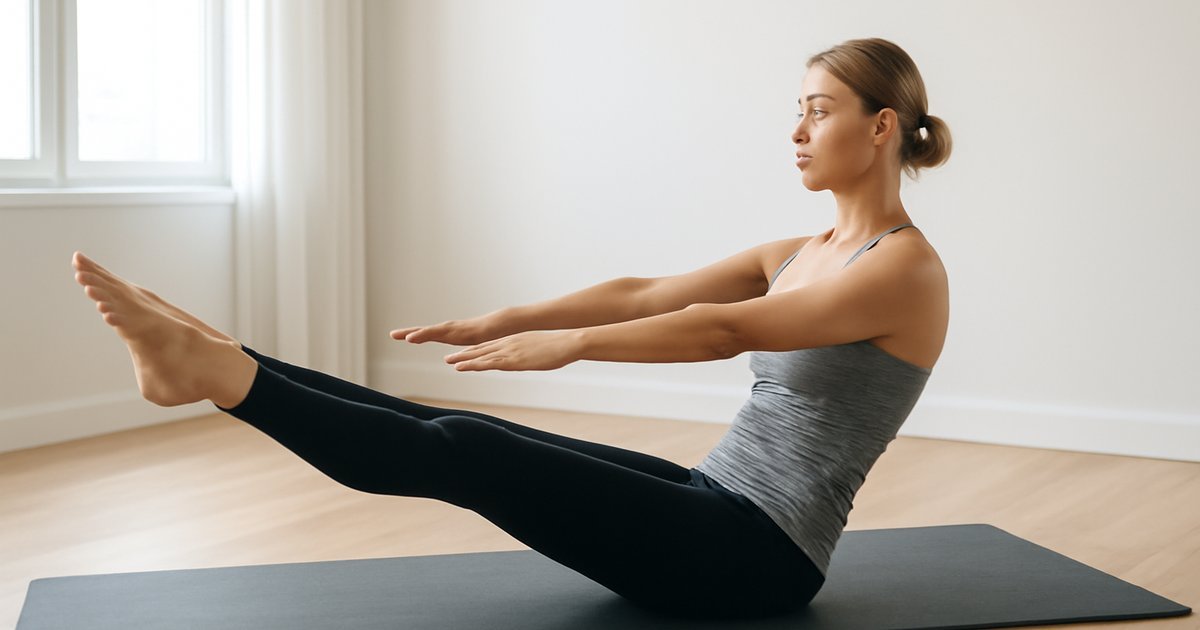
How a century-old movement method is helping millions of Americans in their 40s, 50s, and 60s rebuild strength, fix posture, and finally get relief from chronic back pain.
Why Pilates Deserves Your Attention After 40
Mark, 54, had spent nearly a decade managing lower back pain with heating pads, ibuprofen, and wishful thinking. His orthopedist had cleared him for exercise but warned against anything high-impact. A physical therapist recommended Pilates. Within eight weeks, Mark was sleeping through the night for the first time in years.
His story isn’t unusual. According to the National Institutes of Health, an estimated 80% of Americans will experience back pain at some point in their lives — and adults over 40 are disproportionately affected. Meanwhile, age-related muscle loss (known clinically as sarcopenia) begins as early as your mid-30s, accelerating joint instability and postural decline with every passing decade.
Pilates — a structured, low-impact exercise system built around controlled movement, breathing, and core engagement — has emerged as one of the most evidence-supported fitness approaches for adults navigating these challenges. In this guide, you’ll learn exactly what Pilates is, what the research says about its benefits, how to get started safely after 40, and what to watch for if you have existing health conditions.
What Is Pilates? A Clinical Overview
Pilates is a system of exercises developed in the early 20th century by Joseph Pilates, originally designed to rehabilitate injured soldiers and dancers. Today it is practiced in two primary formats: mat Pilates, performed on the floor using only body weight, and reformer Pilates, which uses a spring-resistance apparatus to add load and variety.
Unlike traditional strength training that often isolates individual muscle groups, Pilates emphasizes integrated movement — training the body to move as a coordinated system. Every exercise involves deliberate activation of the core musculature, which includes not just the abdominal muscles but the deep spinal stabilizers, pelvic floor muscles, and the muscles surrounding the hips and lower back.
The six foundational Pilates principles are concentration, control, centering, flow, precision, and breath. These principles make Pilates as much a neuromuscular training method as a physical one — meaning your nervous system and muscles are both being trained simultaneously.
According to the American College of Sports Medicine, Pilates qualifies as a muscular endurance and flexibility training modality and is appropriate for a wide range of fitness levels, including beginners and those with chronic musculoskeletal conditions.
The Science-Backed Benefits of Pilates After 40
Research into Pilates has expanded significantly over the past two decades, and the findings are particularly compelling for adults in midlife and beyond.
Core Strength and Spinal Stability
A 2015 meta-analysis published in the journal Medicine & Science in Sports & Exercise found that Pilates training significantly improved core muscle activation and lumbar stability compared to control groups. For adults over 40 — when intervertebral disc hydration decreases and spinal ligaments lose elasticity — this kind of deep stabilization work is clinically meaningful.
Stronger core muscles take pressure off the vertebral joints, reducing the mechanical strain that contributes to chronic low back pain, disc herniation risk, and spinal compression.
Posture Correction and Alignment
Prolonged desk work, smartphone use, and the gradual weakening of postural muscles contribute to what clinicians call forward head posture and thoracic kyphosis — the hunched upper back increasingly common in middle-aged adults. The NIH reports that poor posture is associated with increased risk of neck pain, shoulder impingement, and even breathing restriction.
Pilates systematically targets the muscles responsible for upright posture — particularly the deep cervical flexors, rhomboids, lower trapezius, and erector spinae. Clinical evidence suggests that 8 to 12 weeks of consistent Pilates practice can measurably improve spinal alignment and reduce postural pain.
Balance and Fall Prevention
The CDC reports that falls are the leading cause of injury-related death among adults aged 65 and older, and balance begins declining measurably in the late 40s. Pilates trains proprioception — your body’s awareness of its position in space — which is a key component of fall prevention.
A study published in the Journal of Aging and Physical Activity found that older adults who completed a 12-week Pilates program showed significant improvements in static and dynamic balance compared to a control group. This makes Pilates a complementary strategy to explore alongside balance-specific training. If you’re already working on stability, you may also find our guide on Yoga for Fitness After 40 a useful companion resource.
Chronic Pain Management
Research published in the Journal of Orthopaedic & Sports Physical Therapy found that Pilates-based exercise was more effective than minimal intervention (such as general advice and walking) for reducing chronic low back pain and improving functional disability scores in adults. Most physicians now consider Pilates a first-line non-pharmacological option for back pain management when performed correctly.
Flexibility and Joint Mobility
Clinical evidence indicates that regular Pilates practice improves hamstring flexibility, hip joint range of motion, and thoracic spine mobility — all of which tend to decrease with age and contribute to stiffness and pain in daily movement.
Signs You May Be Ready for Pilates (and When to Check First)
You don’t need to be in peak physical condition to start Pilates. In fact, many people come to it because they’re deconditioned, in pain, or recovering from injury. That said, certain signs suggest Pilates may be especially beneficial for you right now:
- Persistent low back or neck pain that isn’t explained by a serious structural cause
- Noticeable loss of flexibility or stiffness when rising from a chair or bed
- Poor posture that has worsened over recent years
- A feeling of weakness or instability in your trunk or hips
- Recent completion of physical therapy that you’d like to maintain
- A desire for low-impact exercise that won’t stress arthritic joints
Before you begin, consult your physician if you have: osteoporosis, a recent spinal surgery or fracture, severe herniated discs, advanced arthritis, or cardiovascular conditions that limit exertion. Your doctor may still clear you for Pilates with modifications — but this is a conversation worth having. Our overview of Exercise for Bone Health After 40 also covers important considerations for those with low bone density.
Getting Started: Practical Guidance for Adults Over 40
Starting Pilates after 40 looks different than starting at 25. Here’s how to do it intelligently.
Choose the Right Format
Mat Pilates is the most accessible entry point — you can begin at home with a quality mat, a few instructional videos, or a community class. It requires no equipment and builds foundational body awareness.
Reformer Pilates is typically offered at dedicated studios. The spring resistance system allows for highly controlled movement with varying levels of difficulty — making it excellent for rehabilitation contexts and for those who want more structured progression.
If you have a specific injury or chronic condition, consider starting with a certified Pilates instructor who holds additional rehabilitation credentials, such as a physical therapist who integrates Pilates, or a PMA-certified instructor (Pilates Method Alliance) experienced in working with older adults.
Sample Beginner Pilates Exercises for Adults Over 40
These are commonly included in beginner programs and are generally well-tolerated by adults with mild back pain or stiffness. Always perform these on a non-slip mat in a quiet space, and stop immediately if you feel sharp or radiating pain.
- The Hundred (modified): Lying on your back, knees bent and feet flat. Lift your head and shoulders off the mat while pumping your arms rhythmically as you inhale for five counts and exhale for five counts. This builds core endurance and deepens your breathing pattern. Beginners keep the knees bent rather than extending the legs.
- Pelvic Curl: Lying on your back, feet flat on the mat. Slowly peel your spine off the mat one vertebra at a time until your hips are lifted. Pause, then roll down with equal control. This mobilizes the lumbar spine and activates the glutes and hamstrings.
- Spine Stretch Forward: Seated upright with legs extended (or slightly bent). Exhale and reach forward, rounding the spine gently, then return to tall sitting. This stretches the posterior chain and reinforces upright posture.
- Single Leg Stretch: Lying on your back, bring one knee to your chest while the other leg extends long. Switch legs in a controlled rhythm. This challenges core stability and hip flexor strength simultaneously.
- Cat-Cow (Pilates variation): On hands and knees, alternate between arching and rounding the spine with deliberate breath coordination. This is one of the most therapeutic exercises available for lumbar stiffness and spinal mobility.
How Often Should You Practice?
Most clinical evidence and experienced instructors recommend two to three sessions per week for adults new to Pilates, with at least one rest day between sessions. Research suggests that noticeable improvements in core strength, posture, and pain levels typically emerge within six to twelve weeks of consistent practice.
This varies from person to person based on starting fitness level, the presence of chronic conditions, and the quality of instruction received.
Pilates and Common Conditions in Adults Over 40
Arthritis
The Arthritis Foundation recognizes low-impact exercise, including Pilates, as beneficial for managing joint pain and maintaining mobility in people with osteoarthritis and rheumatoid arthritis. The key is avoiding positions that compress painful joints — a qualified instructor can modify exercises accordingly.
Osteoporosis
Pilates can be performed safely with osteoporosis, but certain movements — specifically those involving spinal flexion (forward rounding) — should be avoided or modified to reduce vertebral fracture risk. Clinical guidelines from the National Osteoporosis Foundation recommend focusing on extension-based and standing exercises instead. Always discuss this with your physician before beginning.
Chronic Low Back Pain
This is arguably where Pilates has the strongest evidence base. The NIH’s National Center for Complementary and Integrative Health acknowledges Pilates-based exercise as a promising non-pharmacological intervention for chronic low back pain, particularly when combined with conventional medical care rather than used as a replacement for it.
Postural Pain from Desk Work
Adults who spend six or more hours per day seated — which describes a large proportion of working Americans over 40 — commonly develop tension in the hip flexors, weakness in the gluteal muscles, and forward head posture. Pilates directly addresses all three through targeted strengthening and mobility work.
When to Call Your Doctor or Seek Emergency Care
While Pilates is a low-risk activity for most adults, you should stop exercising immediately and seek medical attention if you experience:
- Sharp, radiating pain down one or both legs during or after exercise
- Sudden numbness, tingling, or weakness in the arms or legs
- Chest pain, tightness, or shortness of breath during light exertion
- Dizziness, loss of balance, or fainting during exercise
- A sudden worsening of back pain following a new exercise
- Loss of bladder or bowel control (this can indicate serious spinal nerve involvement)
At your next routine appointment, consider telling your doctor: “I’ve started Pilates for core strength and back pain — are there specific movements I should avoid given my history?” This opens a productive conversation and ensures your exercise plan aligns with your overall care.
Frequently Asked Questions About Pilates After 40
Is Pilates enough exercise on its own, or do I need to add cardio?
Pilates is excellent for strength, flexibility, and pain management, but it does not typically provide the cardiovascular challenge that guidelines from the American Heart Association recommend — at least 150 minutes of moderate-intensity aerobic activity per week. Think of Pilates as a powerful complement to cardio, not a complete replacement. Low-impact options like walking for fitness after 40 pair especially well with a regular Pilates practice.
Can Pilates help with weight loss after 40?
Pilates can support body composition changes by building lean muscle mass and improving metabolic efficiency, but research suggests it is less effective for caloric burn than aerobic exercise. Combined with a balanced diet and cardio training, it can meaningfully contribute to a healthy weight management plan.
Is mat Pilates or reformer Pilates better for beginners?
Both are appropriate for beginners. Mat Pilates is more accessible and affordable. Reformer Pilates provides more feedback through spring resistance and is often preferred in clinical rehabilitation settings. If cost or access is a factor, mat Pilates with quality instruction is a fully valid starting point.
How long before I see results from Pilates?
Most adults report noticeable improvements in posture and back pain within 6 to 12 weeks of consistent practice (two to three sessions per week). Strength and flexibility gains are typically measurable by the 8-week mark, though this varies from person to person.
Can I do Pilates if I’ve had back surgery?
This depends entirely on the type of surgery, how recently it was performed, and your surgeon’s clearance. Many post-surgical patients are referred to Pilates as part of their rehabilitation — but always get explicit approval from your surgeon or physical therapist before beginning, and work with an instructor who has experience in post-surgical recovery.
Moving Forward: The Takeaway on Pilates After 40
Pilates isn’t a trend. It’s a rigorously structured, evidence-supported movement practice that speaks directly to the physical challenges adults face in their 40s, 50s, and 60s — declining core strength, postural deterioration, chronic pain, and reduced balance.
The research is clear: consistent, properly instructed Pilates can meaningfully reduce back pain, improve spinal alignment, enhance balance, and build the foundational strength that makes every other physical activity safer and easier. It works best as part of a complete fitness strategy that includes cardiovascular exercise, adequate rest, and appropriate nutrition.
You don’t need to be flexible or fit to start. You just need a qualified instructor, medical clearance if you have existing conditions, and the willingness to be patient with a process that builds real, lasting results. Start slow, listen to your body, and let your doctor know you’ve begun.
Medical Disclaimer: This article is for informational and educational purposes only. It does not constitute medical advice, diagnosis, or treatment. Always consult your physician or a qualified healthcare provider before making changes to your health routine or treatment plan.
Medically reviewed by our editorial health team. Content follows evidence-based standards aligned with CDC and NIH guidelines.
Leave a Reply