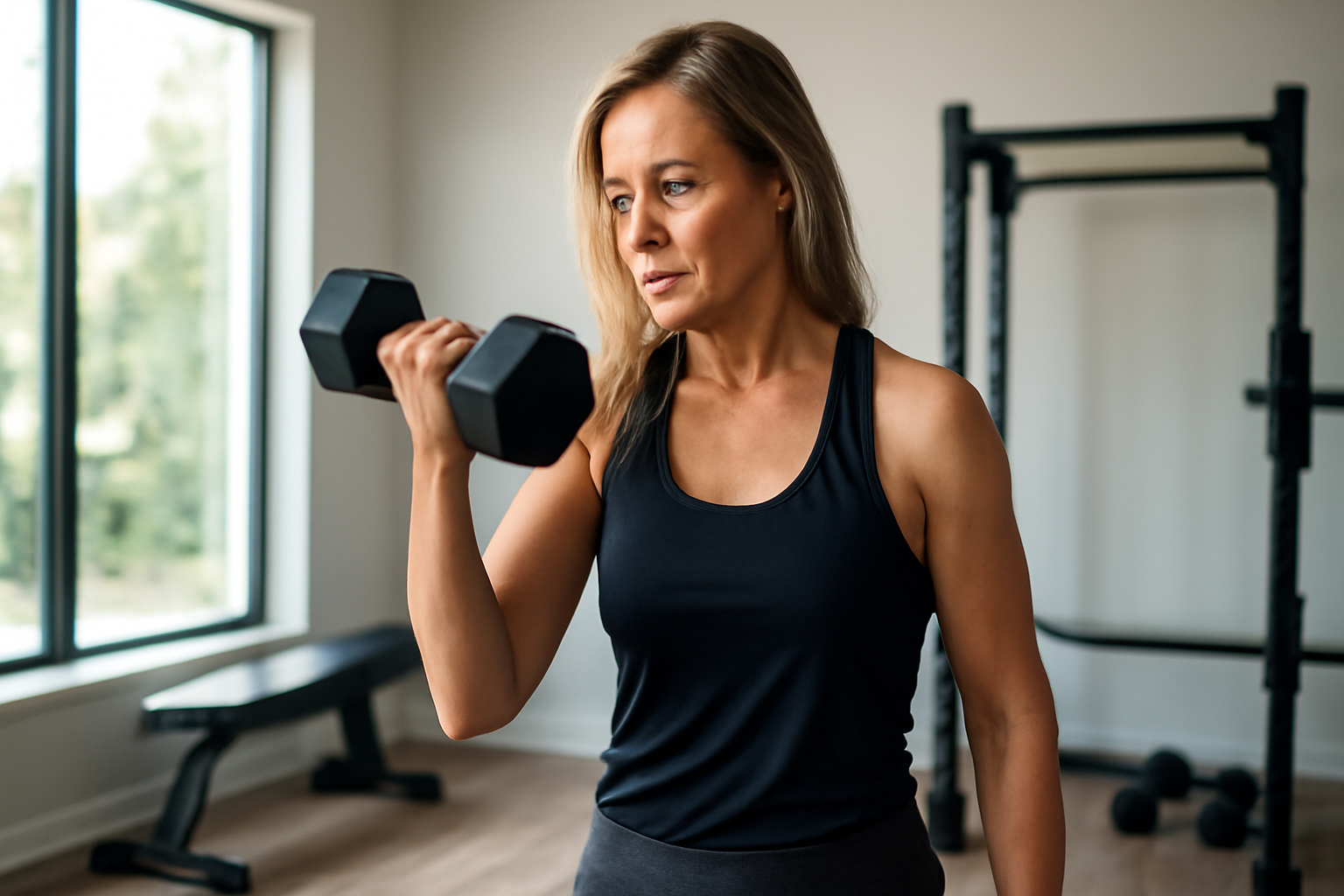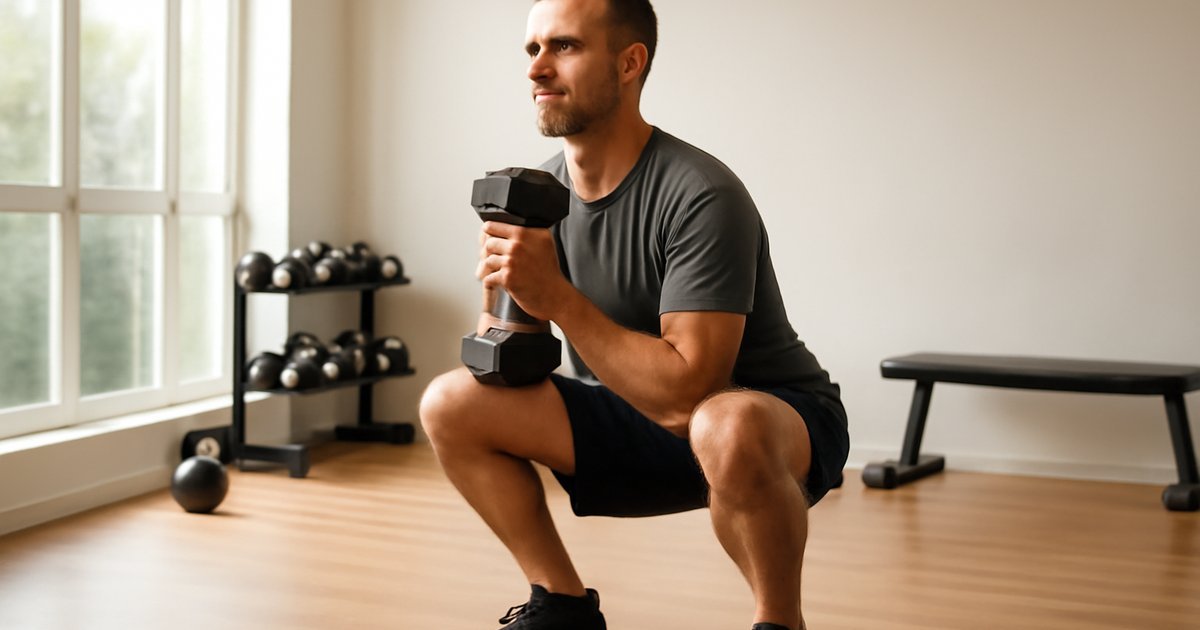
Dumbbell Workouts After 40: Build Strength Safely
Free weights remain one of the most clinically supported tools for preserving muscle mass, joint health, and metabolic function as you age.
Introduction
When David turned 44, he noticed something unsettling: carrying groceries left him winded, and climbing stairs had become a chore. His doctor told him what research has been saying for years — he was losing muscle. The condition is called sarcopenia, and according to the National Institutes of Health, adults can lose up to 5% of their muscle mass every decade after age 30, with losses accelerating significantly after 60.
The good news? A pair of dumbbells and the right plan can change that trajectory dramatically.
Dumbbell training after 40 is one of the most accessible, evidence-backed fitness strategies available to aging adults. Whether you are managing mild joint stiffness, working around a busy schedule, or returning to exercise after a long break, free-weight training with dumbbells offers a flexible, low-barrier entry point into strength training that delivers real, measurable benefits.
In this guide, you will learn what makes dumbbell workouts uniquely effective for adults over 40, how to structure safe and progressive routines, which exercises offer the highest return on investment, and how to avoid the most common mistakes that lead to injury or burnout.
What Is Dumbbell Training — and Why Does It Matter After 40?
Dumbbell training is a form of resistance exercise that uses hand-held free weights to create muscular load. Unlike machines, which guide movement along a fixed path, dumbbells require your stabilizing muscles to work simultaneously — engaging more muscle fibers and training real-world functional strength.
After 40, your body undergoes several physiological shifts that make strength training not just beneficial but increasingly essential. Hormonal changes — particularly declining testosterone in men and estrogen in women — reduce the body’s natural muscle-building signals. Metabolic rate slows. Bone density begins to decrease. Joint cartilage becomes less resilient.
According to the CDC’s physical activity guidelines, adults should engage in muscle-strengthening activities at least two days per week. Yet surveys consistently show that fewer than 30% of American adults meet this standard — leaving millions vulnerable to the downstream effects of muscle loss, including falls, metabolic disease, and reduced independence.
Dumbbell training addresses this gap with a tool that is inexpensive, space-efficient, and scalable to virtually any fitness level.
Signs You May Need More Strength Training
Many adults over 40 don’t realize how much muscle function they’ve lost until daily activities start to feel harder than they should. Clinical research suggests the following are common early indicators that your musculoskeletal system needs more resistance training:
- Difficulty rising from a chair without using your arms — a key functional strength marker
- Grip weakness — research from the American Journal of Medicine links low grip strength to increased cardiovascular and all-cause mortality risk
- Chronic lower back ache — often related to weak core and posterior chain muscles
- Frequent fatigue during light physical tasks — such as carrying laundry or light yard work
- Poor balance or unsteady gait — particularly when navigating uneven terrain
- Unexplained weight gain — especially fat accumulation around the midsection, which may reflect declining lean muscle mass and metabolic rate
A 2021 meta-analysis published in the British Journal of Sports Medicine found that resistance training performed at least twice weekly was associated with a 25% lower risk of cardiovascular disease and a 17% lower risk of all-cause mortality. These are not small numbers — they represent a profound case for picking up those weights.
Causes of Muscle Loss After 40 — and How Dumbbells Help
Understanding why muscle loss happens helps you train more intelligently. The primary drivers include:
Hormonal decline: Testosterone levels in men drop approximately 1-2% per year after age 30, per the American Urological Association. In women, perimenopause and menopause bring dramatic estrogen reductions that also impact muscle protein synthesis.
Reduced physical activity: Career demands, family responsibilities, and longer recovery times often lead adults to move less — creating a negative feedback loop where inactivity accelerates muscle loss.
Inadequate protein intake: Research from the American Journal of Clinical Nutrition indicates that many adults over 50 consume insufficient dietary protein to support muscle maintenance, let alone growth.
Neurological changes: The nervous system’s ability to recruit fast-twitch muscle fibers — those responsible for power and speed — declines with age. Resistance training helps preserve these neural pathways.
Dumbbell workouts directly counteract all of these mechanisms. They provide the mechanical stimulus necessary for muscle protein synthesis, engage the nervous system’s motor recruitment patterns, and can be performed in ways that complement dietary protein intake for maximum anabolic effect.
For adults managing joint conditions, dumbbell training allows for natural movement arcs that accommodate individual anatomy — something fixed machines cannot offer. If you are also exploring lower-impact options, consider reading our guide on Resistance Band Training After 40: Build Strength Safely, which pairs well with dumbbell work for a complete home-based program.
How to Structure a Safe Dumbbell Routine After 40
The most effective dumbbell programs for adults over 40 prioritize progression, recovery, and movement quality over sheer volume or intensity. Clinical evidence suggests that 2 to 3 strength training sessions per week is optimal for most aging adults — enough to drive adaptation without overwhelming recovery capacity.
Key structural principles:
1. Start with compound movements. Exercises that work multiple joints simultaneously — such as the dumbbell squat, Romanian deadlift, chest press, and bent-over row — deliver the most training stimulus per minute. Prioritize these before adding isolation work.
2. Use moderate loads with controlled tempo. Research suggests that training with weights you can lift for 8-15 repetitions with good form produces the most favorable combination of muscle growth and joint safety for adults over 40. Avoid grinding through maximum loads — especially early in your training.
3. Progress gradually. The principle of progressive overload — incrementally increasing weight, reps, or sets over time — is the engine of all strength adaptation. Aim to increase load or volume by roughly 5-10% every 2-3 weeks when movements feel consistently manageable.
4. Prioritize warm-up and cool-down. Spend 5-10 minutes warming up with dynamic movements (leg swings, arm circles, light bodyweight squats) before lifting, and close each session with gentle stretching. For a science-backed flexibility protocol, see our article on Stretching After 40: Routines for Flexibility & Pain Relief.
5. Allow adequate recovery. After 40, muscle repair takes longer. Avoid training the same muscle group on consecutive days. Two full rest days per week is a reasonable baseline.
The Best Dumbbell Exercises for Adults Over 40
The following exercises represent a clinically rational selection for adults in the 40-70 age range. They balance effectiveness, safety, and functional carryover into daily life.
Lower body:
- Dumbbell goblet squat — Holding one dumbbell at chest height encourages upright posture and is easier on the lower back than barbell variations. Excellent for quad, glute, and core engagement.
- Romanian deadlift (RDL) — A hinge movement that targets the hamstrings and glutes with minimal spinal loading when performed correctly. Critical for maintaining posterior chain strength.
- Reverse lunge — Safer than forward lunges for knee health, this movement builds single-leg strength and balance simultaneously.
- Step-ups — Functional, low-impact, and highly effective for hip extensors and stabilizers.
Upper body:
- Dumbbell chest press (floor or bench) — Builds pressing strength without the shoulder stress of barbell variations.
- Single-arm dumbbell row — One of the best exercises for upper back and posture improvement — critical for adults spending hours seated.
- Overhead press (seated or standing) — Strengthens the shoulders and upper back. Seated variation reduces spinal compression risk for those with lumbar sensitivity.
- Bicep curl and tricep kickback — Useful isolation exercises to maintain arm strength for functional tasks like lifting and reaching.
Core and stability:
- Dumbbell farmer’s carry — Walking with dumbbells in each hand builds grip strength, core stability, and improves posture. Simple, underrated, and deeply functional.
- Dumbbell deadbug (light weight) — Trains deep core stability with minimal spinal stress.
Living With a Dumbbell Routine: Practical Tips for Long-Term Consistency
Starting a dumbbell program is one thing — maintaining it over months and years is another. Clinical research consistently identifies consistency as the single most important variable in long-term fitness outcomes.
Schedule your sessions like appointments. Adults who block exercise time on their calendars are significantly more likely to follow through than those who plan to "fit it in" when time allows.
Train at home when needed. A set of adjustable dumbbells requires minimal space and eliminates the barrier of gym commutes. Many highly effective routines can be completed in 30-40 minutes in a living room or garage.
Pair strength training with complementary modalities. Dumbbell training works best when combined with cardiovascular exercise, flexibility work, and mind-body practices. Our guide on Yoga for Fitness After 40: Strength, Flexibility & Calm explores a powerful complement to free-weight training.
Track your progress. Keeping a simple training log — noting weights used, reps completed, and how you felt — provides motivational feedback and helps you detect when it’s time to increase load.
Fuel your sessions appropriately. Research indicates that consuming 20-40 grams of high-quality protein within 2 hours post-training significantly enhances muscle protein synthesis in adults over 40. Discuss specific nutritional strategies with your physician or registered dietitian.
When to Call Your Doctor — and Red Flag Warning Signs
Dumbbell training is generally safe for healthy adults, but your individual health history matters enormously. Always consult your physician before beginning a new exercise program, particularly if you have been sedentary or are managing a chronic condition.
Seek immediate medical attention if you experience:
- Chest pain, pressure, or tightness during or after exercise
- Sudden shortness of breath disproportionate to exertion
- Dizziness, fainting, or loss of consciousness
- Sudden severe joint pain — especially in the knee, shoulder, or lower back — suggesting possible structural injury
- Heart palpitations (irregular or racing heartbeat) during exercise
- Numbness or tingling that radiates down an arm or leg
Discuss with your doctor at your next visit if you notice:
- Joint pain that persists more than 48 hours after training
- Persistent muscle soreness that doesn’t improve with rest
- Significant asymmetry in strength between left and right sides
- Any new or worsening symptoms related to existing conditions such as hypertension, diabetes, or osteoporosis
Your physician can help you identify appropriate load ranges, movement modifications, and whether cardiac stress testing is warranted before beginning higher-intensity training.
Frequently Asked Questions
How heavy should my dumbbells be when starting out after 40?
Most adults beginning or returning to strength training after 40 should start with weights they can lift for 12-15 repetitions with good form while still feeling challenged by the last 2-3 reps. This varies widely by individual — from 5 lb to 30 lb depending on the exercise and fitness baseline. There is no universal starting weight. The goal is progressive challenge, not ego-driven heavy lifting.
Can dumbbell training help with weight loss after 40?
Research suggests resistance training contributes to weight management by increasing resting metabolic rate — the calories your body burns at rest — through the maintenance and growth of lean muscle tissue. Clinical evidence indicates that combining strength training with aerobic exercise and a nutrient-dense diet produces the most sustainable body composition outcomes. However, diet remains the primary driver of weight loss in most adults.
Is it safe to do dumbbell training if I have osteoporosis?
For many adults with osteoporosis, appropriately prescribed resistance training is not only safe but recommended by organizations including the National Osteoporosis Foundation. Load-bearing exercise creates mechanical stress on bone that stimulates bone-forming cells. However, exercise selection and load must be carefully tailored. Always consult your physician and consider working with a physical therapist before starting.
How long before I see results from dumbbell training?
Most adults notice functional improvements — such as easier daily tasks, better posture, and increased energy — within 4-8 weeks of consistent training. Visible muscle changes typically become apparent after 8-16 weeks. Research indicates that neural adaptations (your nervous system learning to recruit muscle more efficiently) begin almost immediately, which is why early strength gains often precede visible changes.
Do I need a gym membership to do effective dumbbell training after 40?
No. A pair of adjustable dumbbells or two or three fixed-weight sets covering a light, moderate, and heavier load can support a comprehensive training program at home. Many clinical studies demonstrating the benefits of resistance training have used home-based protocols, making gym access a preference rather than a requirement.
Conclusion
Dumbbell training after 40 is one of the most evidence-supported investments you can make in your long-term health, independence, and quality of life. It is accessible, adaptable, and proven to counteract the physiological changes that make aging harder than it needs to be.
You do not need a perfect program or a fully equipped gym to begin. You need consistency, patience, and a willingness to progress gradually. Start where you are. Use what you have. And remember that every rep is a message to your body that strength — not decline — is the direction you’ve chosen.
As always, the most important first step is a conversation with your physician. Together, you can design an approach that honors your current health status while building toward a stronger, more capable future.
Medical Disclaimer: This article is for informational and educational purposes only. It does not constitute medical advice, diagnosis, or treatment. Always consult your physician or a qualified healthcare provider before making changes to your health routine or treatment plan.
Medically reviewed by our editorial health team. Content follows evidence-based standards aligned with CDC and NIH guidelines.