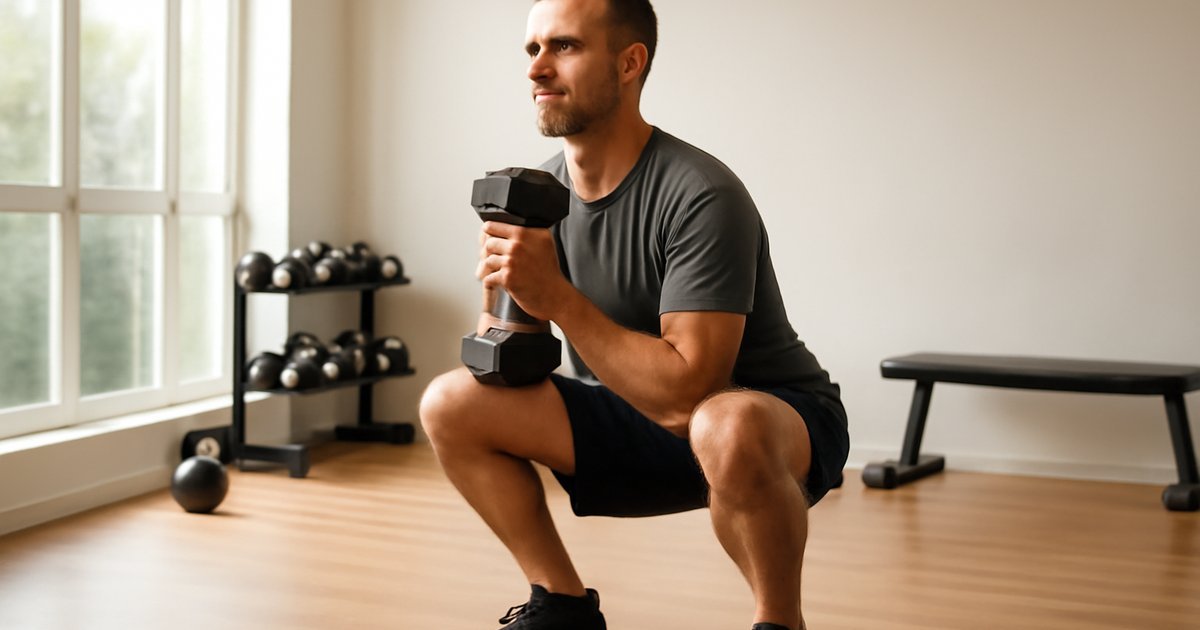
No gym membership required — just your body, a little space, and the right approach for your age.
Michael, 52, had avoided the gym for years. A demanding schedule, a nagging shoulder, and the intimidation of a weight room kept him on the sidelines. Then his doctor mentioned something that stopped him cold: adults who lose muscle mass after 40 are significantly more likely to develop metabolic disease, fall-related injuries, and mobility limitations as they age. The fix, his doctor explained, didn’t require barbells or expensive equipment. It required consistency — and a smart bodyweight training plan.
According to the CDC, muscle mass naturally declines at a rate of 3 to 8 percent per decade after age 30, with the rate accelerating after 60. This process, called sarcopenia, affects millions of Americans and contributes to everything from chronic back pain to insulin resistance. The good news? Research consistently shows that bodyweight training — using your own body as resistance — can slow, stop, or even partially reverse this decline.
In this guide, you’ll learn what bodyweight training is, why it works especially well after 40, what exercises to prioritize, how to build a sustainable routine, and when to check with your doctor before starting.
What Is Bodyweight Training?
Bodyweight training is a form of strength and resistance exercise that uses your own body weight — rather than dumbbells, machines, or barbells — as the primary source of resistance. Think push-ups, squats, lunges, planks, and pull-ups. These movements recruit multiple muscle groups simultaneously, improve coordination, and build functional strength that translates directly to everyday activities.
Unlike weight machines that isolate individual muscles, bodyweight exercises often require core engagement, joint stabilization, and balance — making them more comprehensive in their training effect.
For adults over 40, bodyweight training offers a uniquely accessible entry point. The NIH notes that resistance training — which includes bodyweight exercise — is one of the most evidence-supported interventions for maintaining muscle mass, bone density, and metabolic health in middle-aged and older adults.
You don’t need a gym, a trainer, or specialized equipment to get started. What you do need is a basic understanding of how to train safely and progressively at your age.
Why Bodyweight Training Works Especially Well After 40
After 40, the body undergoes real physiological changes that affect how you respond to exercise. Hormonal shifts — including declining testosterone in men and estrogen in women — affect muscle protein synthesis. Recovery time increases. Joints may be less tolerant of high-impact loading. Injuries that once resolved in a week now take three.
A 2019 meta-analysis published in the British Journal of Sports Medicine found that progressive resistance training — including bodyweight-based programs — significantly improved muscle strength, physical function, and quality of life in adults over 50. The key word is “progressive”: gradually increasing difficulty over time.
Bodyweight training aligns naturally with the needs of this age group because:
- It’s low-impact by default. Most bodyweight exercises place less stress on joints than loaded barbell work.
- It’s scalable. Every exercise can be made easier or harder without adding external weight.
- It improves balance and coordination — critical for fall prevention, which the CDC identifies as a leading cause of injury-related death in adults over 65.
- It’s time-efficient. A 30-minute bodyweight circuit can deliver measurable cardiovascular and muscular benefits.
This doesn’t mean bodyweight training is a replacement for all other forms of exercise. For adults managing osteoporosis, for example, weight-bearing resistance with external load may be preferred. This varies from person to person — always confirm your approach with your healthcare provider.
Key Exercises for Adults Over 40
Not all bodyweight exercises are created equal. After 40, the goal is to prioritize movements that build functional strength, protect vulnerable joints, and improve mobility — not just max reps for their own sake.
Here are the foundational categories and what to include:
Lower Body
- Bodyweight squats — Strengthen quads, glutes, and hamstrings. Modify with a chair for support if needed.
- Reverse lunges — Easier on the knees than forward lunges; excellent for single-leg balance.
- Glute bridges — Target the posterior chain without spinal loading; ideal for those with lower back sensitivity.
- Step-ups — Functional movement that mirrors stair-climbing and builds unilateral leg strength.
Upper Body
- Push-ups (incline variation) — Reduces shoulder stress while still building chest, shoulder, and tricep strength.
- Pike push-ups — A shoulder-focused progression that requires no overhead loading.
- Doorframe rows (or table rows) — A beginner-friendly pulling movement to counterbalance push patterns and support posture.
Core
- Dead bugs — Train core stability without spinal flexion; safer than traditional crunches for adults with disc issues.
- Forearm planks — Build deep core endurance; modify by performing from the knees.
- Bird dogs — Improve coordination between the hips and shoulders while stabilizing the spine.
Clinical evidence from the American College of Sports Medicine (ACSM) suggests that adults over 40 should aim for two to three strength-training sessions per week, targeting all major muscle groups. Bodyweight training can fully satisfy this recommendation when programmed correctly.
How to Build a Bodyweight Routine After 40
The most common mistake adults over 40 make when starting bodyweight training is doing too much, too soon — or training without structure. Both lead to frustration and injury.
Here’s a practical framework based on exercise physiology principles:
Phase 1: Foundation (Weeks 1-4)
Focus on learning proper form, not volume. Start with 2 sessions per week. Choose 4 to 6 exercises covering major muscle groups. Perform 2 sets of 8 to 10 reps with slow, controlled movement. Rest 60 to 90 seconds between sets.
Phase 2: Building (Weeks 5-10)
Increase to 3 sessions per week. Add a third set. Introduce progressions — for example, move from incline push-ups to flat push-ups, or from two-leg glute bridges to single-leg variations. Reduce rest intervals slightly to 45 to 60 seconds.
Phase 3: Progression (Weeks 11+)
Introduce more challenging variations: deficit push-ups, pistol squat progressions, or elevated pike push-ups. Consider adding tempo training — slowing down the lowering phase (eccentric) to increase muscle stimulus without adding external load.
Research from Harvard Health supports the principle that eccentric-focused training (the lowering phase of any movement) is particularly effective for building muscle in older adults, even without heavy resistance.
Recovery matters as much as training. Most physicians recommend at least 48 hours between resistance training sessions targeting the same muscle group. This varies from person to person, but after 40, the recovery window typically lengthens — and respecting it reduces injury risk significantly. If you’re looking for complementary approaches to pair with your training, consider reviewing what stretching after 40 can do for flexibility and pain relief between sessions.
Nutrition to Support Bodyweight Training After 40
Exercise without adequate nutrition is like trying to build a house without materials. After 40, protein becomes especially critical for muscle protein synthesis — the process by which your body repairs and builds muscle tissue after training.
The NIH recommends that older adults aim for approximately 1.2 to 1.6 grams of protein per kilogram of body weight per day to support muscle maintenance during resistance training — a meaningfully higher target than the general population recommendation of 0.8 grams per kilogram.
Practical protein-focused strategies include:
- Including a protein source (eggs, Greek yogurt, chicken, legumes, cottage cheese) at every meal
- Consuming protein within 30 to 60 minutes after training to support recovery
- Staying well hydrated — dehydration impairs muscle function and increases injury risk
- Not skipping meals, especially after a training session
Vitamin D and calcium also play important roles in muscle and bone health for adults over 40. Clinical evidence from the Mayo Clinic indicates that Vitamin D deficiency is widespread among US adults and is associated with reduced muscle strength and increased fall risk. Discuss supplementation with your physician if you haven’t had your levels checked recently.
Living With and Preventing Common Setbacks
The biggest challenge in bodyweight training after 40 isn’t the exercises — it’s staying consistent through life’s interruptions and managing minor setbacks without quitting entirely.
Here’s what the evidence supports for staying on track:
- Schedule training like an appointment. Research from the American Psychological Association shows habit formation in exercise is strongly tied to routine triggers — same time, same day, same location.
- Track progress in something other than the scale. Note how many reps you complete, how an exercise feels, or whether you’ve moved to a harder variation. These signals are more motivating than weight changes alone.
- Listen to discomfort vs. pain. Muscle fatigue during exercise is expected. Joint pain, sharp sensations, or pain that worsens over a session are signals to stop and reassess.
- Don’t skip rest days. Active recovery — light walking, stretching, or gentle yoga — is ideal between strength sessions. Overtraining is a real phenomenon, and adults over 40 are more susceptible to its effects.
For adults who find that certain movements aggravate specific conditions — like knee osteoarthritis or lumbar disc issues — bodyweight training can often be modified rather than abandoned. A physical therapist can provide individualized movement modifications that keep you training safely. You might also find it helpful to explore Pilates after 40 as a complementary practice for core strength and postural support.
When to Call Your Doctor — and Red Flag Signals
Before beginning any new exercise program after 40, the American Heart Association recommends a medical evaluation — particularly if you have a history of cardiovascular disease, diabetes, joint conditions, or haven’t exercised regularly in more than a year.
Seek immediate medical attention if during or after exercise you experience:
- Chest pain, pressure, or tightness
- Sudden shortness of breath disproportionate to effort
- Heart palpitations or an irregular heartbeat
- Dizziness, lightheadedness, or fainting
- Sudden severe pain in any joint or muscle
- Numbness or tingling radiating into the arms or legs
At your next scheduled appointment, talk to your doctor about:
- Whether your current fitness level is appropriate for resistance training
- Any medications that might affect your heart rate response or exercise tolerance
- Modifications needed for existing joint conditions, hernias, or cardiovascular diagnoses
- Bone density testing (DEXA scan) if you’re postmenopausal or have risk factors for osteoporosis
Frequently Asked Questions
Can bodyweight training build real muscle after 40?
Yes. Clinical evidence indicates that progressive bodyweight training — gradually increasing difficulty — stimulates muscle protein synthesis and can build measurable muscle mass in adults over 40. The key is progressive overload: continually making exercises slightly harder as your body adapts.
How many days a week should I do bodyweight training after 40?
Most physicians and the ACSM recommend two to three resistance training sessions per week for adults, with at least 48 hours of recovery between sessions targeting the same muscle groups. Starting with two sessions per week and building from there is appropriate for beginners.
Is bodyweight training safe if I have knee or back pain?
In many cases, yes — but with appropriate modifications. Exercises like glute bridges, dead bugs, and incline push-ups can be performed with minimal stress on sensitive joints. Always consult your physician or a physical therapist before training through pain to identify safe movement options for your specific situation.
Do I need to warm up before bodyweight training?
Absolutely. A 5 to 10 minute warm-up — including light cardio (marching in place, arm circles) and dynamic stretching — prepares joints and muscles for exercise, improves performance, and reduces injury risk. This is especially important after 40, when connective tissue tends to be less pliable at rest.
What’s the difference between bodyweight training and calisthenics?
Calisthenics is a specific subset of bodyweight training that often involves more gymnastic-style movements — like muscle-ups, handstands, and front levers. Bodyweight training is a broader term that includes any exercise using body weight as resistance. For adults over 40, a foundational bodyweight approach is typically more appropriate than advanced calisthenics.
Conclusion
Bodyweight training after 40 is one of the most practical, evidence-supported, and accessible paths to maintaining strength, metabolic health, and physical independence as you age. You don’t need a gym. You don’t need equipment. You need a consistent, progressive approach that respects your body’s real needs — and the wisdom to build up gradually rather than go all-in overnight.
Research suggests that adults who engage in regular resistance training live longer, maintain better cognitive function, and report higher quality of life than those who remain sedentary. The investment is modest. The return is significant.
Start where you are. Progress from there. And always keep your physician in the loop as your fitness evolves. For additional movement options that complement bodyweight work, explore what yoga for fitness after 40 can add to your routine in terms of flexibility and stress relief.
Medical Disclaimer: This article is for informational and educational purposes only. It does not constitute medical advice, diagnosis, or treatment. Always consult your physician or a qualified healthcare provider before making changes to your health routine or treatment plan.
Medically reviewed by our editorial health team. Content follows evidence-based standards aligned with CDC and NIH guidelines.